Beethoven’s Big Day
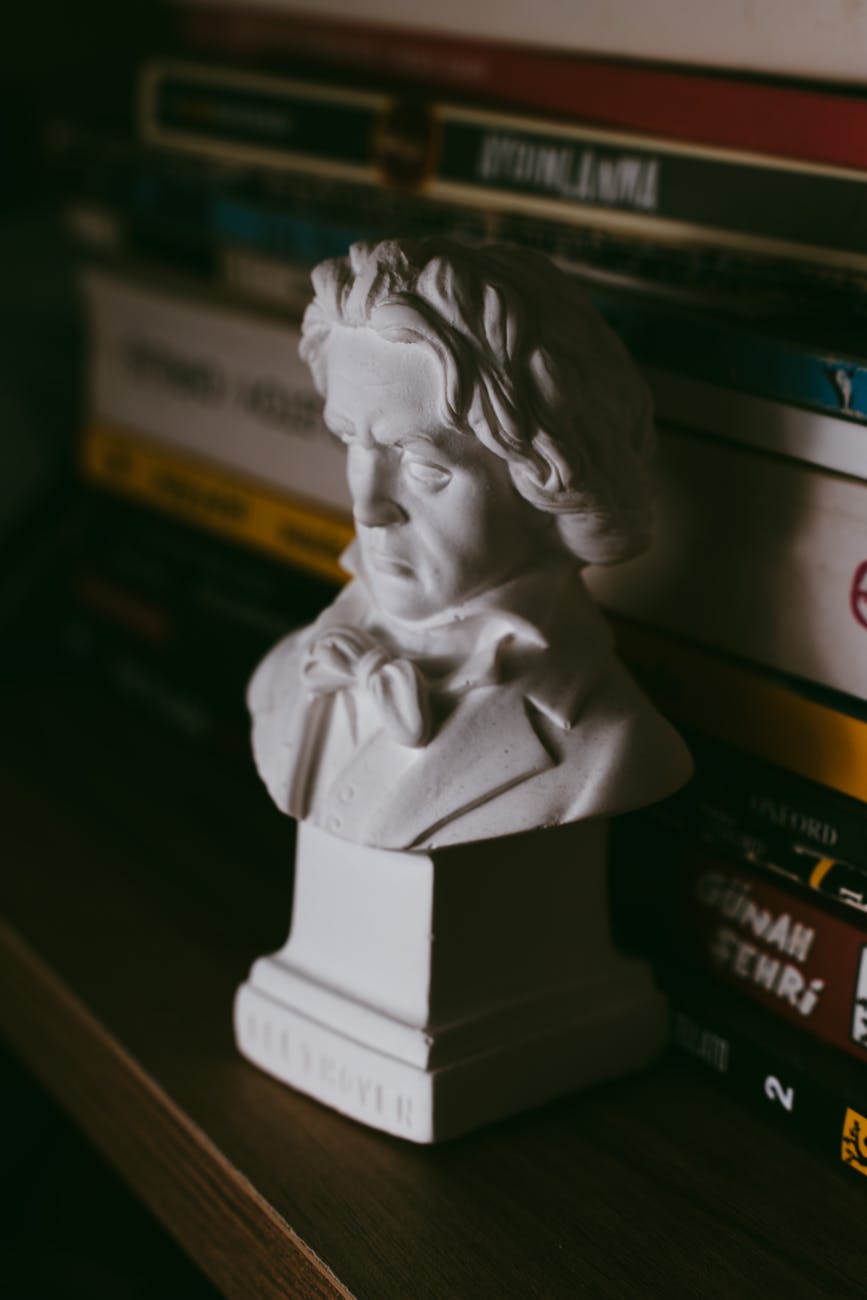
May 7, 1824. Beethoven wakes up, always at the same time. His head is heavy. It feels like red wine from yesterday evening is still swirling about inside him. He struggles out of bed, opens the window and looks out. Yes, the bells are swinging back and forth, yes, he cannot hear them. He remembers when he heard no sound from them for the first time. That morning is memorable for its wretchedness. He thought of climbing the bell tower and jumping off. But his task, his destiny, his legacy held him back.
He has to get his act together. Vienna awaits with bated breath. A few shots of caffeine might get him started. He dresses, goes downstairs and emerges into the sunlight of a warm Spring morning. He enters the café and sees the greetings, the raised mugs. He feels the soundless vibrations of human communication. He manages a smile, brief, never enough to cut through the constant hum of melancholy.
He sits down. A young man walks up. Beethoven looks up at him. Today he won’t lose patience. He opens his notebook and thrusts it towards the man.
The man writes, I hear there is going to be singing. Haydn and Mozart never put songs into their symphonies.
Beethoven explains how he had no choice in the matter. He tried but failed to express without words the glorious egalitarian ideals first championed and later betrayed by Napolean.
The caffeine has not lifted his spirits, nor the bread, cheese and sausage. He trudges back to his apartment, wearily ascends the staircase and steps into what the rest of the world would call a frightful mess. He sees the unwashed plates, the clothes strewn about, the scattered piles of manuscripts, the unemptied chamber pot, the unmade bed, but like the rancid odours none of it registers. He goes to his piano and taps out the song that after tonight will become the most famous in Europe and, later, most of the world. He absorbs the melody through his fingertips. Or maybe his mind is playing tricks. Somewhere, buried in his papers and notebooks, a tenth symphony is brewing, but he has progressed further with some piano sonatas, so perhaps he’d better push on with them. He rummages, curses his untidiness, his lack of a system, but time evaporates once he finds the manuscripts.
The launderer arrives with his suit. Behind him is a labourer who empties the chamber pot, empties the basin and re-fills it with fresh water, and tops up the water goblet. Beethoven checks his pocket watch; it is late afternoon. The premiere is less than two hours away. The launderer waits while Beethoven washes his face, then helps him get into his suit.
Beethoven returns to the piano sonatas until a tap on his shoulder by a long-time friend tells him it is time to leave. He follows Beethoven out and locks his front door. The carriage is outside. Half an hour later they arrive at the Karntnertor theatre. There is a crowd outside waiting to get in.
The orchestra is ready. Beethoven walks onto the stage and bows to the packed audience. He sees their clapping, notices a few familiar faces, then turns to the orchestra and raises his baton. Ninety minutes later, it is over. Beethoven is still facing the orchestra. One of the soloists, Caroline Unger, gets up and gently turns him around. He sees the audience on its feet, cheering, clapping. He bows. Some of Beethoven’s friends have organised a celebration. People are telling him his ninth symphony is a triumph. But triumph and celebration have no place in Beethoven’s world. He goes home early, to bed, to wake up to another day of profound silence.


 Gerry Roberts