Impressions of Guangzhou 2025
12 September
Surrounded by Chinese people, I am among those of my ilk. I do not detect anywhere a sense of entitlement, instead an overall predisposition towards satisfaction with their lot. Proving again on this longish flight to Guangzhou. I could not be happier flying China Southern, official airline of Southern China, Guangzhou its major city with a population of eighteen million. Some people are predisposed to complain as a first response to a perception of even slight inconvenience. I have encountered a few who wear that predisposition as a badge of honour. Yet another unsavoury hallmark of an affluent society, like the one to which I belong. I suspect a racist element too, an expectation of servility, a jumping to attention, from those considered inferior. And when it’s not forthcoming, looking for points of criticism with a stringency not applied to others. As for me, there is nothing worthy of criticism in China Southern’s economy class. The flight leaves on time. My seat is comfortable. The food is tasty. Taste is the ultimate test of economy class fare. If you want gourmet dining, travel first class. And all my luggage turns up without delay on the carousel.
I want people to be themselves when engaging with me. It helps me be myself without a facade, without a stifling sense that I am being judged or expected to behave in a certain way. I could, and perhaps should, cultivate the ability to ignore perceived judgement and expectation, and persist with being my natural polite happy self.
Long flights are wearing. I’m not a continuous movie watcher. One or two is about all I can take, unless they are really good and, even better, have English subtitles. Accents and aircraft noise combine to make much of the dialogue incomprehensible. It is tiring to concentrate for long periods, even more tiring when the effort is largely futile. I resort to reading and writing. Noise does not encroach on them.
The little boy occupying the seat in front of me coughs and sneezes and breathes through clogged sinuses, as if he is forcing air through jelly. I think he might have something catching. But he doesn’t appear ill. He is in good spirits despite his olfactory issues. I take comfort from that. I get a bit congested too from time to time.
The soft-featured young man across the aisle from the boy, clad entirely in loose black attire, has Crocs on his feet. He seems unaware of my presence throughout the nine hours we share the same space. His backpack looks expensive; so does the curious little black suitcase he pulls from the overhead locker after we land. I keep seeing him on the long walk from the aeroplane to the immigration hall. He vanishes into the immigration queue for Chinese passport holders. Somehow he is a distinctive presence right up to that point.
Our hotel for the night is situated in an area alive with cafes and eateries. Choosing one for a snack is difficult to say the least. No matter where we eat, we are always going to feel we could have done better. I think we do ok. My bowl of noodles is cheap and tasty. We are in the busy heart of the Baiyun district. There are many youngsters about, like the basketballers doing their thing on an outdoor court just outside our hotel. Lots of vehicles too, especially silent motorised two-wheelers, silent because they are electric, wherever there is space to squeeze through. No such thing as a vehicle-free zone. Pedestrians need to take note.
The people manning the food carts must have a hard life. They cannot make much money despite the effort it takes to set up, prepare and cook. They must make do with very little in their lives. Unlike me, whose life is steeped in privilege.
13 September
The no frills hotel serves its purpose, giving us a good night’s sleep. An air conditioner is mandatory in these parts at this time of the year. Although it must be said many people we saw during our stroll yesterday evening probably have no choice but to swelter at night. Like I did growing up. I never slept in air conditioned comfort as a child and teenager. One does get acclimatised. I guess I will, again, if forced to endure such conditions. Especially if a bed to sleep on becomes a luxury.
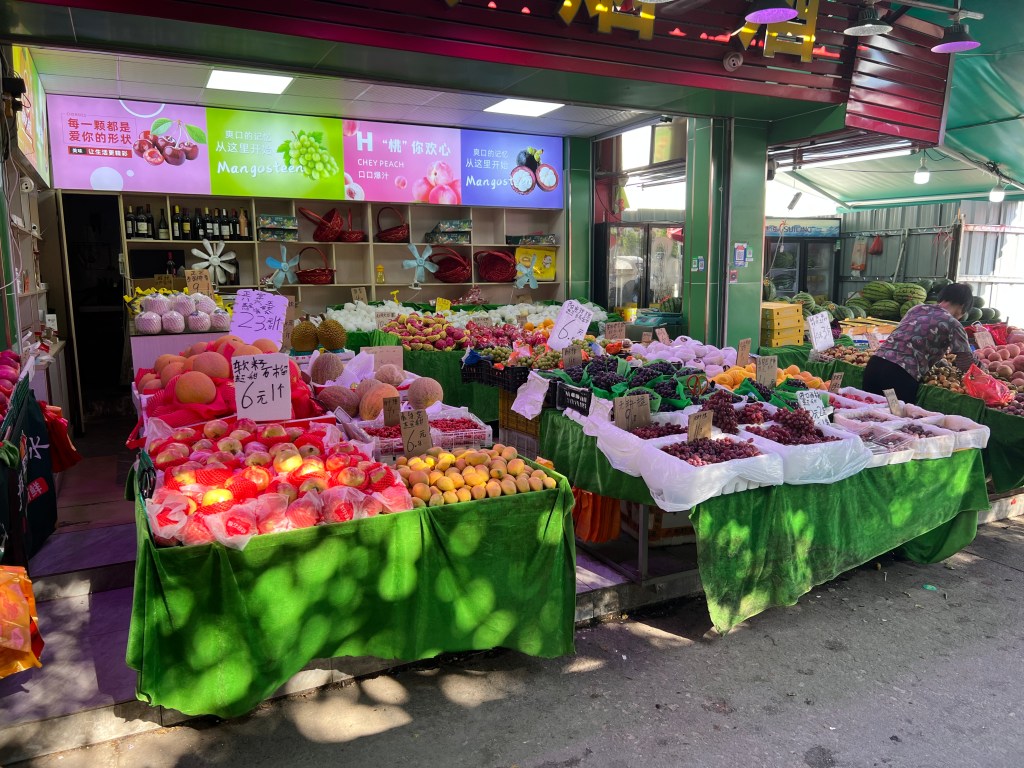
We wander into a market street, an open-air alley flanked by stalls selling fresh and cooked produce. Pomelos are in season at this time. We purchase two fairly hefty ones.
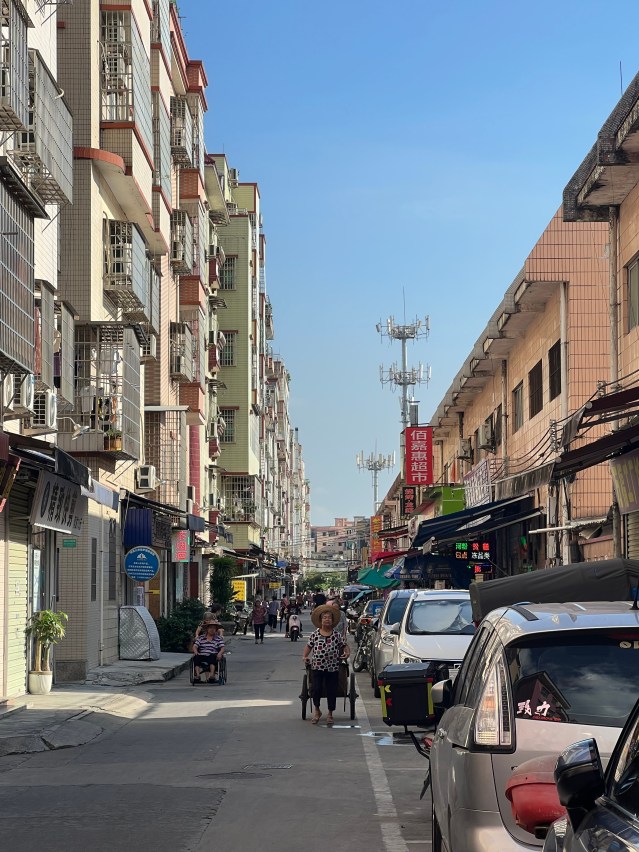
What lies in store today? Travel to Foshan, an hour away by car but very much part of greater Guangzhou. Three nights in a good hotel await us.
It is hot, humid, and the air is dusty (polluted is the official term I imagine).
Foshan’s Swissotel is a bump-up from last night. They upgrade us to a room on the 46th floor. Maybe they’ve been upgrading everyone. The hotel doesn’t feel crowded. Lifts take little time to arrive and they are almost always empty.
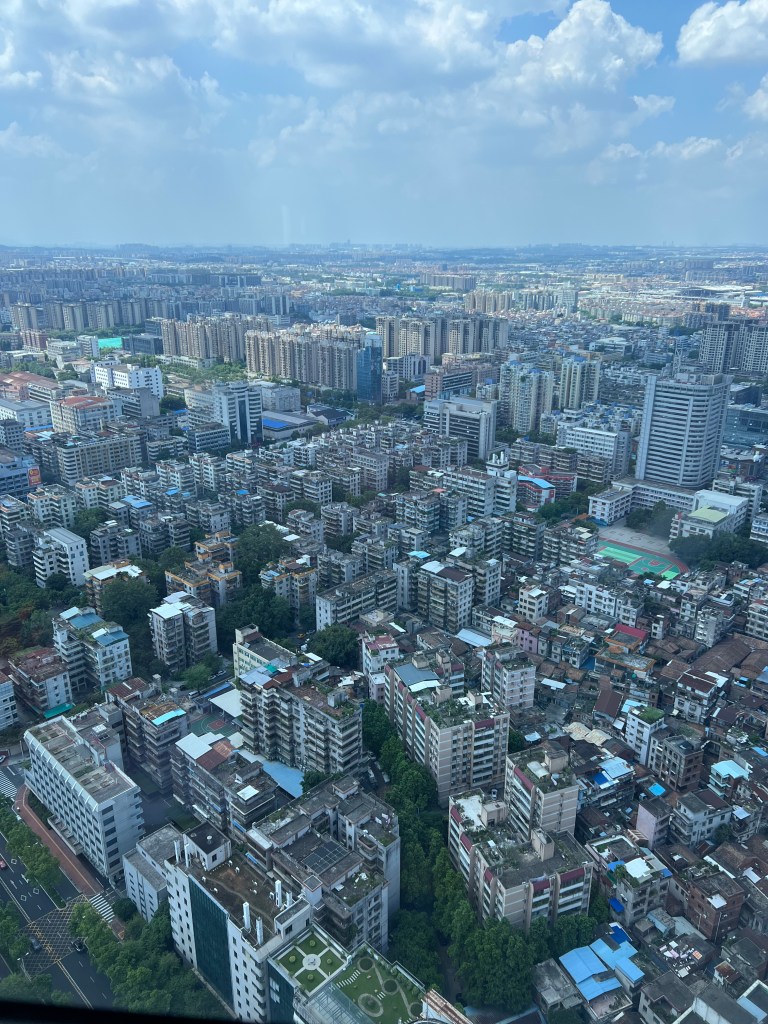


We park our luggage and go exploring. There is a lot to see. We have no choice but to ignore the oppressive afternoon heat and humidity. Cooler weather won’t arrive for another two to three weeks.
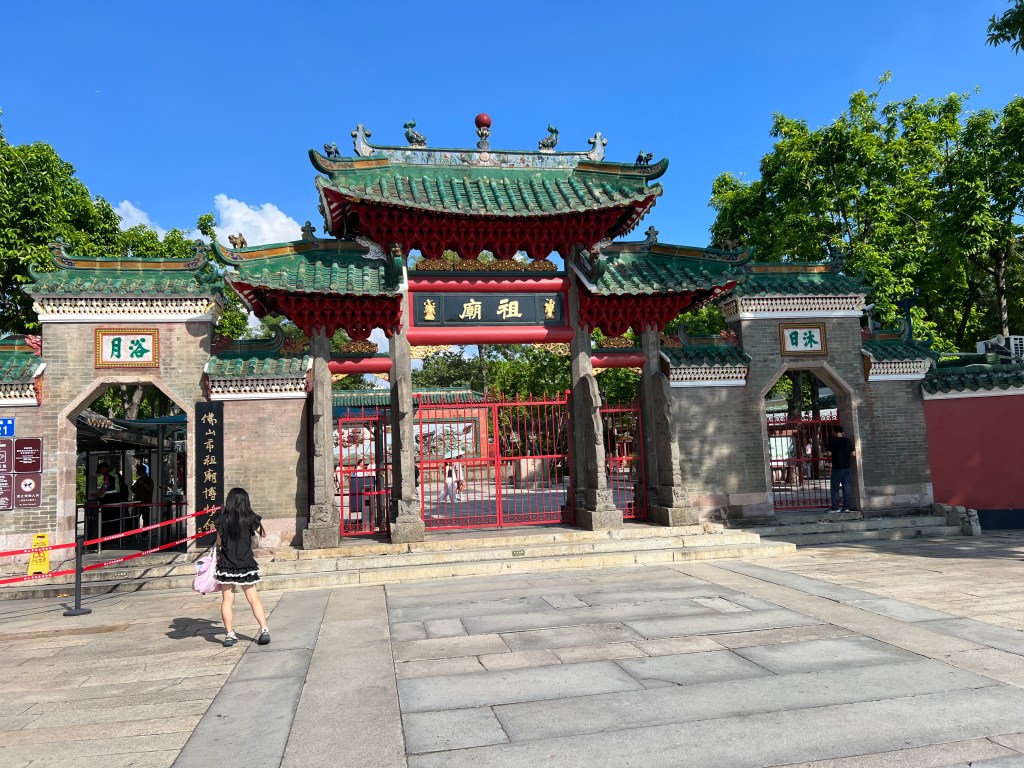
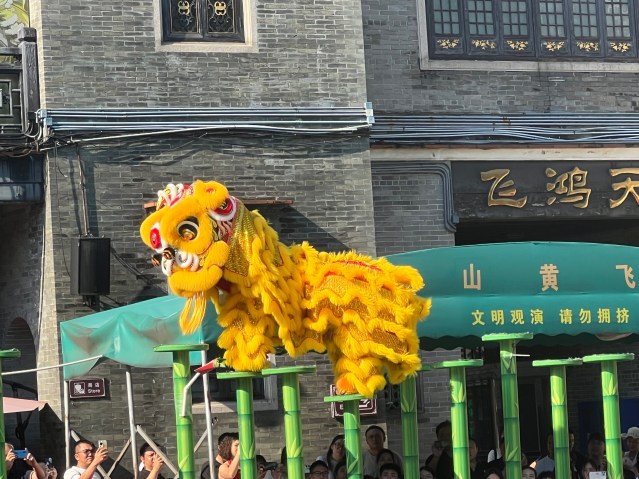
There is a large temple complex nearby and it is attracting people. I can hear drums and cymbals. We obtain tickets; at least Bock does. A venerated old person, all I need to gain free entry to such places is show my passport for proof of age. We follow the drumbeats to a square in which an energetic lion dance is in progress. Two people covered by the iconic lion costume I’ve seen in Melbourne and Singapore perform an acrobatic routine atop vertical poles planted in the ground. Another group, young men with sweat splashing off them, beat drums and clash cymbals. Impressive, above all for such high energy in the oppressive heat. Sweat’s pouring off me just standing still.
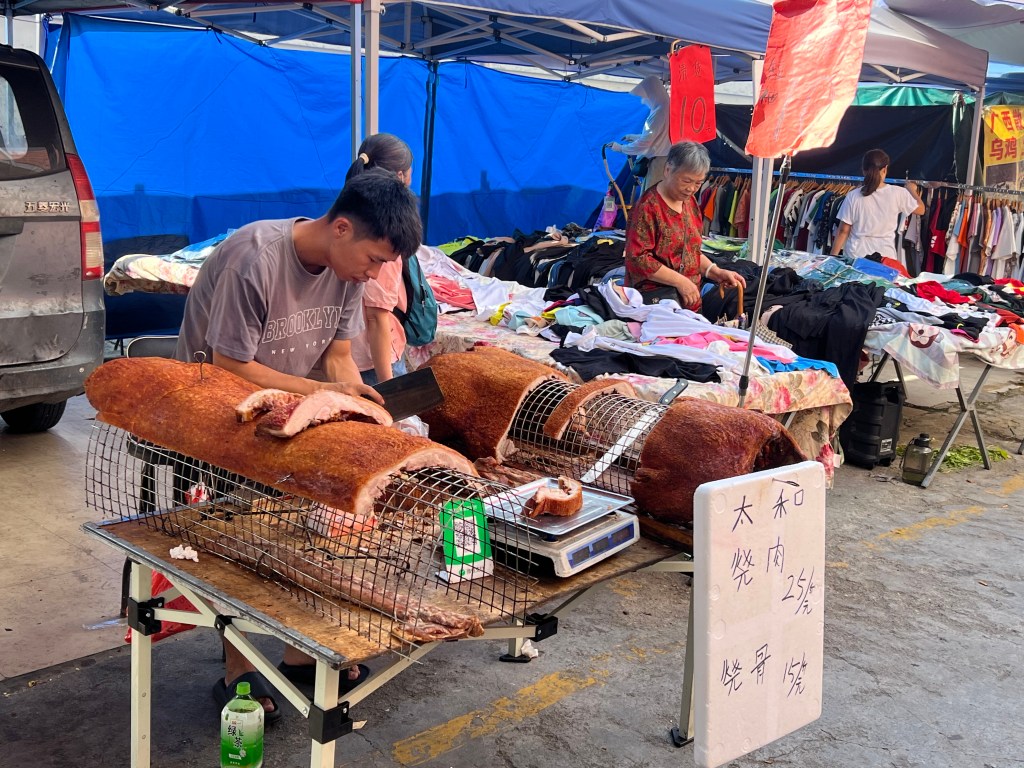
We leave the temple. Using Amap, China’s version of Google Maps which doesn’t work here, we find a night market gathering momentum. As we are going to discover throughout our visit, Guangzhou away from the skyscrapers and shopping malls is full of byroads and alleys crammed with interesting old buildings, most of them still functioning as homes or small businesses, eateries dominating. Most of this night market’s stalls are regular businesses operating out of permanent buildings. It is crowded despite the heat. I guess Saturday evening has brought out the locals.
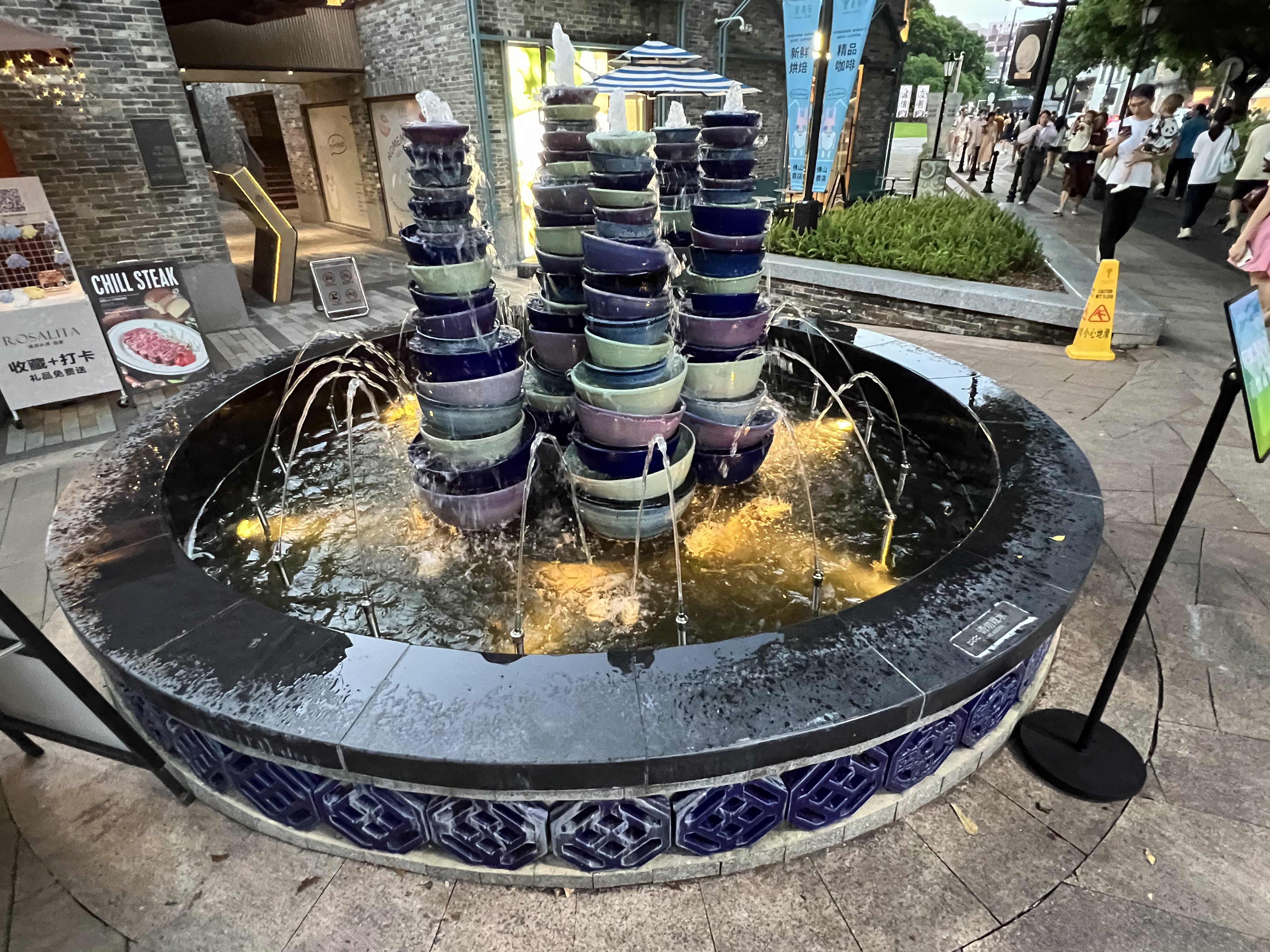
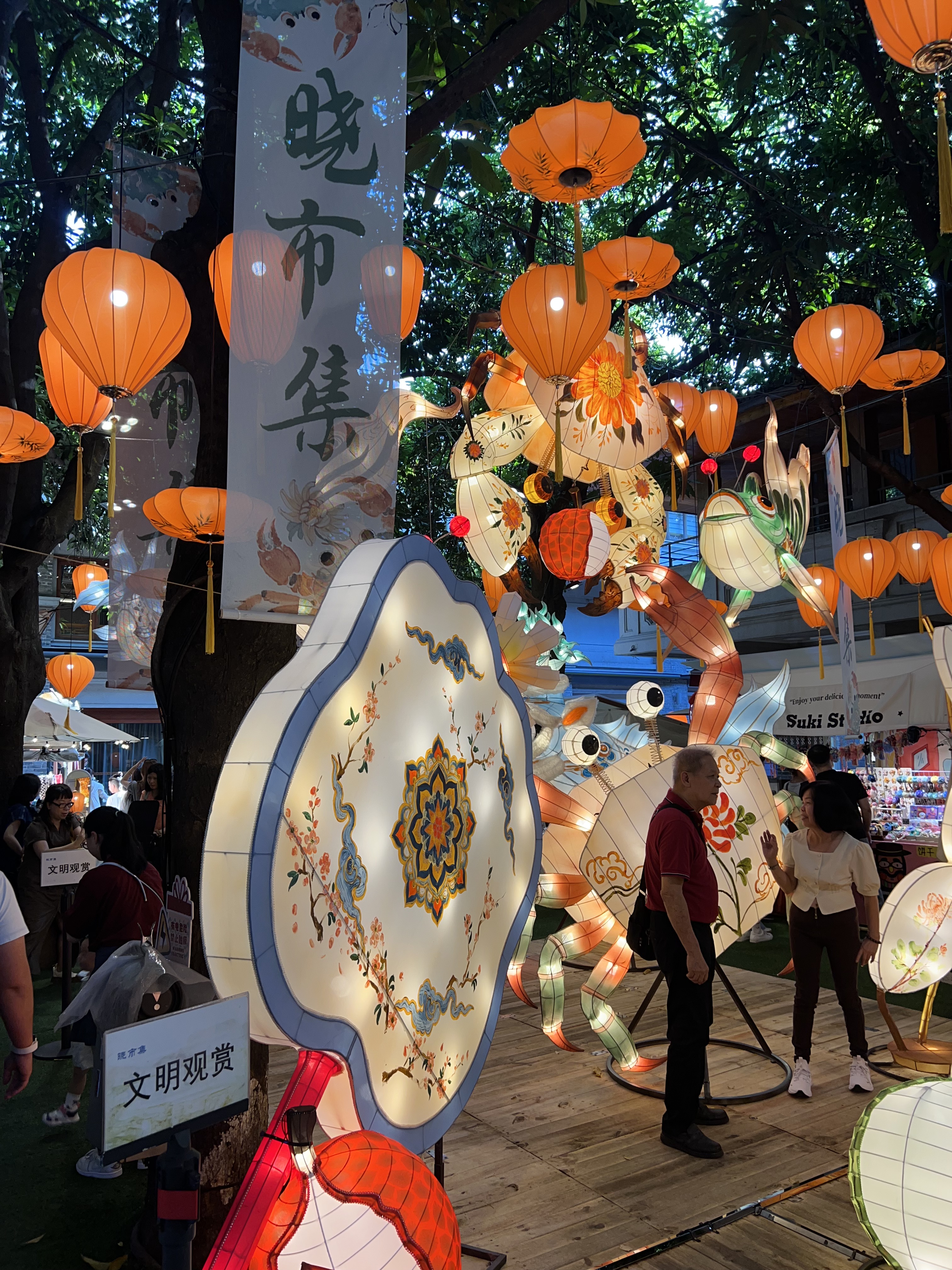

We leave the night market and wander into a shopping mall. I discover a shop selling chilli peanuts just like those I feasted on in Zhangjiajie earlier this year. I buy a bag. They are going to be enjoyed by just one person. Too hot for anyone else I think. They are my secret delight.
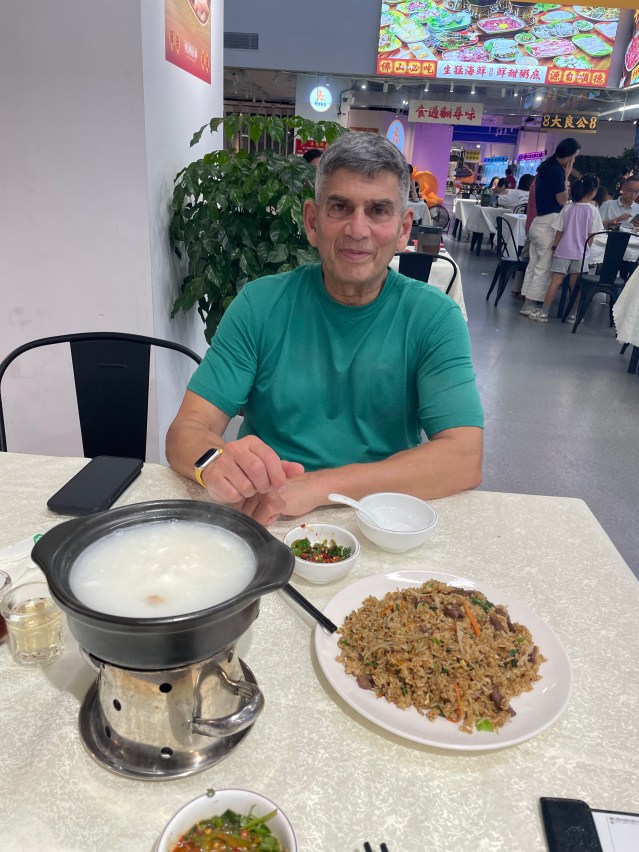
We find a restaurant that specialises in porridge hotpot. Not in the mood for porridge as an evening meal, I find they make a mean fried rice.
14 September
There is something about China that impresses me no end. It is not their culture and history, although they impress me too. Something else. Chinese people don’t give way to others unless they are forced to. There are just too many Chinese in China to allow someone right of way over you. You’d be waiting for ever. I have no problem with this attitude. They just go if they are not being physically impeded, if there is no obvious obstacle in front of them. They are not aggressive about it. No elbows, no violence, no arguments. If someone doesn’t fill the space in front of them while they can, someone else will fill it. If they are not first, it is not a problem. They’ll accept second or third and continue on their way.
Every Chinese has an unbroken legacy going deep into a rich past characterised by ritual and invention and art and thinking. Turbulence too. But that’s true about everyone, me included. That life was cheap in days gone by is universal, not specific to a set of countries or cultures. Brutality is not a distinguishing feature of only some old cultures. I can imagine Chinese people laughing at Trump’s shenanigans. They have survived a lot worse. Trump is no more significant than a blip.
The western system of etiquette and manners is a facade. Westerners are often ill-disposed to the recipients of their courtesy. China is different. Westerners who love China experience a revelation. It’s not at all about lifting the Chinese to be more like westerners with their outward lofty manners, their religion and its moral codes that in practice are steeped in hypocrisy. They put to bed all that rubbish when they realise that they need to emulate the Chinese, not convert them. The people of China are the most down to earth I have encountered. They don’t try to impress, and they are not interested in being impressed. What a great outlook that is.
Belonging to a coloured minority has a secret strength. I didn’t inherit that toxic illusion of racial superiority. So I am not, even unconsciously, disposed to looking down on people because of their race. This is my strength. I look at everyone as being fundamentally the same as me.
China is being nothing but good experiences. Everyone is friendly, accommodating, and always willing to help. I encounter one or two exceptions, but they don’t undermine this perception.
The good things about a person do not nullify the bad things. A racist who goes to church and is faithful to his wife is still an ignorant racist. Make no mistake. I’ll say it again, it is the worst things you do that define you, not the best. Make it a blanket rule. As a resident of Australia, I enjoy the trappings of a wealthy society. That defines me as much as my compassion. I must place all my cards on the table, because I am defined by the entire pack, not just a select few.
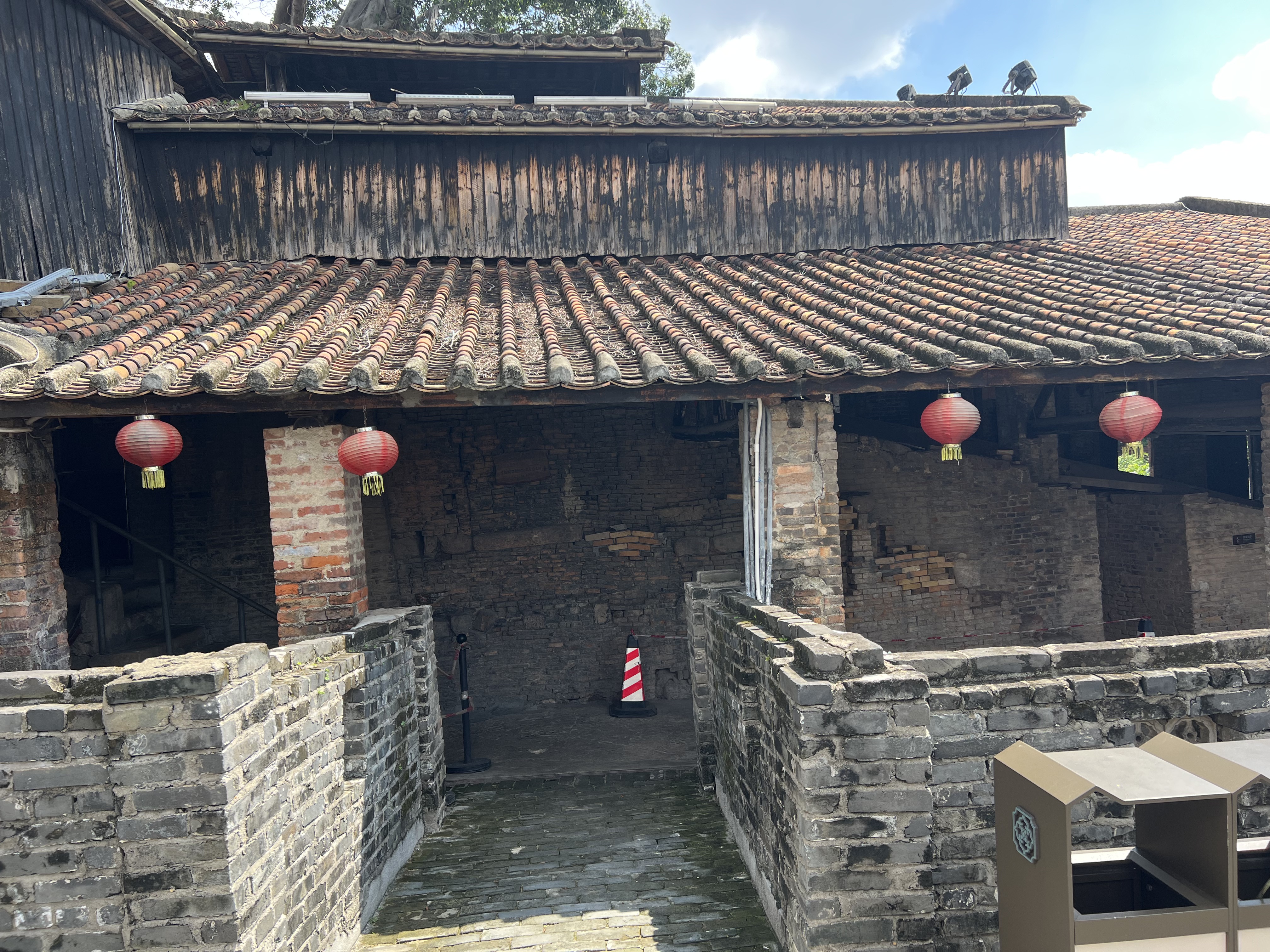
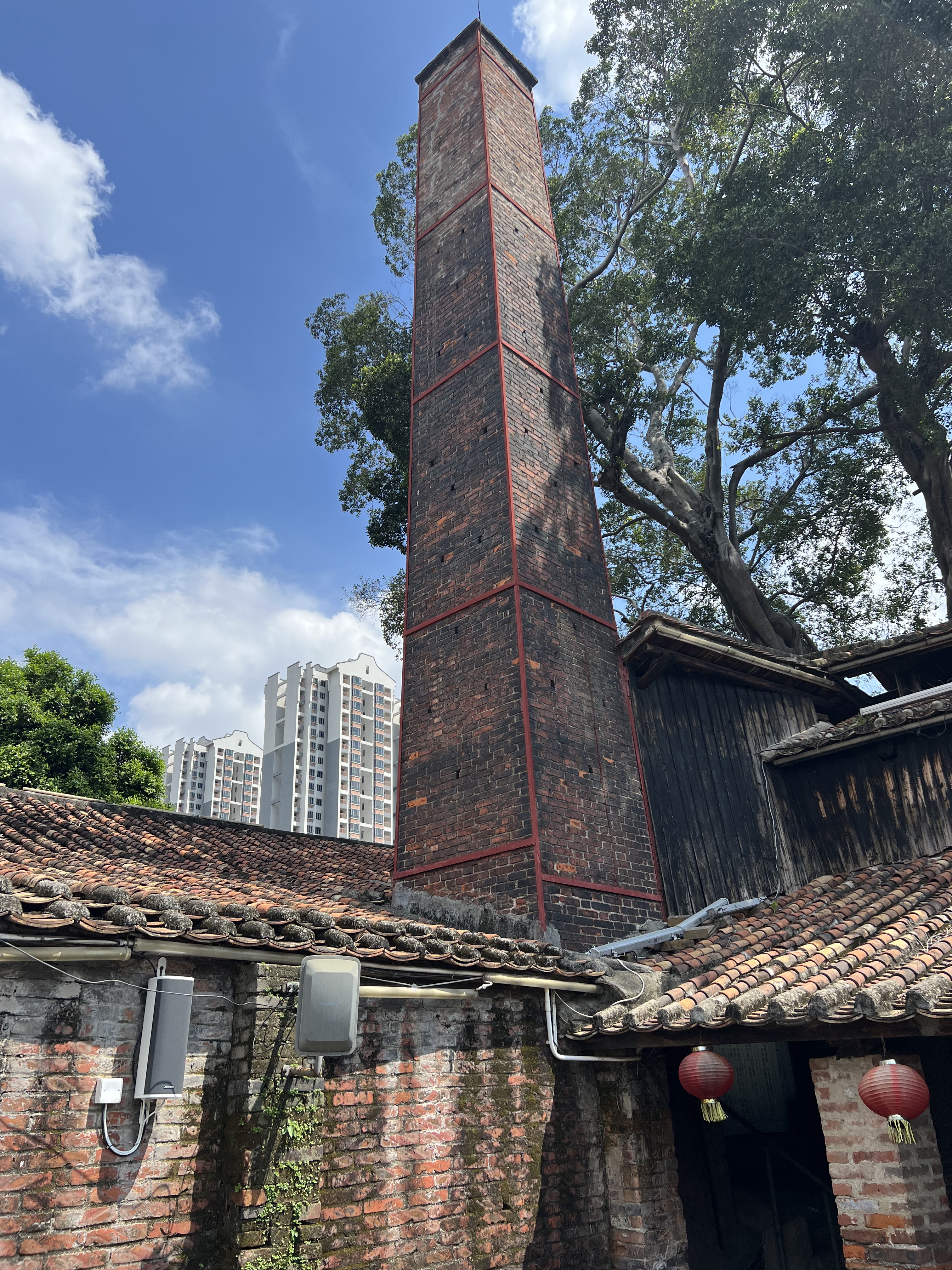
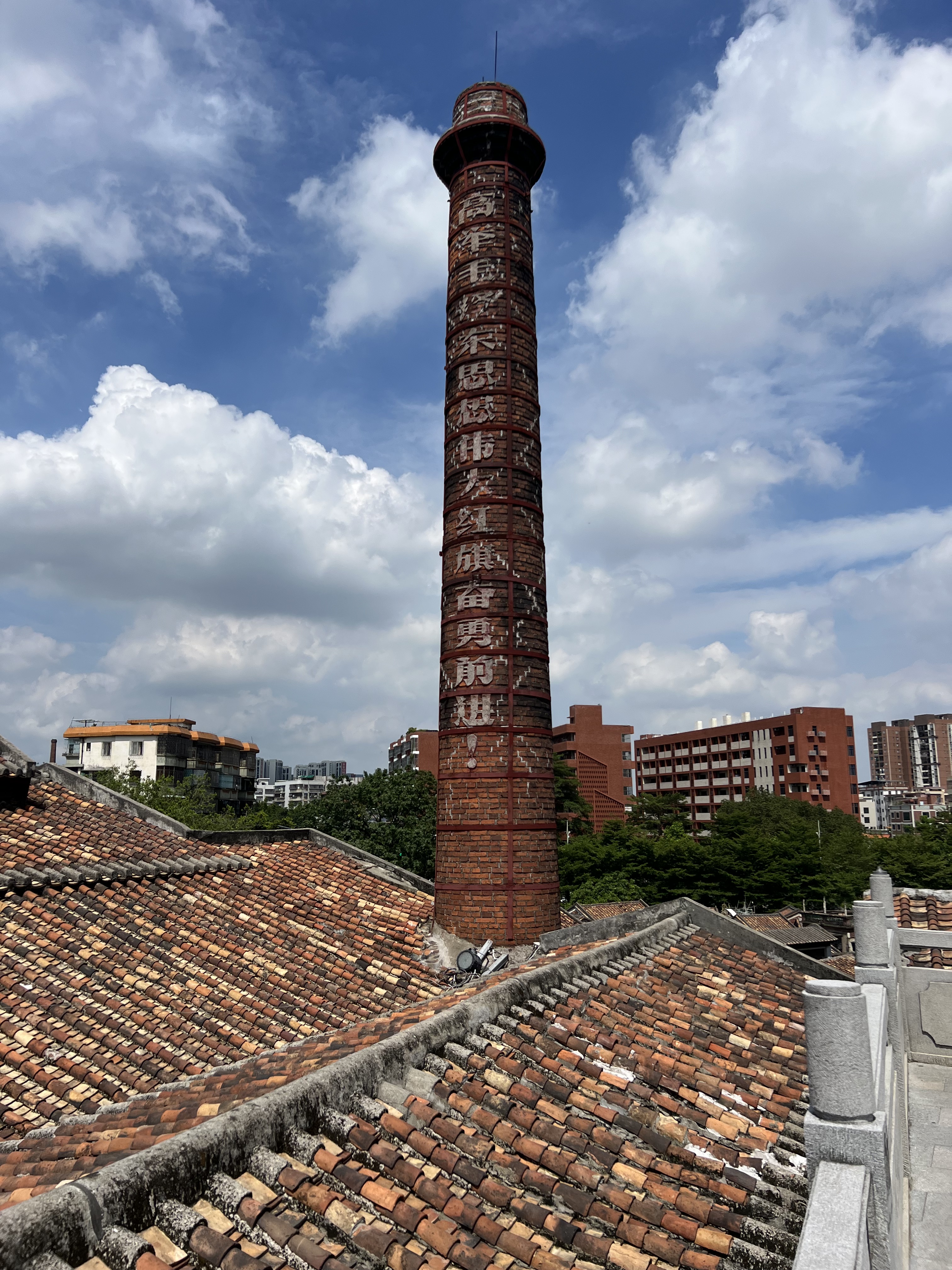
Today we decide to visit the ancient Nanfeng kiln. The kiln, built in 1506, is still in use. We use the local DiDi to take us there. DiDi is cheap in China. And easy to use. You need to use the app embedded in Alipay or WeChat. You send out the request for a ride to a destination, DiDi drivers signal their availability with a quoted amount and their cars’ description and registration. You accept one of them. The app pinpoints your location to the driver and tracks the car so that you can see it drawing closer on the map. The most we pay is around $22 AUD for an hour’s journey.
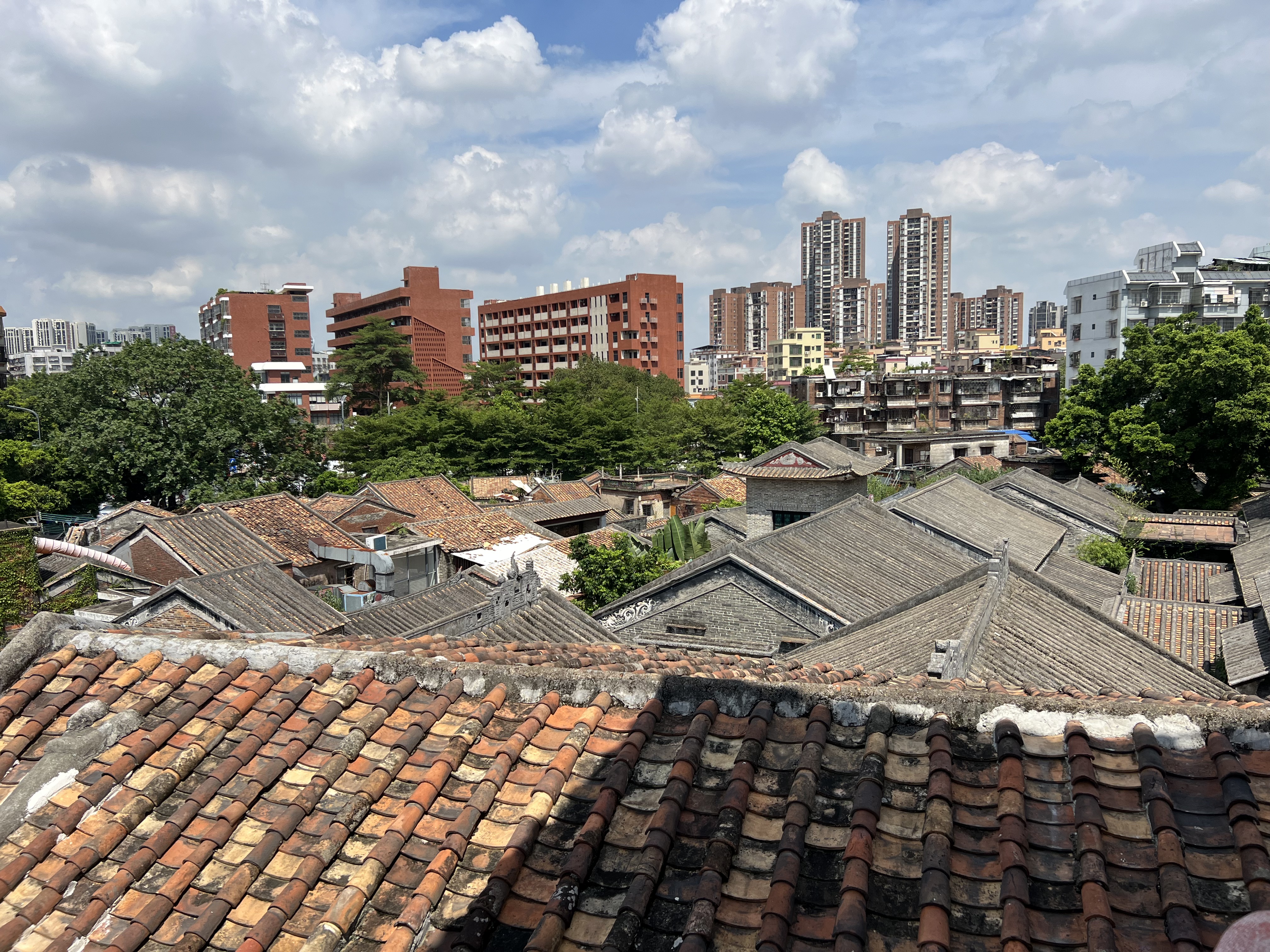
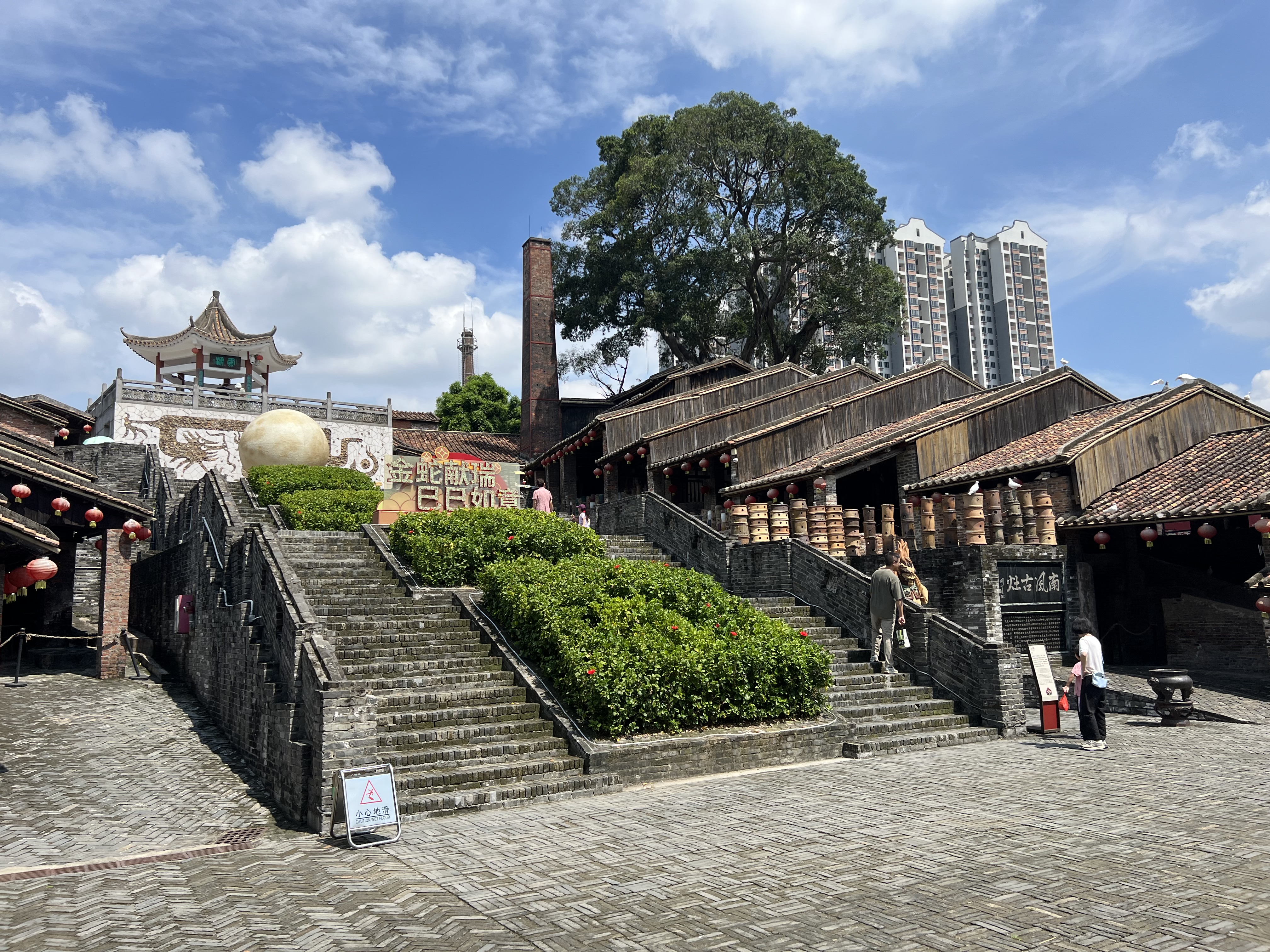
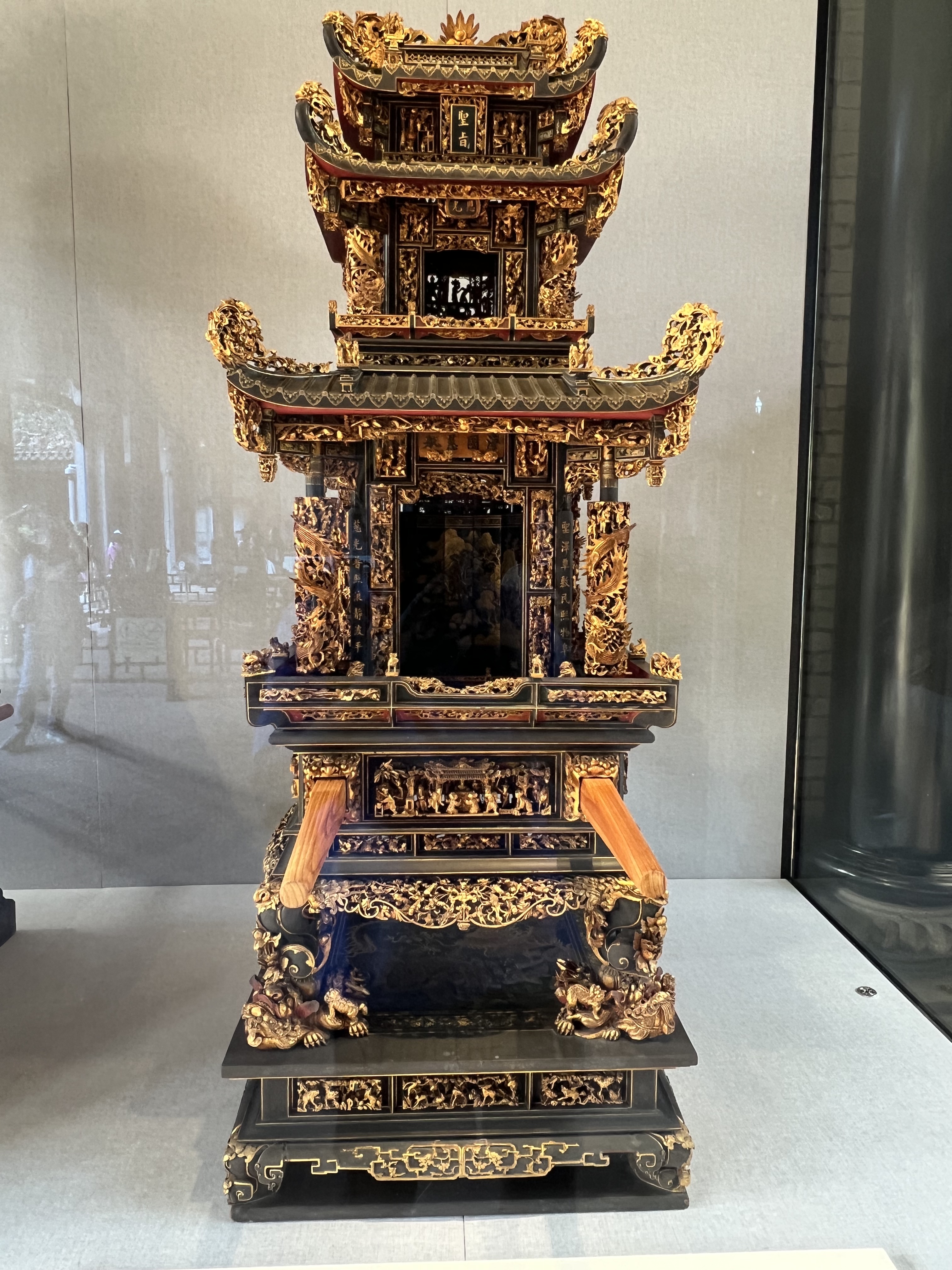
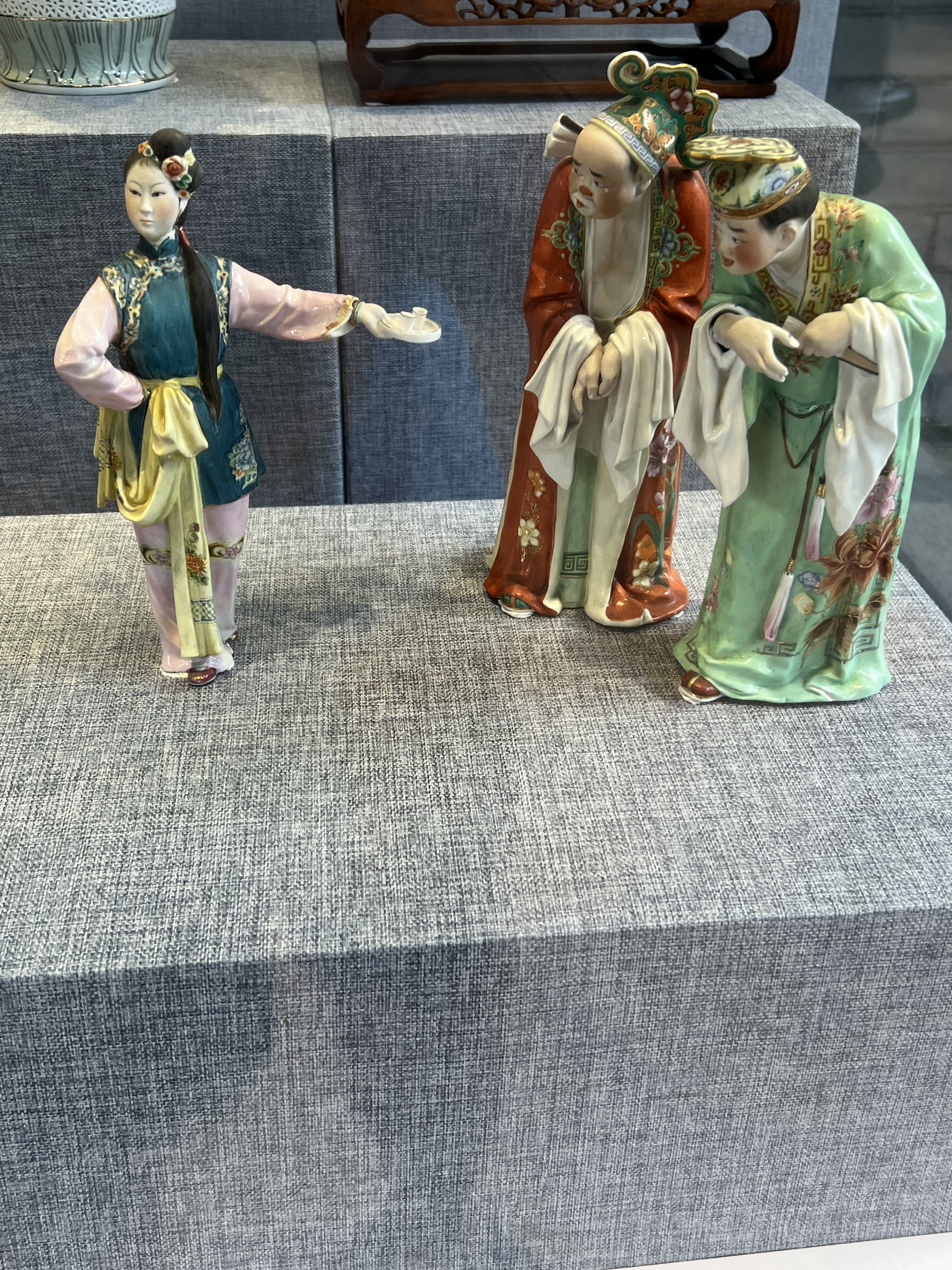
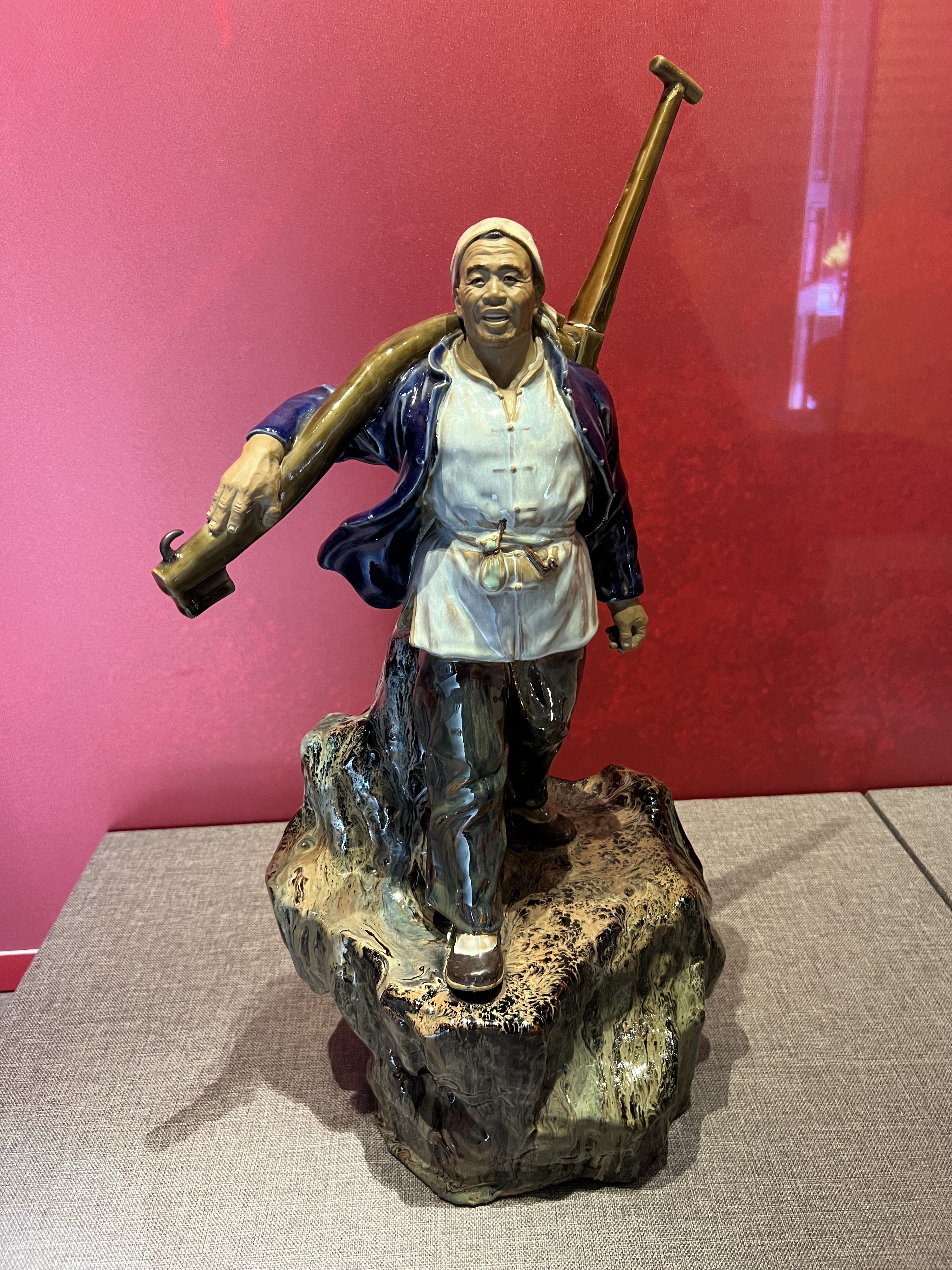
The Nanfeng kiln is still in use, fired up every two months to produce a variety of ceramics sold in shops situated within the kiln precinct. The kiln these days is a complex of alleys, shops, cafes, plazas and a theatre. Plus the kiln itself. The shops sell mostly tourist kitsch. Some of the ceramics are nice, especially the more rugged ones fired in the kiln. They cost significantly more than those produced in modern facilities.
We wander along alleys, some of which take us into the ancient buildings surrounding the kiln. We finish our tour in the theatre, where a we are going to be treated to a show.
The show commences with a juggler who gets the kids going. Kids are the same, all over the world. Colour, movement and noise bring them to their feet. Next, a masked, face-changing dancer arrives on stage. His performance is impressive. Fit and agile, he moves like the acrobatic warriors of kung fu movies. Every few seconds his mask changes shape and colour. At the end, he removes his mask to reveal a handsome face, almost non-Chinese, although Bock assures me he is Chinese. The show quietens down with a pottery demonstration on a manually operated wheel. The potter, an old man with plenty of skill turns out a perfectly symmetrical vase. Like all who are highly skilled, he makes it look easy. A sale (of sorts) ensues of calligraphy produced on stage by another skilled old man. We buy a banner which says, roughly, it is better to give than receive. It is large, and we have not yet found where to display it in our home.
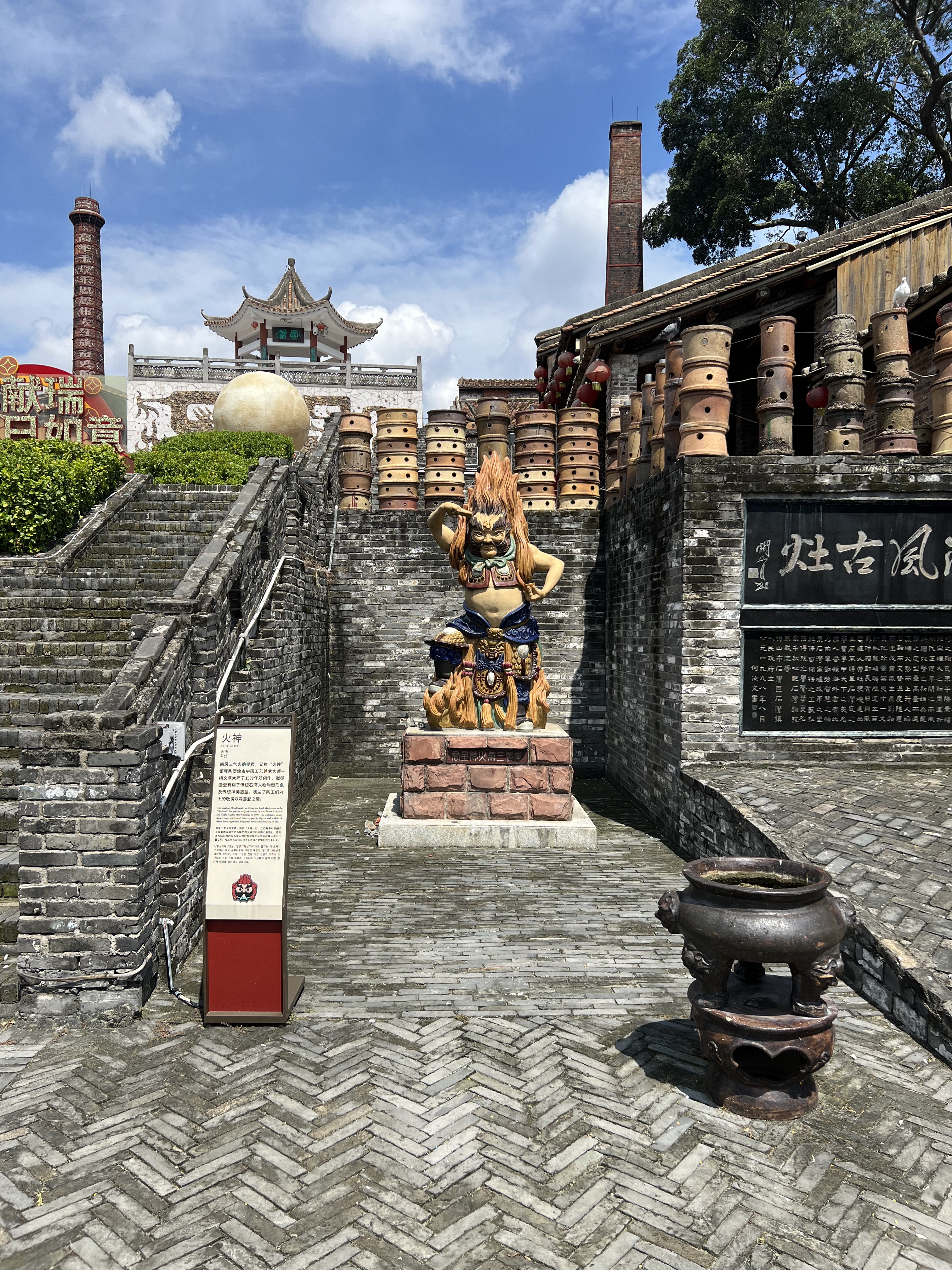
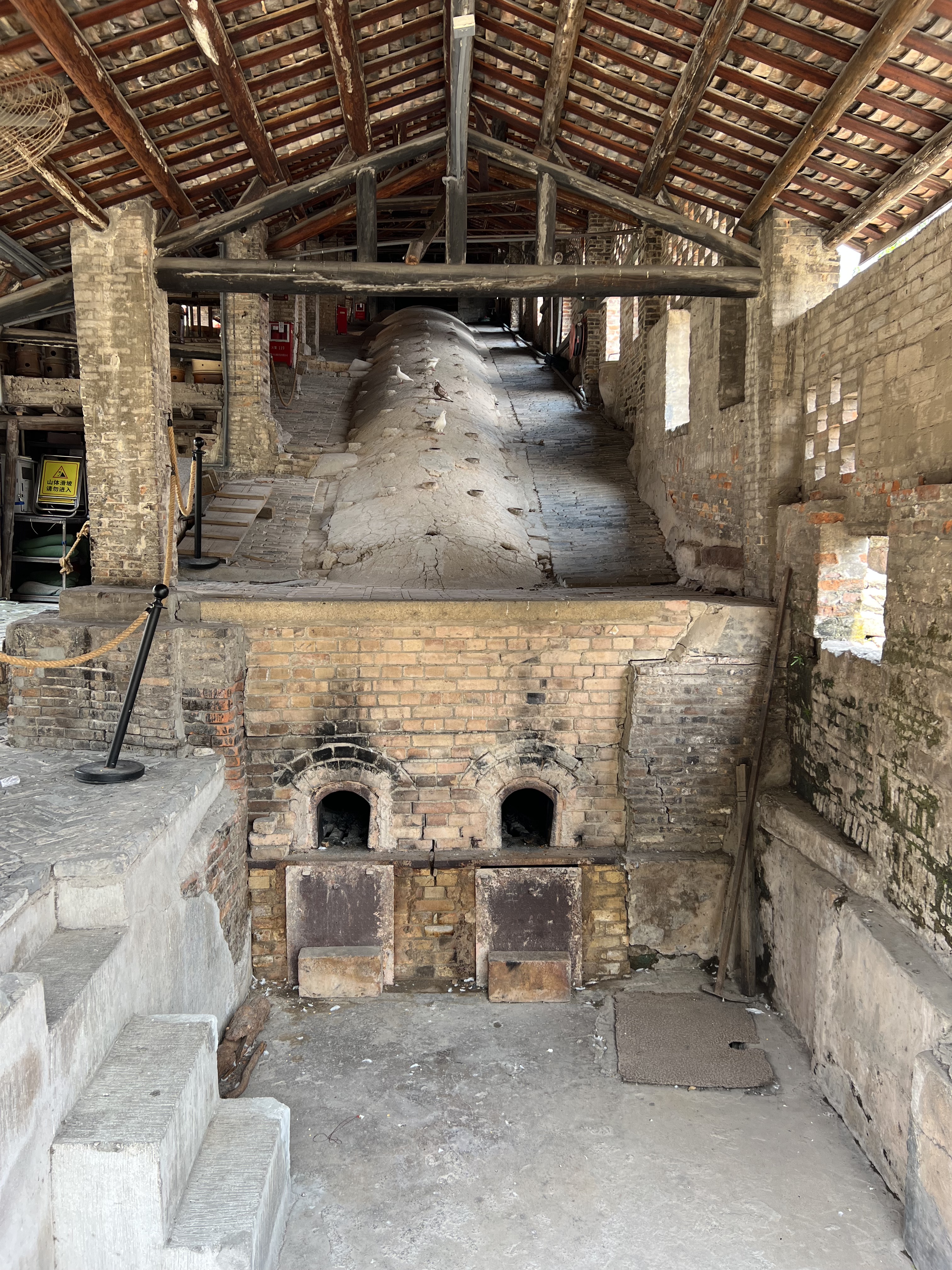
It is lunchtime when we leave the kiln. Bock is looking for a claypot rice restaurant that’s been given a high rating in a blog. We find it and enjoy a good quality cheap meal. Something I have already begun to discover in Guangzhou. No matter where we eat, the noodles are perfectly cooked (it is so easy to overcook noodles).
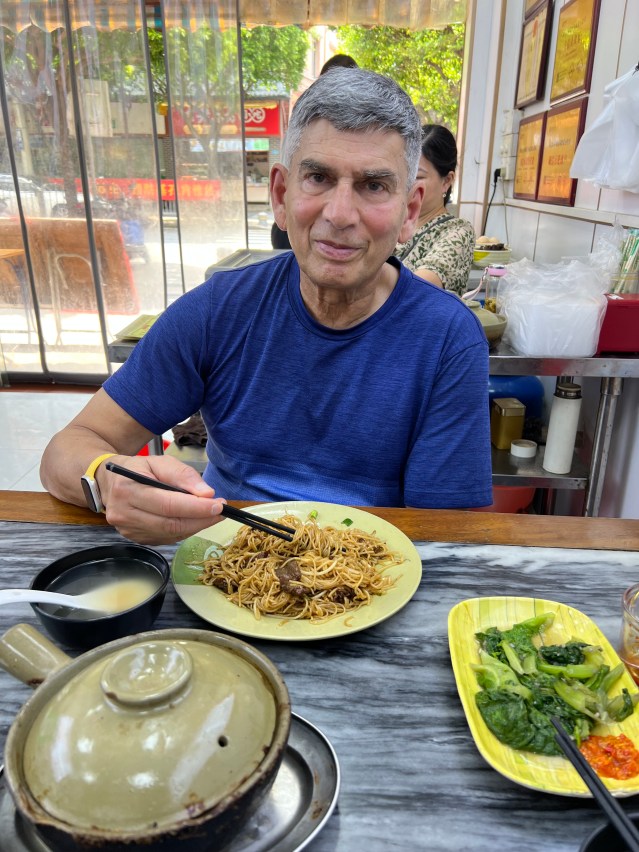
We return to our hotel and decide to have a massage. The Swissotel rates are exorbitant so we search for something in the neighbourhood. We find one in a building across the road from the hotel. They offer a 90-minute massage and cupping for two people for a little over $100AUD. My masseur is a slight middle-aged woman who turns out to possess the strength of ten men. The bruising on my back is fearful to behold, but I float out of there, light and loose. We spend the evening loafing in lanes and alleys, admiring the buildings and, later, looking for a restaurant recommended by bloggers. We find it courtesy of a large crowd waiting for their number to be called. Forty minutes later we are taken to our table. After a great dinner we Didi to our hotel.
15 September
I detect slight soreness from yesterday’s massage. but it’s not restrictive in any way. Still, I will not be putting myself through that sort of torture again.
Today we are going to Shunde, the birthplace of Cantonese cuisine. Ah yes, this trip is about food, more than anything else. Make no mistake. And shopping. But shopping for what? Food. Snacks. What’s in all this for me? Not very much, apart from the joy of being among people in a new place, exchanging looks and smiles and waves, and of course travelling with Bock which is always a joyful experience. There is also a break from home and normal day to day life, although I love home and life in Melbourne. Good in every direction. I am blessed.
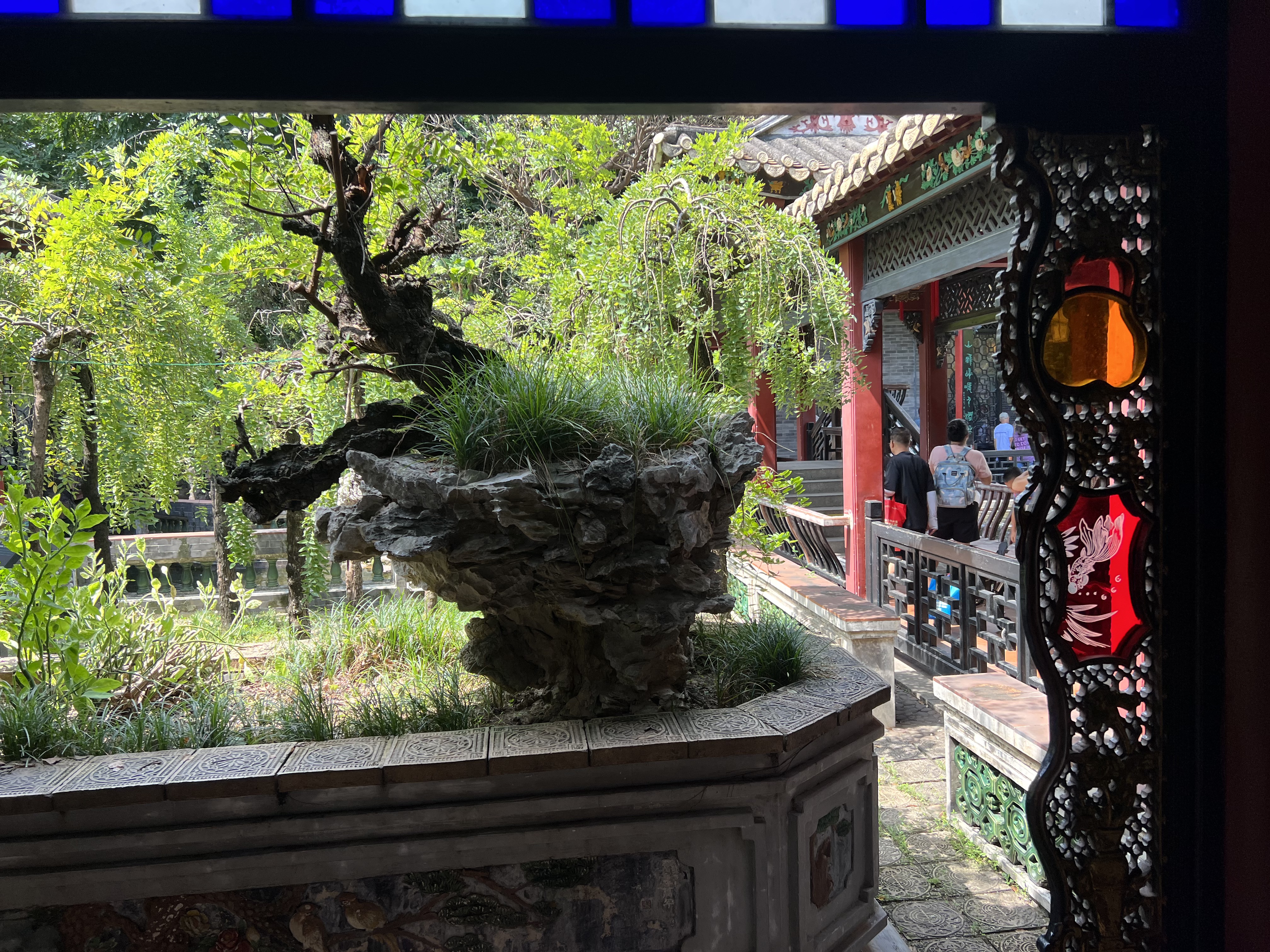
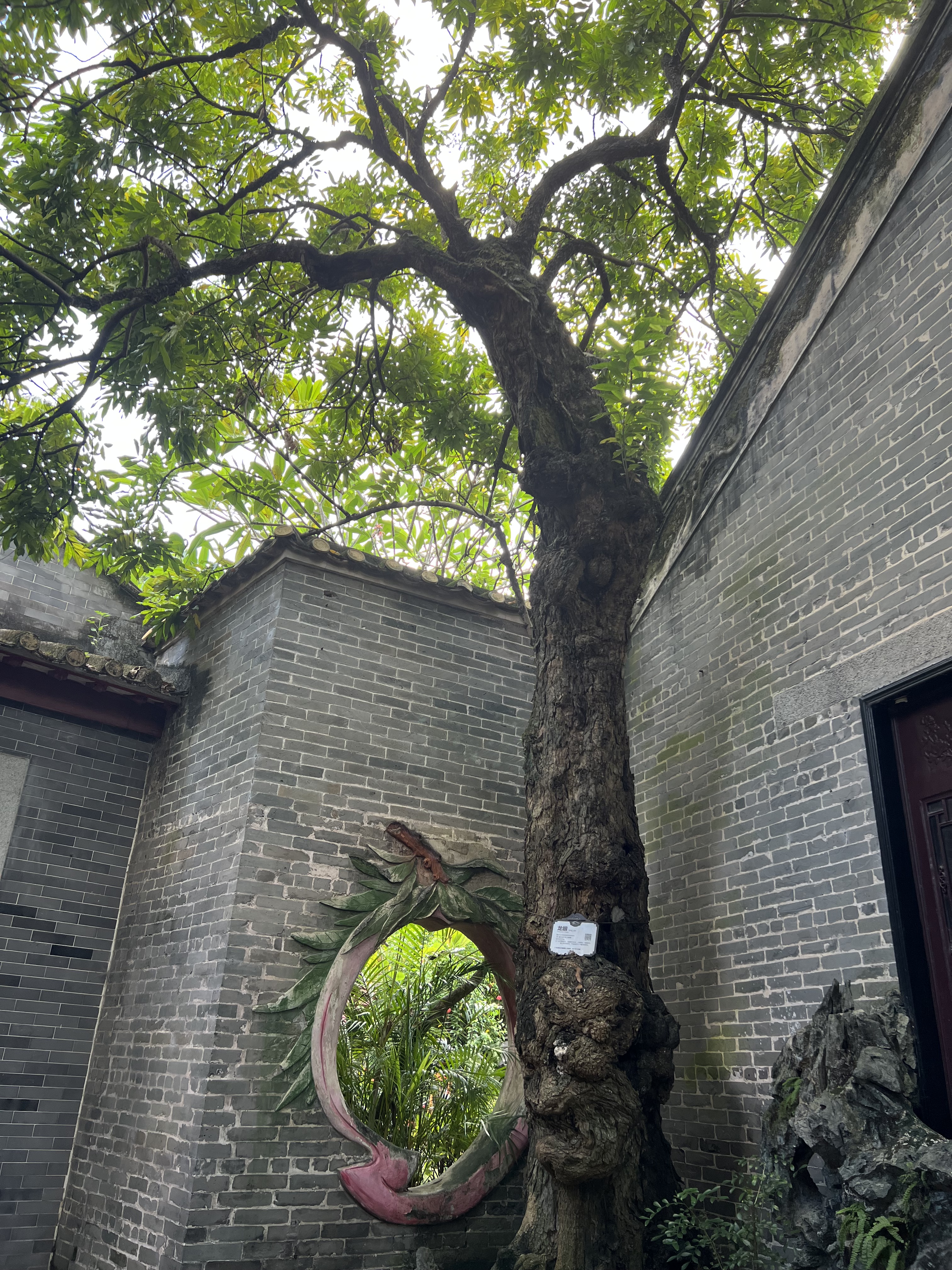
Shunde is a district so big it is not possible to tell where it begins and ends. I see signs on shops saying we are in Shunde barely minutes into our journey, but it takes us another half-hour to get to our first destination. Before sampling Shunde’s culinary delights we are visiting Qinghui Park. Oh, a park, I think, immediately summoning a vision of lawns, manicured garden beds, exotic trees, lakes, fountains, and most of all a network of paths for a substantial morning walk. Qinghui park, also called Qinghui Garden, has all those things crammed into a small enclosure that does not facilitate walking as an exercise, unless you do many circuits of the paths, not really possible because there are many visitors about. No matter, there is a lot to see. The garden has many cottages and pavilions, all connected by paths that take you along waterways and lakes, swollen with fish and in one of them, a congestion of waterlilies. We stop at many fruit trees, some hundreds of years old. The complex began as the home of a Ming Dynasty scholar. Later, a Qing Dynasty scholar bought it. The park has elements of both dynasties.
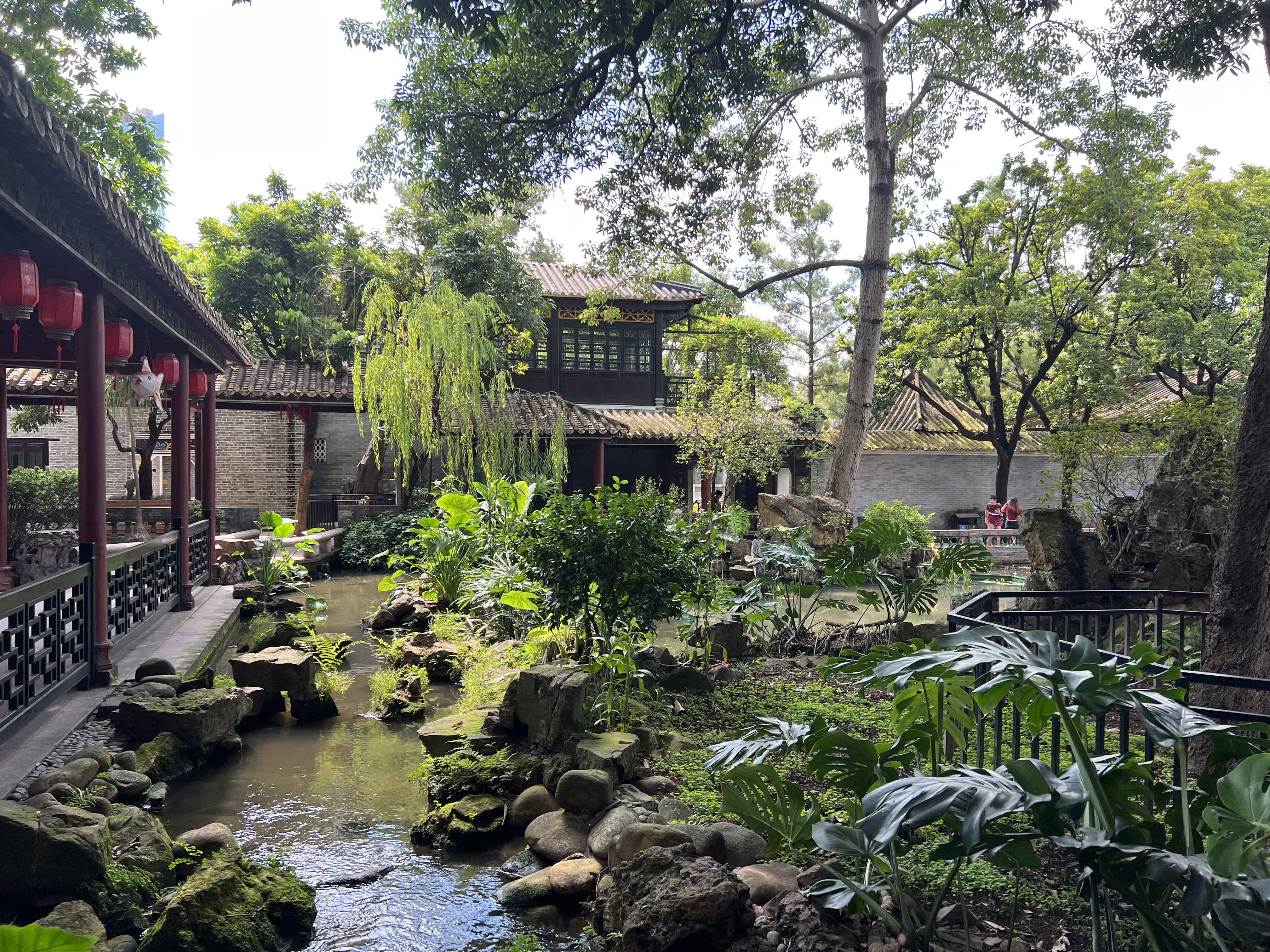
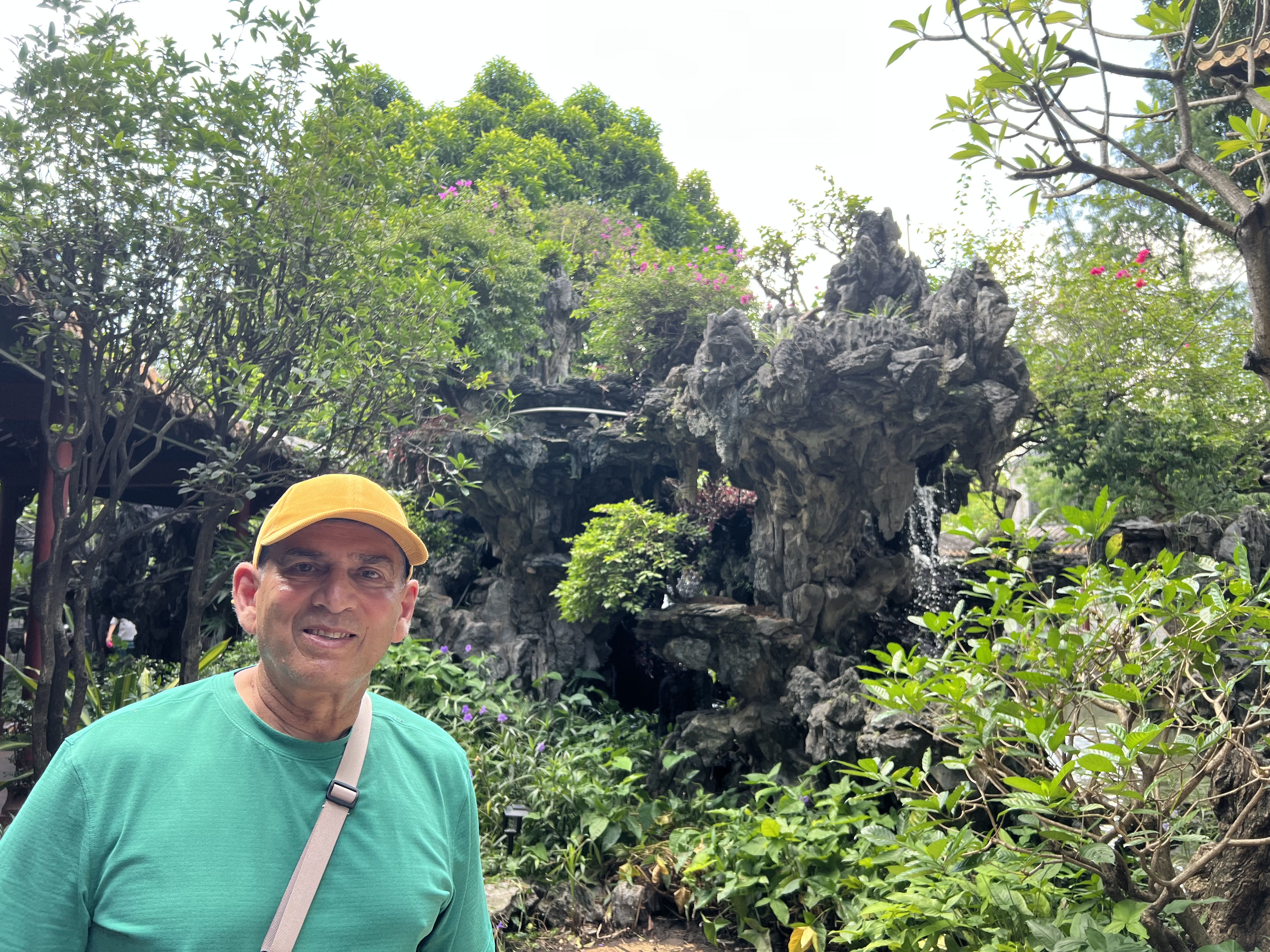
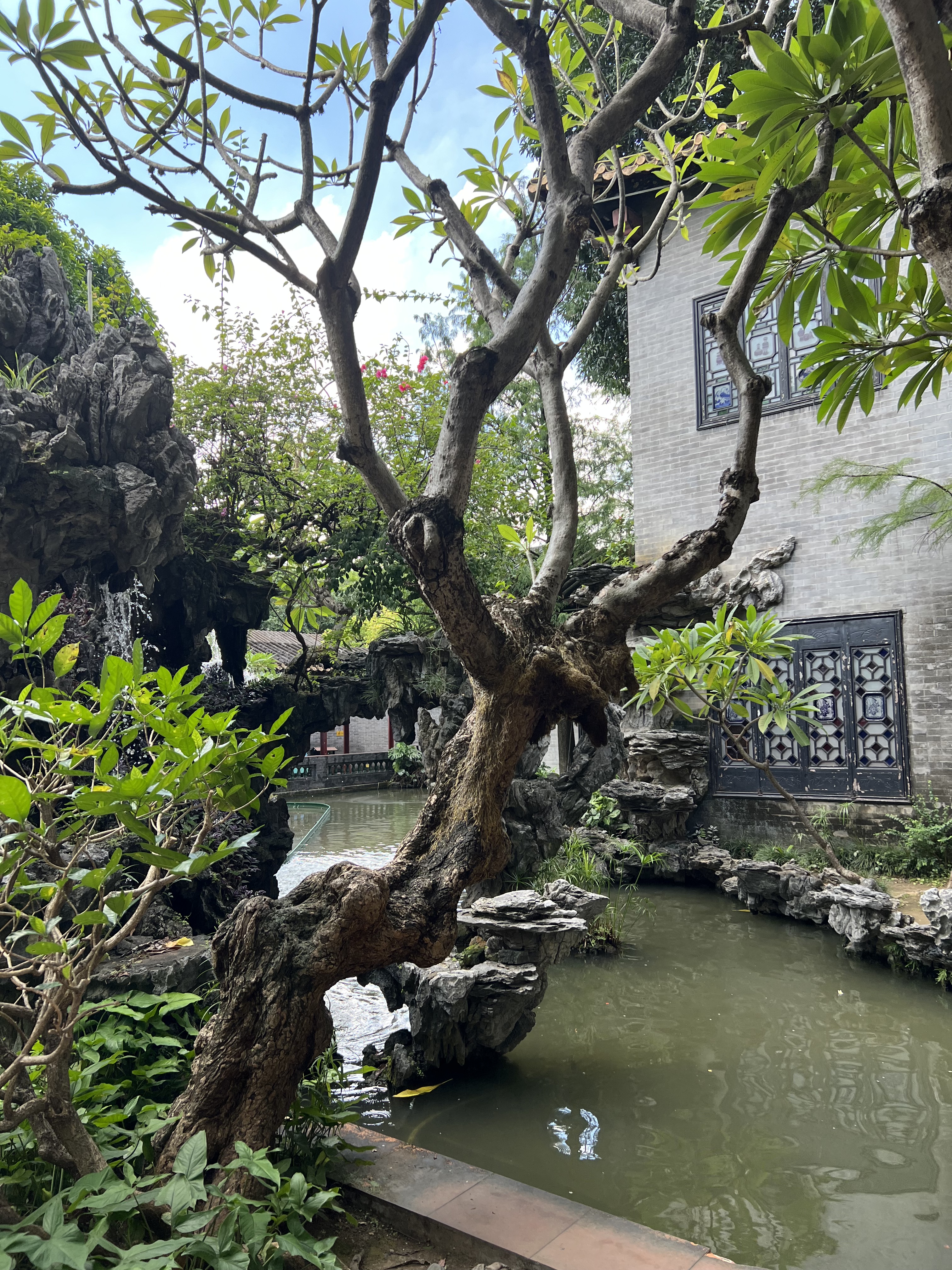
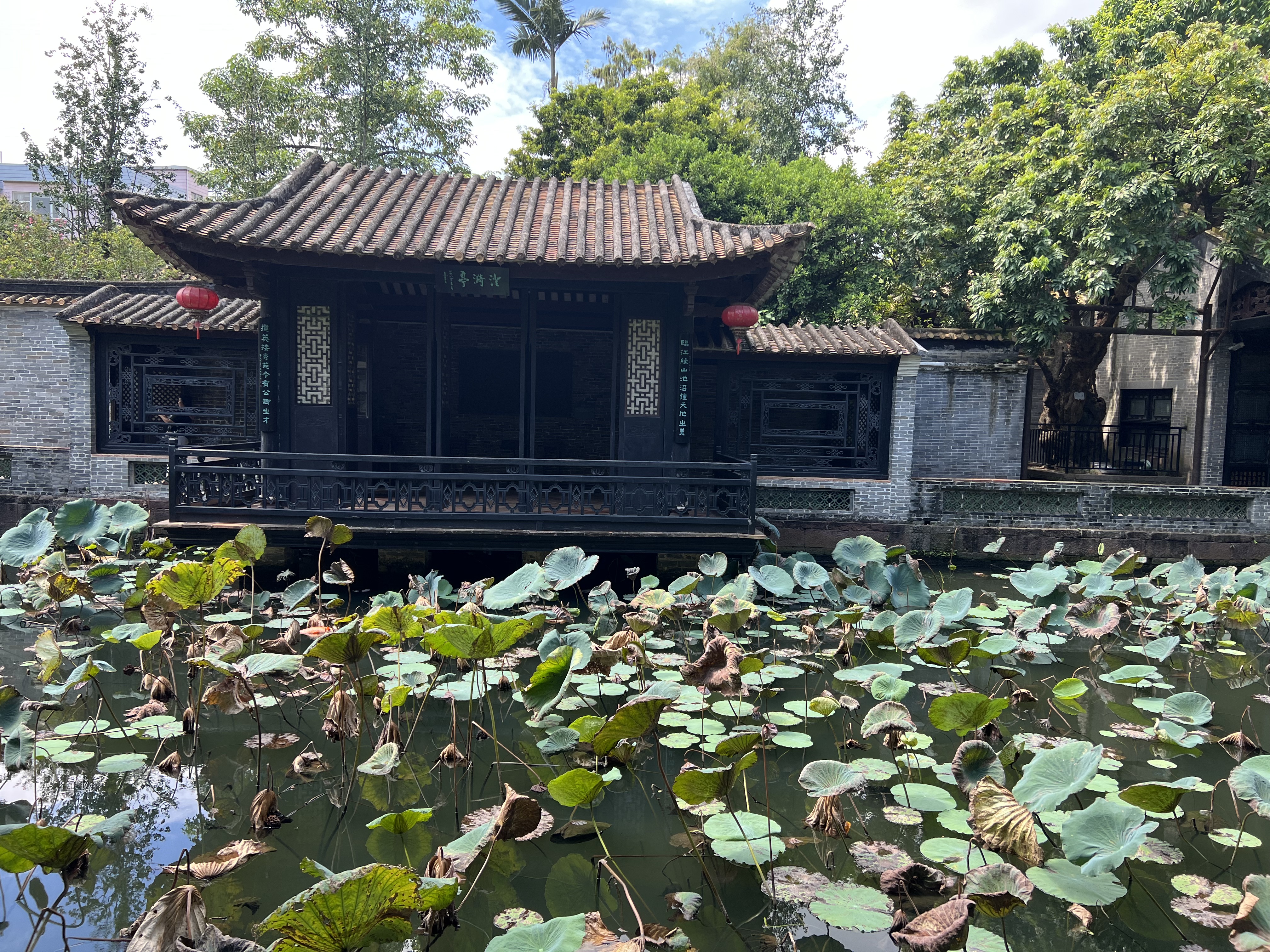
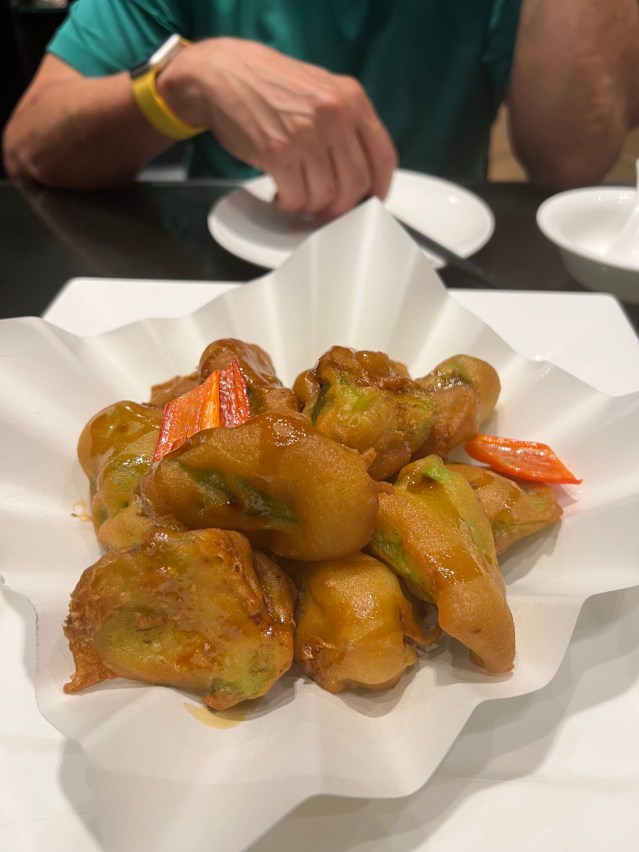
From Qinghui Park we take a DiDi to a restaurant recommended by a food blog for its roast goose. Large, cavernous, and mostly empty because it is early, the restaurant provides large, cheap servings of everything. I’m no roast goose gourmet. After that we visit a shopping precinct, stopping on the way at a hairdresser for Bock to have a haircut. It is lovely to escape the heat for an hour. For dinner we go to another recommended restaurant, this one a bit lavish, upmarket and expensive. We score highly a dish of eggplant deep-fried in batter.
In bed I introspect. What is it exactly I owe myself. Become better without the pressure of expectations of myself. Write because of the joy of writing, the fulfilment and satisfaction that come with improvement, and nothing more. The joy of learning and getting better doesn’t need additional motivation. An attempt to add a garnish of plaudits and fame contaminates the joy. This is our last night in Foshan. Tomorrow we hook up with Bock’s family.
16 September
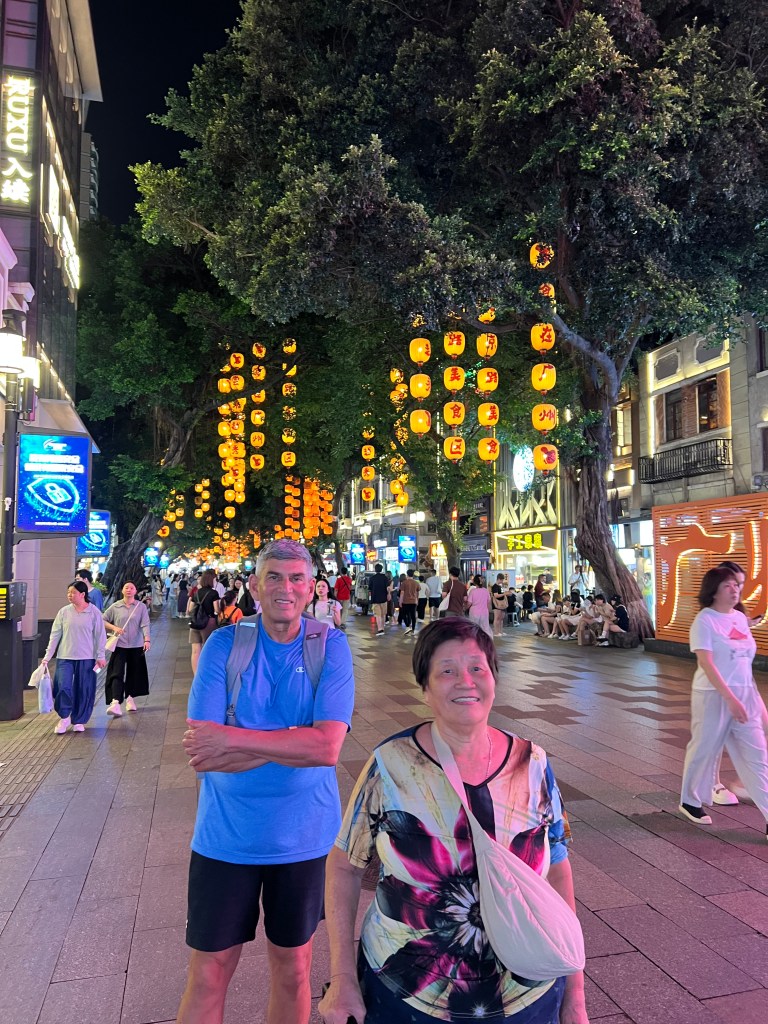
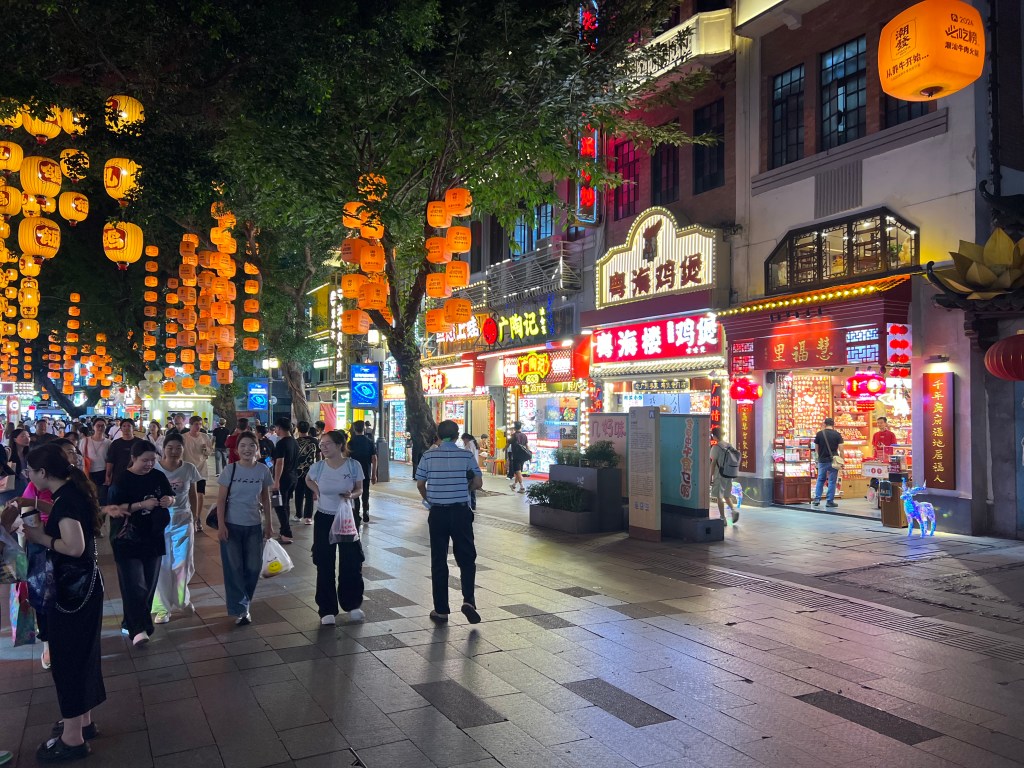
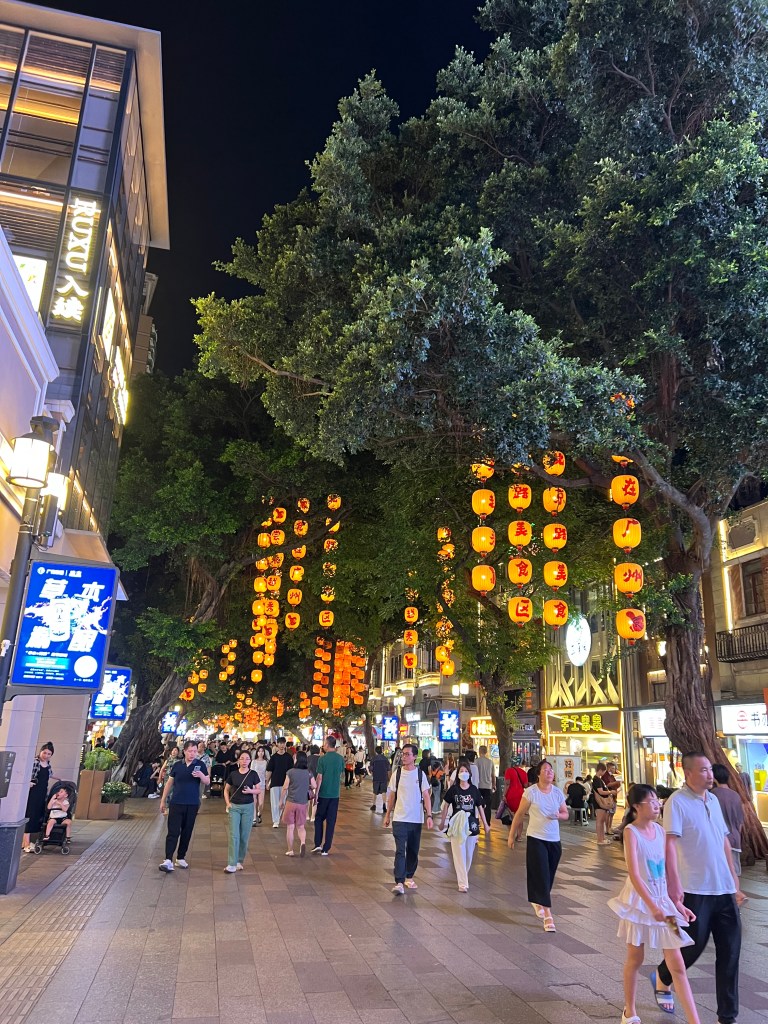
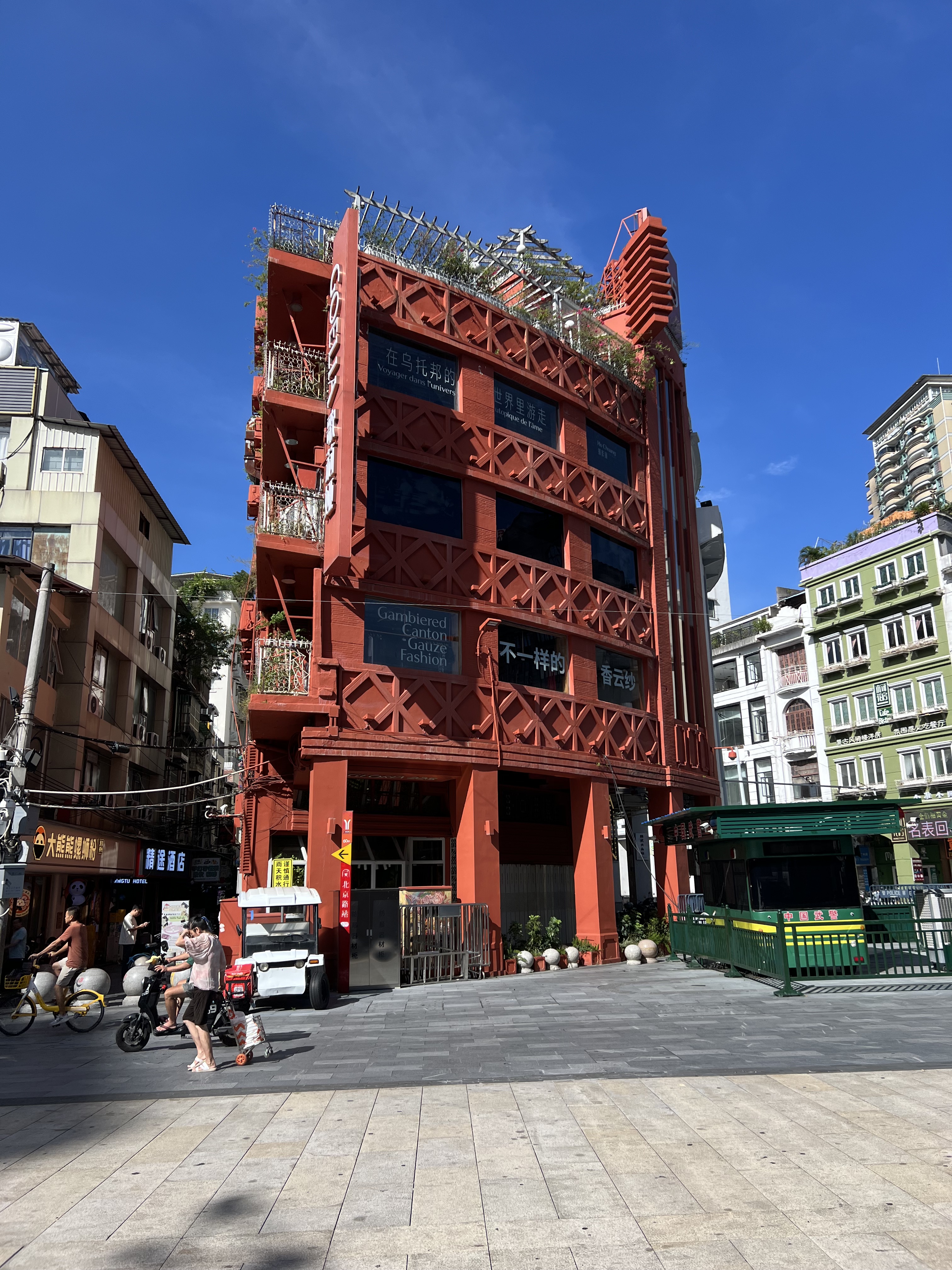
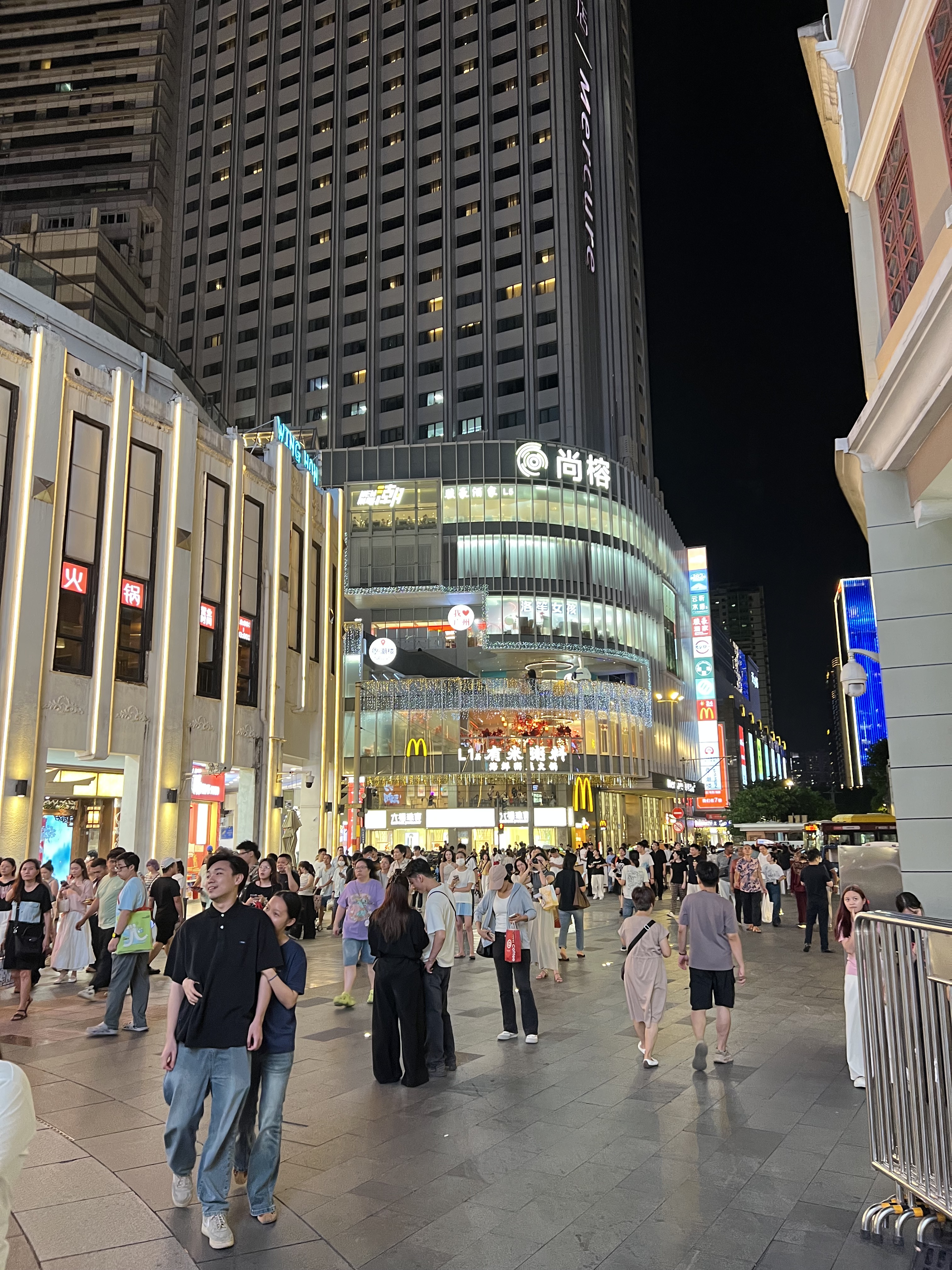
We check out of Foshan and head off to downtown Guangzhou to meet Bock’s mum and sisters Jasmine and Lisa arriving from Singapore. Our two-storey apartment has sufficient space and facilities. The living room is small and quickly becomes messy, in true holiday fashion. No one complains. The location is ideal, a short walk from Beijing Street, Guangzhou’s main food precinct. I let Bock and his sisters call the shots, choose where to shop and where to eat. It’s great being together. Lisa and Bock’s mum were not aware Bock and I’d be joining them. Lisa is more surprised. Bock’s mum was unsure how to react. She might have wondered if she’d been told but had forgotten that Bock was going to be there. Being together will dominate these next days in Guangzhou. My impression of the city, what I’ve seen of it, is that it’s old and rundown and crowded. There are the polished, spectacular parts of it, the parts one sees in magazine photos, but on the ground where the common folk hang out it is dirty and dusty and congested and totally bloody marvellous. Over the next four days we’ll shop and eat and gossip and then go home.
Beijing Road mid-afternoon is quiet. People are milling about but it’s an awkward time. It is too late for yum cha and too early for dinner. Most restaurants are closed. Opening time is not far off. We walk around, then find the place where Jasmine needs to collect articles she purchased online in Singapore. By the time we walk away from there, restaurants are well and truly open. We search for somewhere to have dinner. In a humble cafe close to our apartment, I enjoy another bowl of perfect noodles.
17 September
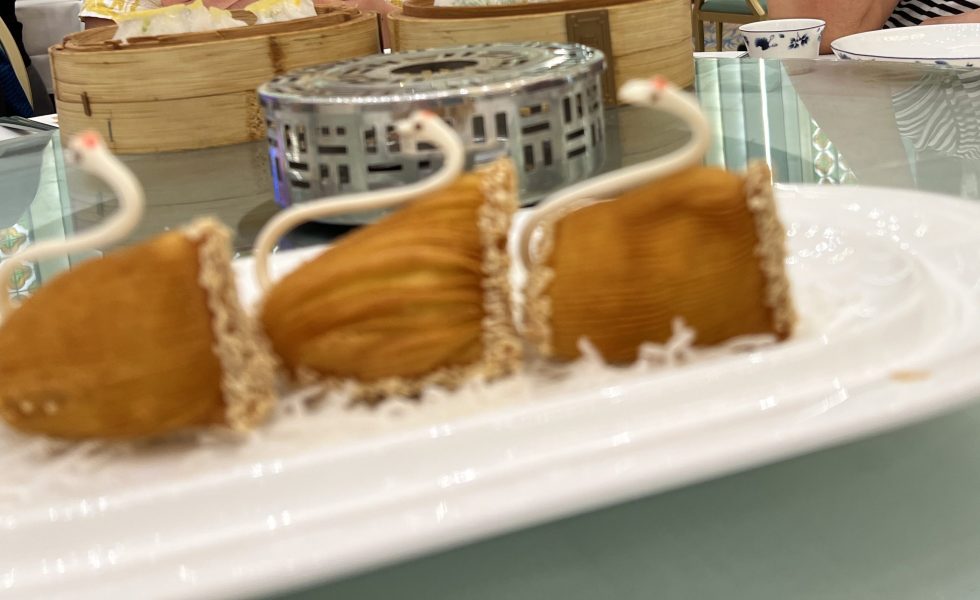
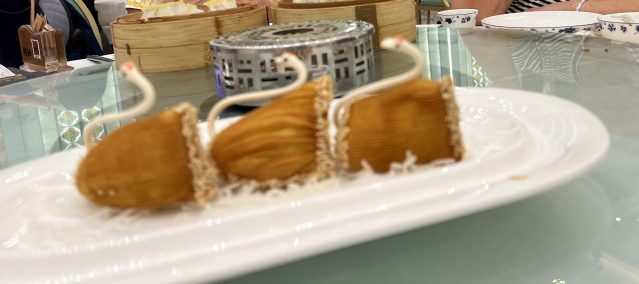
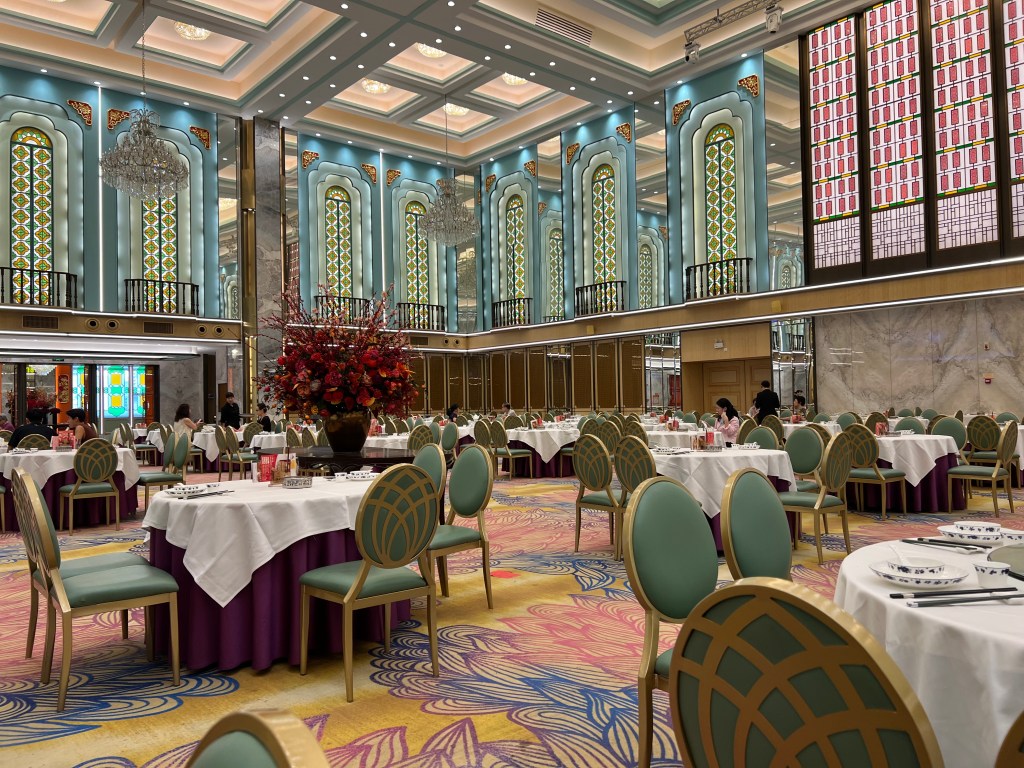
Until this morning Bock and I have been skirting the edges of a proper yum cha, sampling one or two dishes here and there in humble eateries. Today, our yum cha is full blown. In a lavish, spacious venue we go for broke, ordering enough to make it more like a celebration than a perfunctory breakfast. At between the equivalent of seven to nine AUD a dish, the cost of our meal keeps rising as we order more and more. Everything has a hallmark of quality. Fresh, tasty, some bordering on works of art, none a disappointment, breakfast this morning is going to be hard to beat.
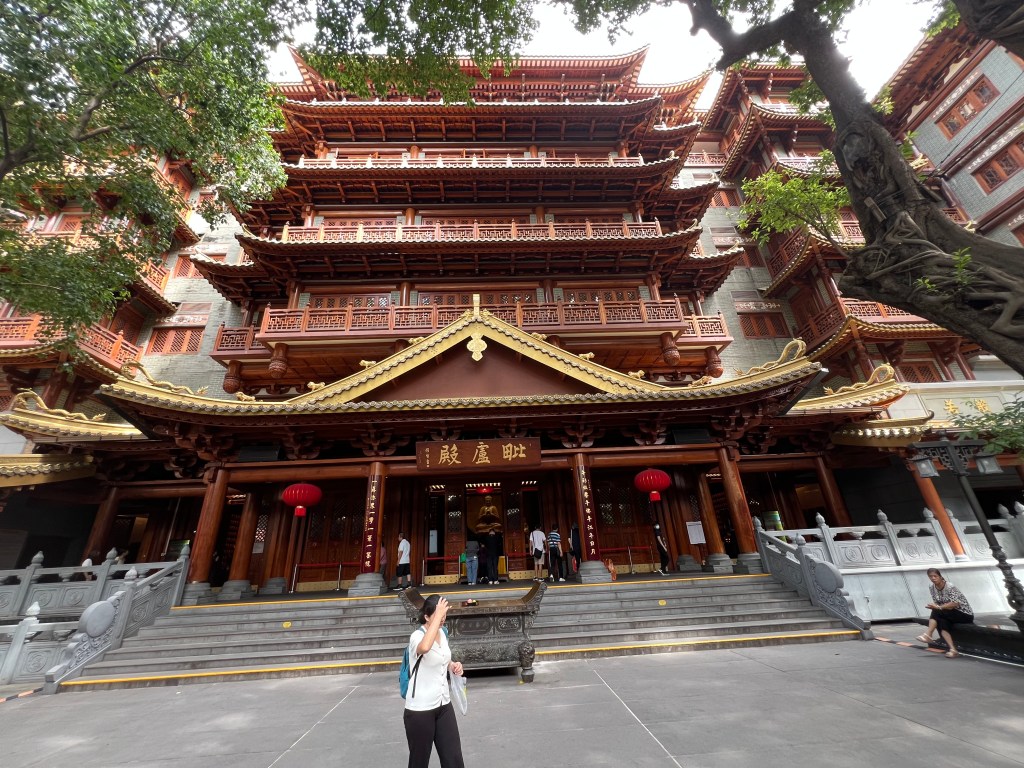
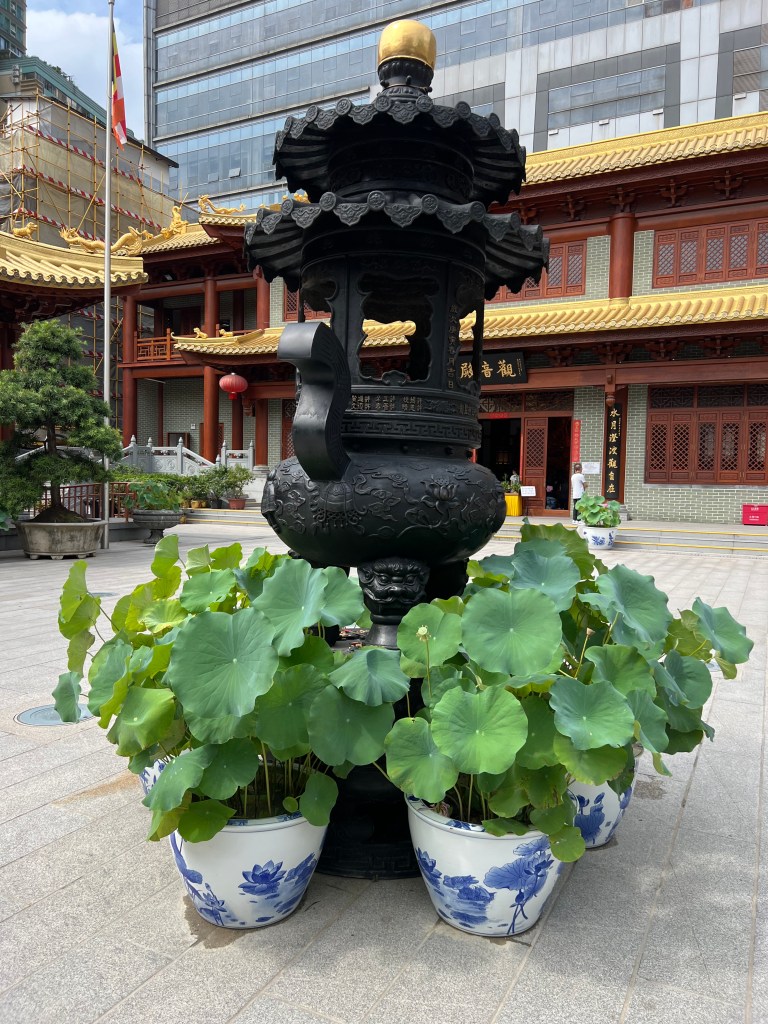

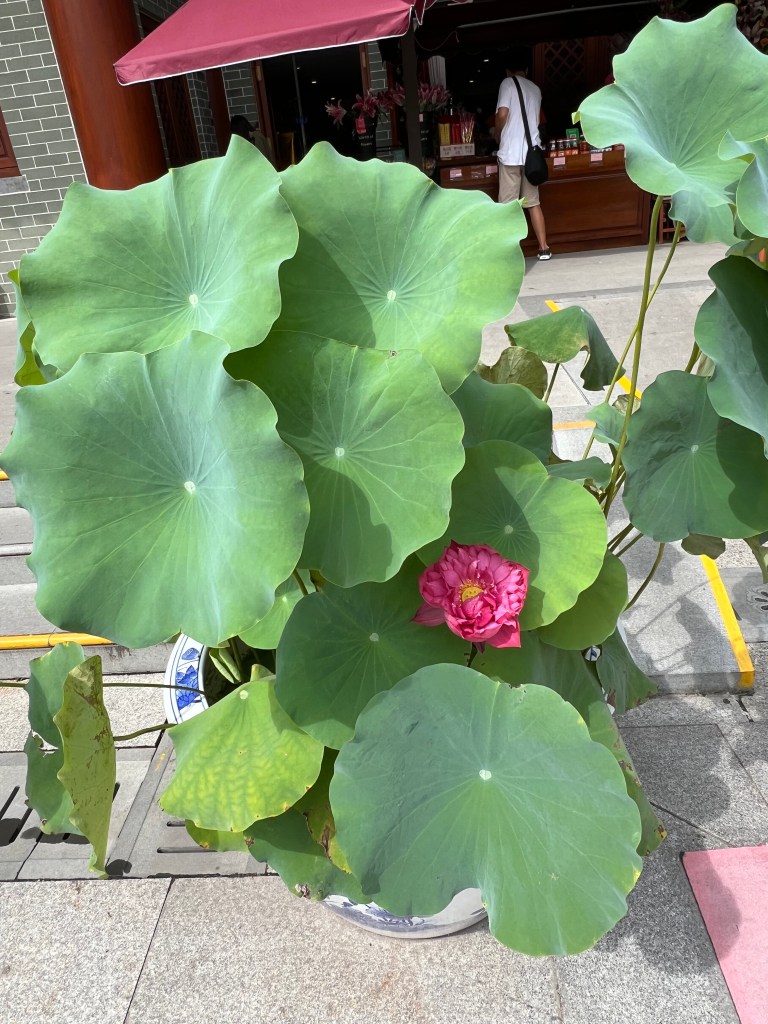
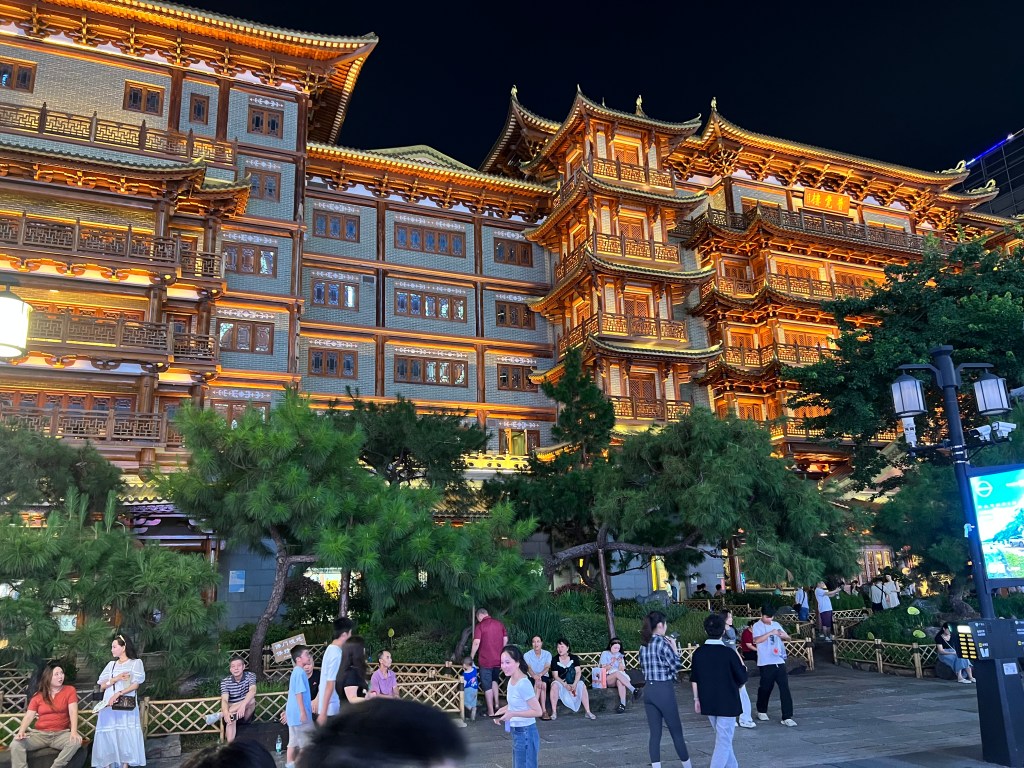
A sore throat niggles all day, not making me ill, but not going away either. My periodic tiredness in the energy sapping heat isn’t worse than normal. A temple, bang in the middle of the Beijing Street precinct, is large and imposing and ornate. A chanting litany is in progress. Stark and mystical, it harks back to ancient times, sounding like Gregorian chant. The litany with responses by kneeling worshippers is reminiscent of church services, masses in particular.
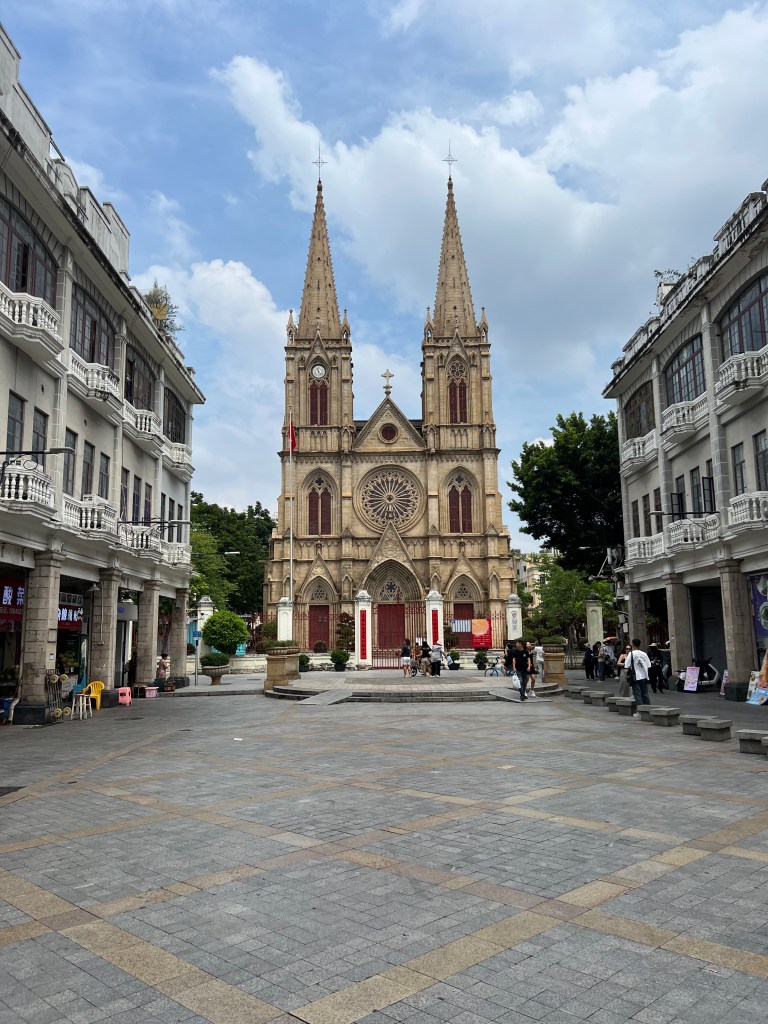
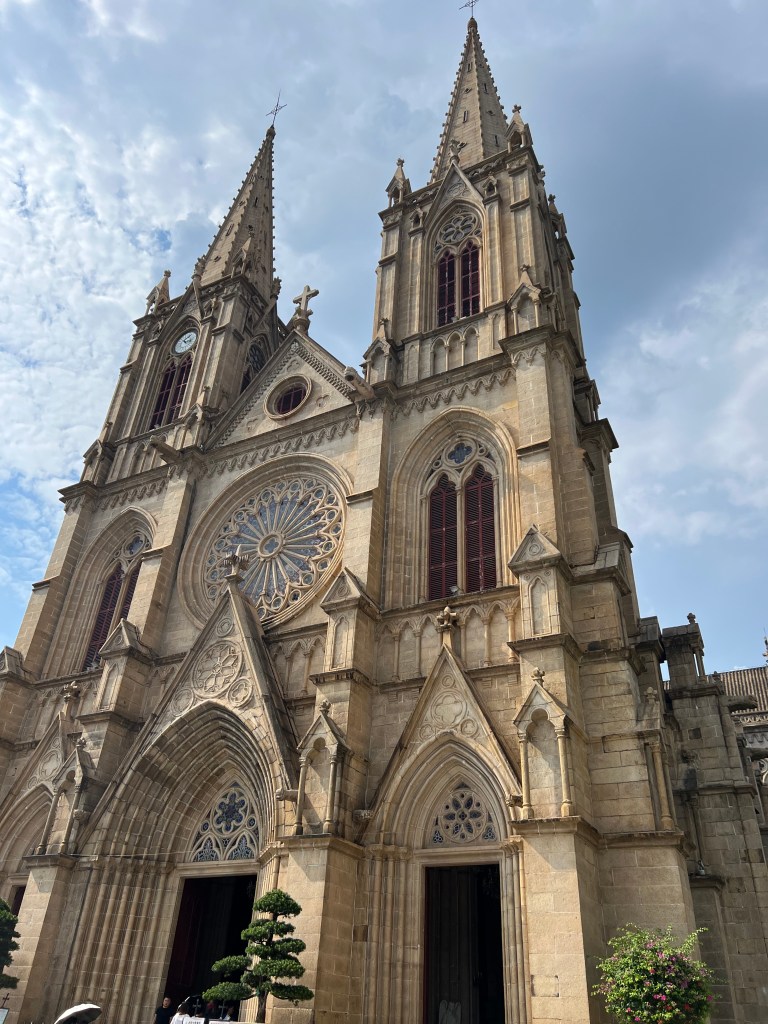
Speaking of church services, the next item on our tourist agenda is the Sacred Heart cathedral, a half-hour walk from the temple. Now midday, we learn when we get there that the cathedral will open at 2:30pm. What else to do but shop. A row of dry goods shops keeps us occupied for over an hour during which we purchase a variety of nuts and dried fruit. From there we proceed to a multi-storeyed mall whose ground floor is filled with every conceivable thing a child could desire. We get back to the cathedral at 3pm. Noteworthy as the largest gothic church in China, it is full of people, who seem to have brought in the stifling afternoon heat. I am unable to distinguish worshippers from tourists.
The cathedral is far from a cool sanctuary. It does not offer me refuge from anything, not that I am seeking refuge from anything. Afterwards, we walk along an indoor alley of dried fish stalls, fish fins everywhere, including ominously shaped shark fins.
Scooter riders and cyclists must think the pavements are their domain, and that we pedestrians use it at their pleasure. Hence the tooting and harassed faces when they are not given way to immediately. Opportunism reigns supreme. I need to shake off my resentment of scooters invading pedestrian areas, insisting on right of way. It is like someone walking into my home and demanding dinner or a shower. I don’t mind riders and walkers coexisting in a space as long as the party with less rights acknowledges the party with more rights. It irks me when the opposite happens. Might is not right. Fairness has to prevail on my world. There is nothing I can do about it, so my annoyance is brief and leaves no residue. I learn quickly not to have a problem with it. it is not going to spoil my holiday.
When a downpour hits we are still in the cathedral area. All of a sudden, taxis became a scarce commodity, practically non-existent. Stepping into the rain guarantees instant drenching. We settle for a Uighur meal in a restaurant not far from where we are sheltering. In true warm Muslim style, we end up having a delicious meal that costs almost nothing at all. Also free delicious tea, sweetened with dates and pears, and tissues, rare in these parts even in fancy restaurants. Proving yet again the warmth and generosity of Muslim people. Jihadists and Sharia proponents give them such a bad name. We walk to our apartment after the rain stops.
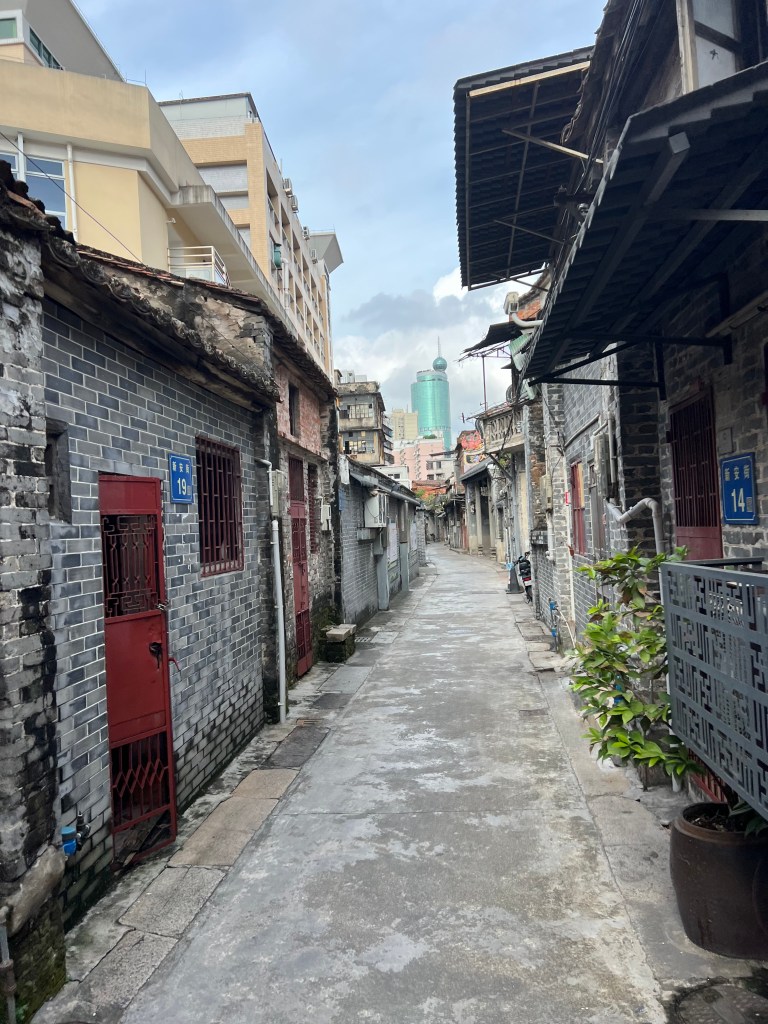
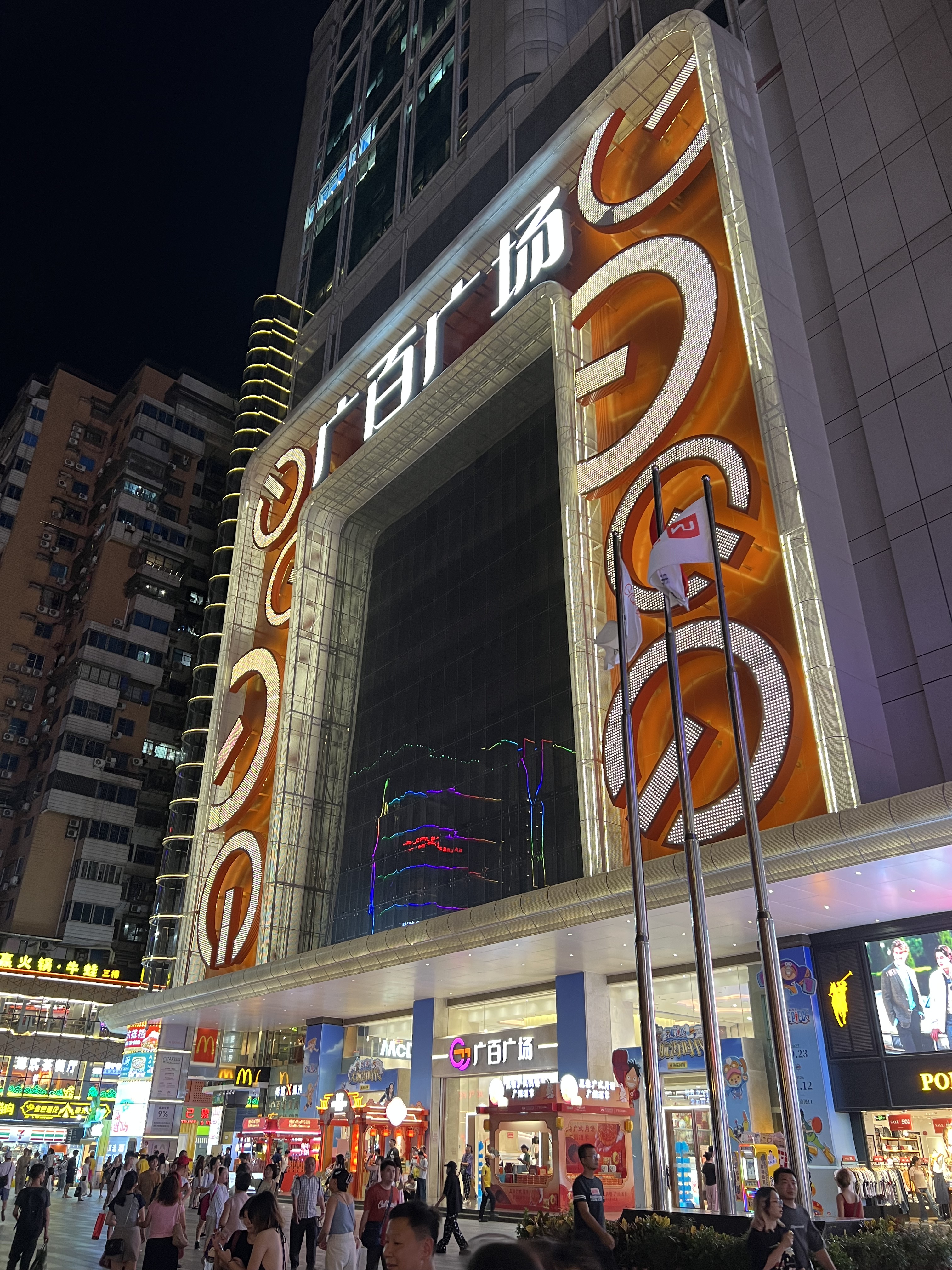
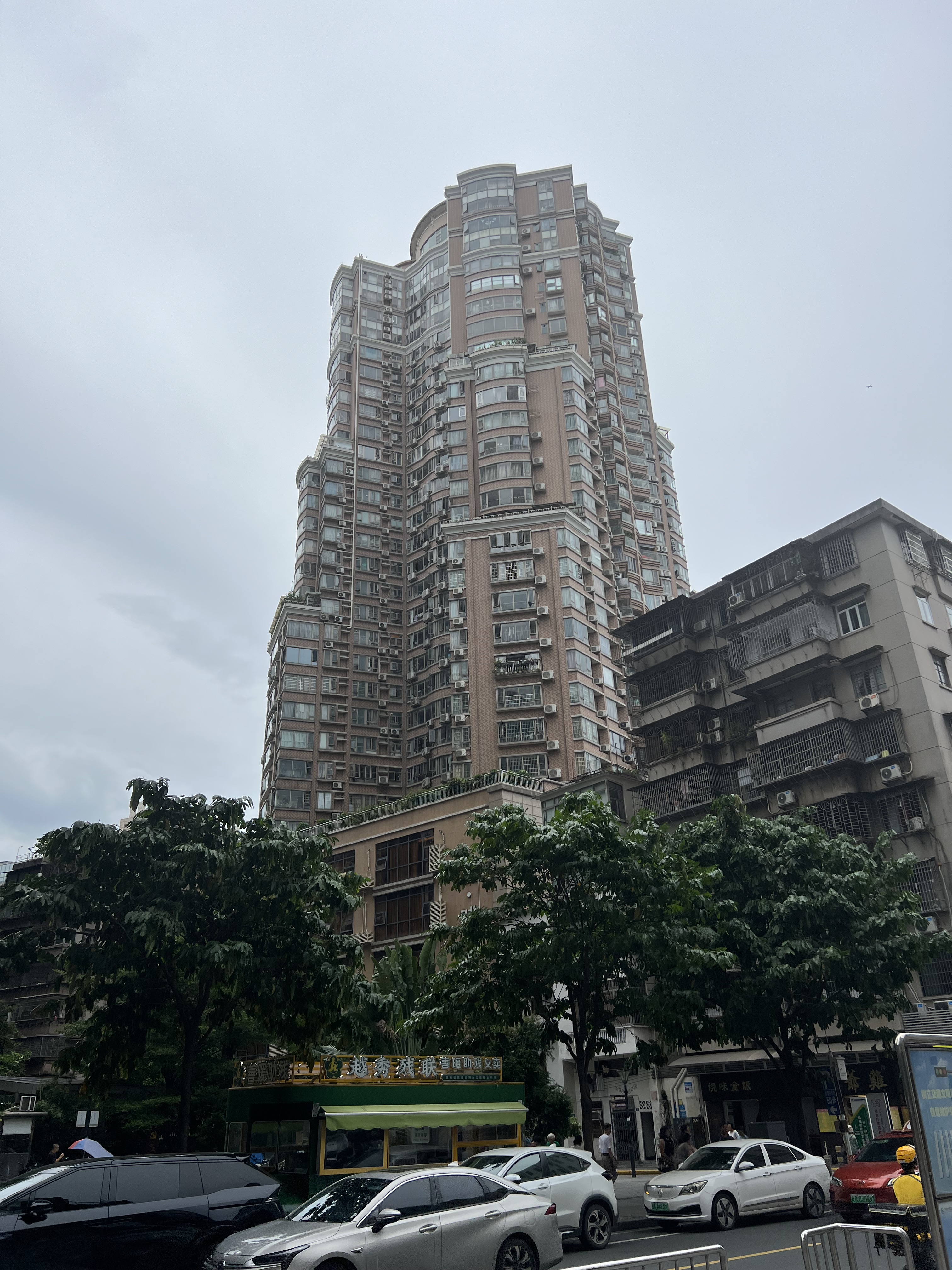
Guangzhou is not a glittering city. Old blackened high rise apartments are everywhere. They give Guangzhou the feel of a city caught in a time warp. This despite high technology dictating much of the populace’s transactional activity. Guangzhou is no Tokyo. Tokyo’s glamour, efficiency, non-struggling inhabitants, many stylish and richly endowed with sense of self, seep out wherever one looks. Here, most people don’t appear to have ownership of this mighty city, some looking as if they have ownership of nothing. Their daily struggle for survival consumes their resources.
18 September
Today is decidedly low energy for me. I’m off the boil, a touch listless, but not ill because my pulse rate is normal. Still, I don’t want to do very much today.
I’m no urban tourist. Shopping spurts barely a trickle of enthusiasm. I’d go to a sports goods store with some hope of adding to my gym gear. Bookshops excite me more. I might look at cosmetics places too. I use a face wash, moisturisers, cleansers and toners. I am into looking after my skin.
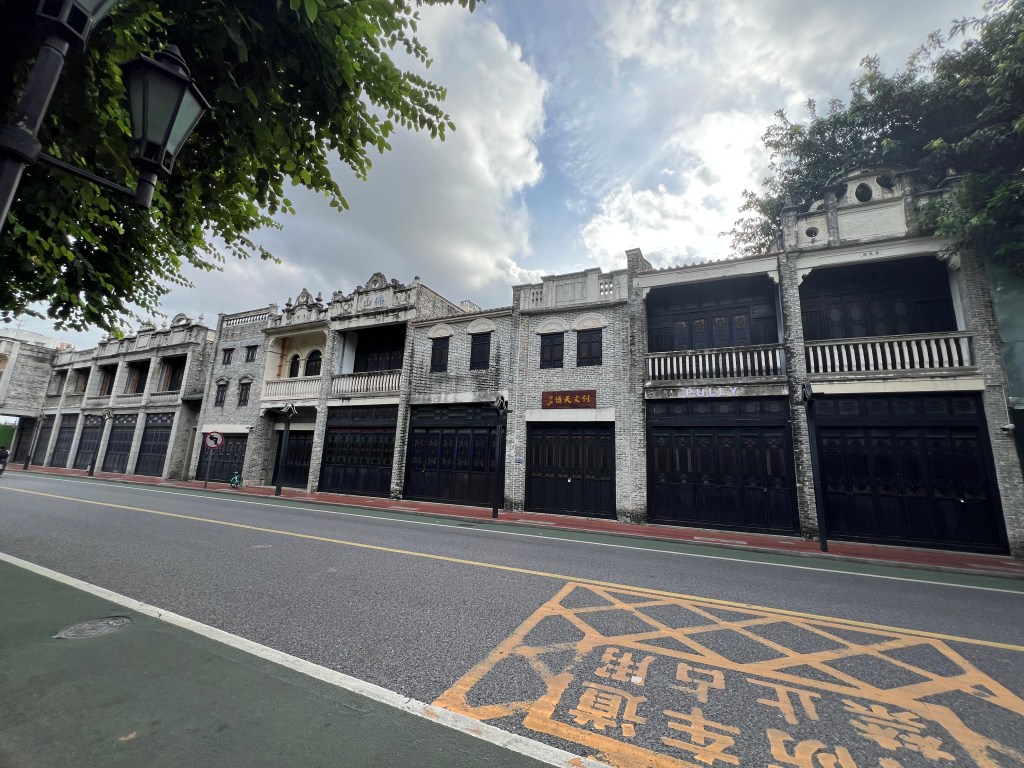
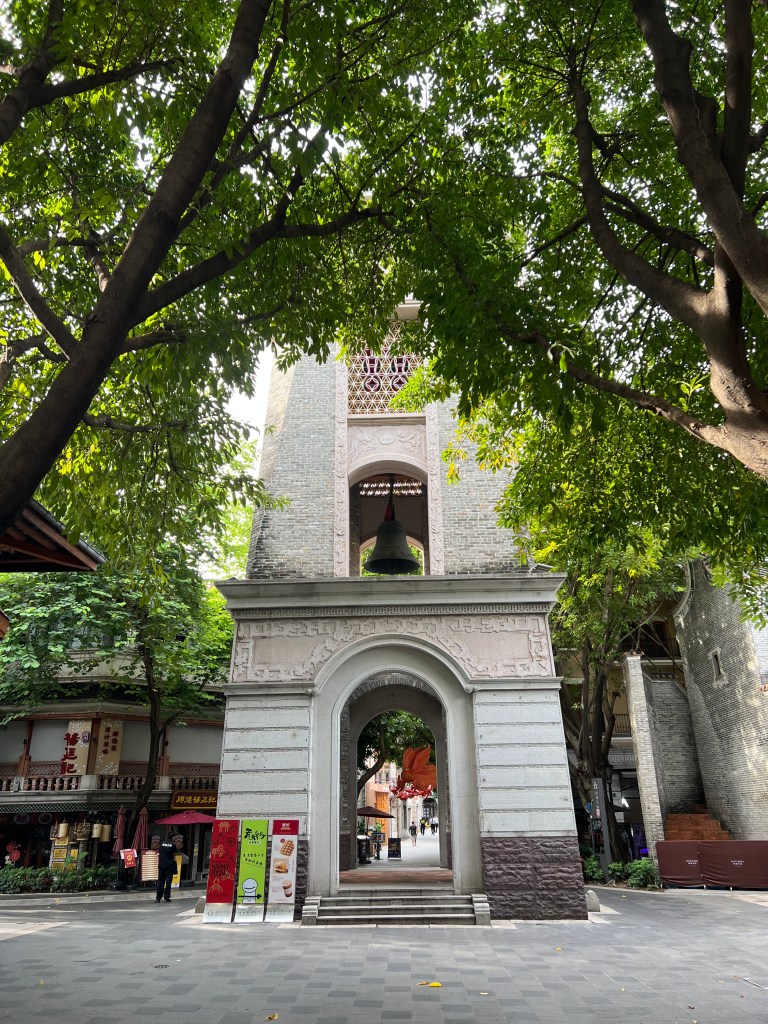
After another great yum cha we make our way to Shangxiajue street, a long, wide, pedestrian boulevard flanked by old trees and buildings that represent Guangzhou’s colonial heritage. The many statues we encounter are another feature of this street. The pace is unhurried, which suits me today. This place is well worth a visit, for both the history on display and as an interlude between more frenetic activity.
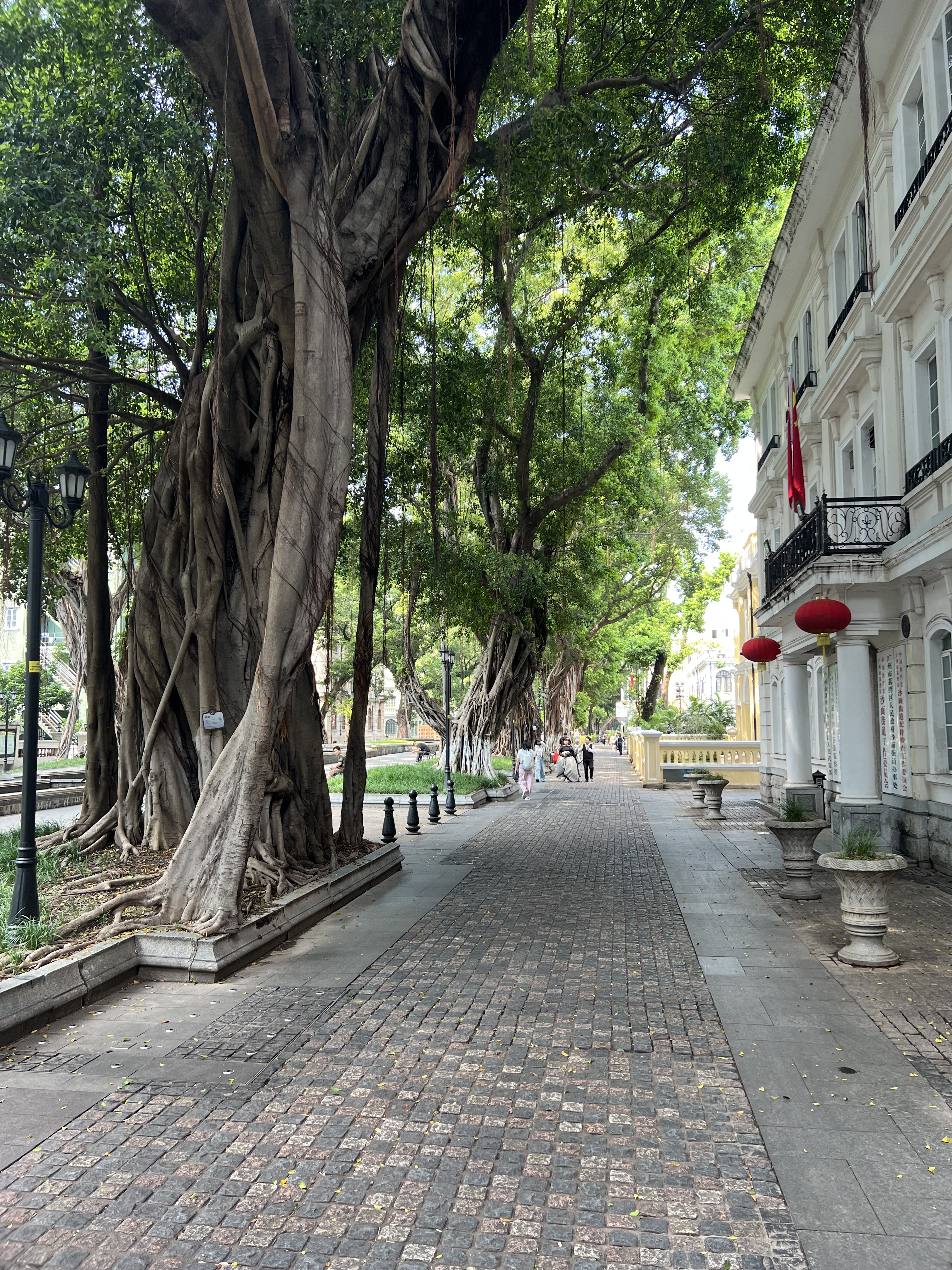
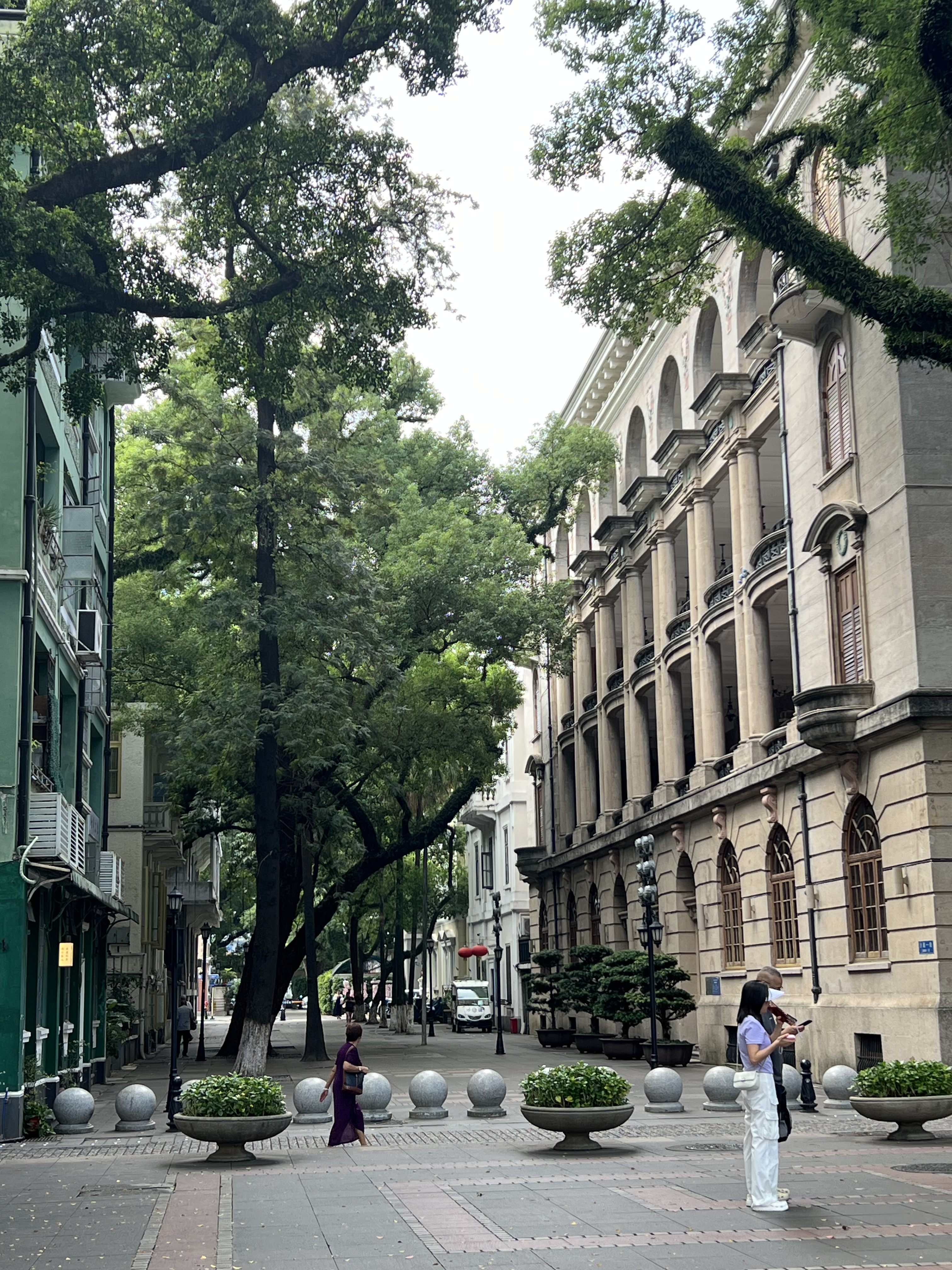
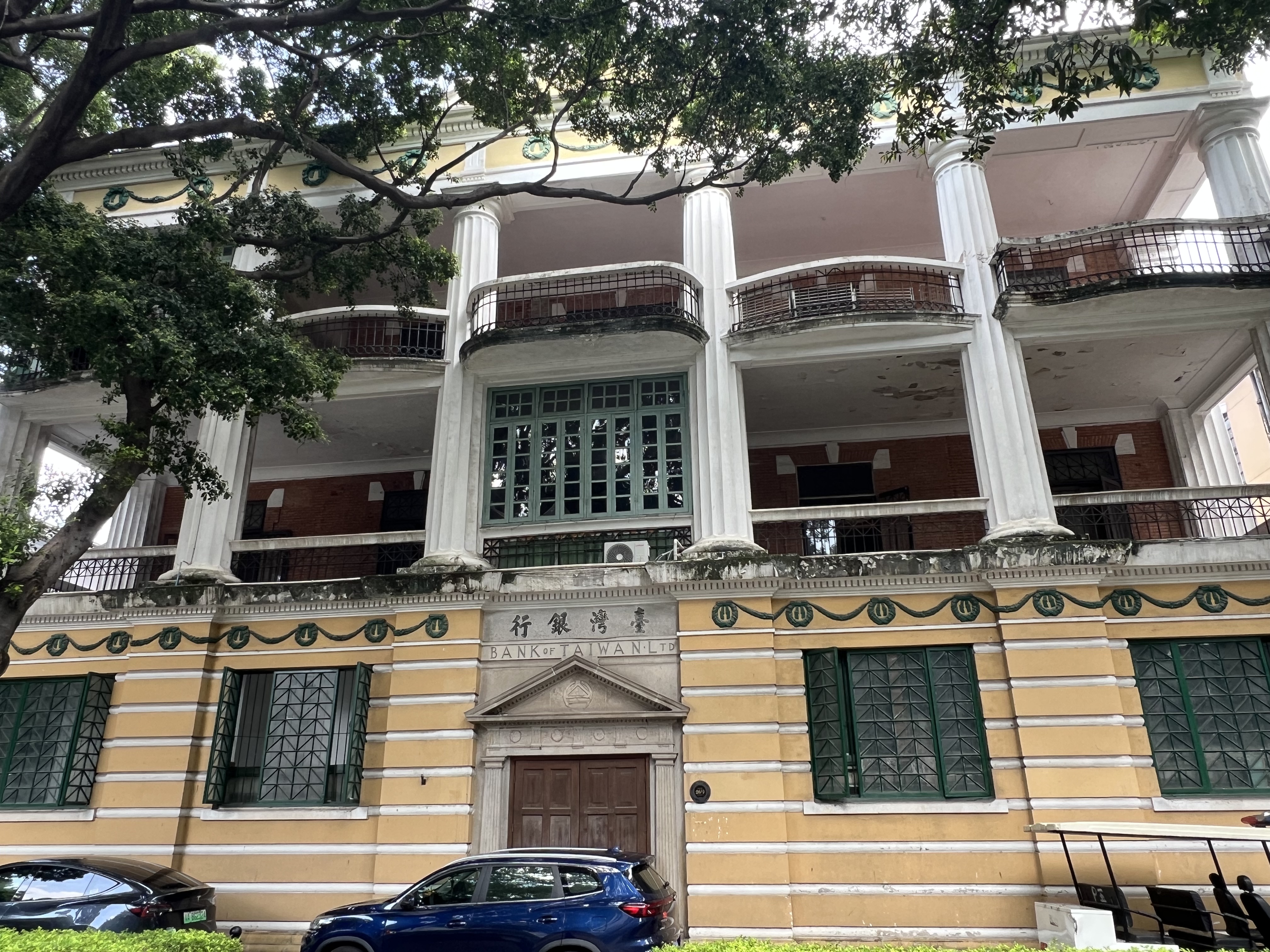
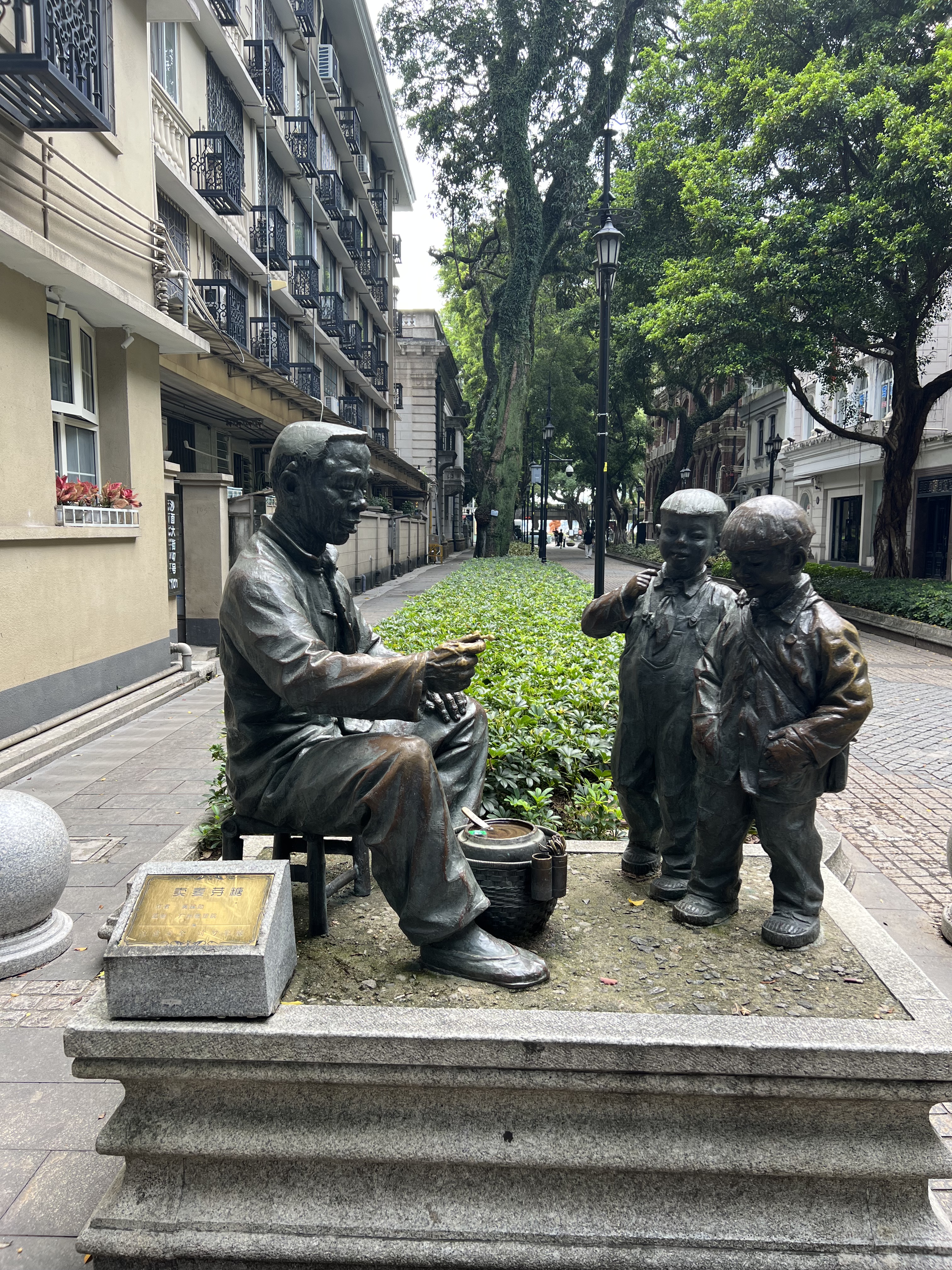

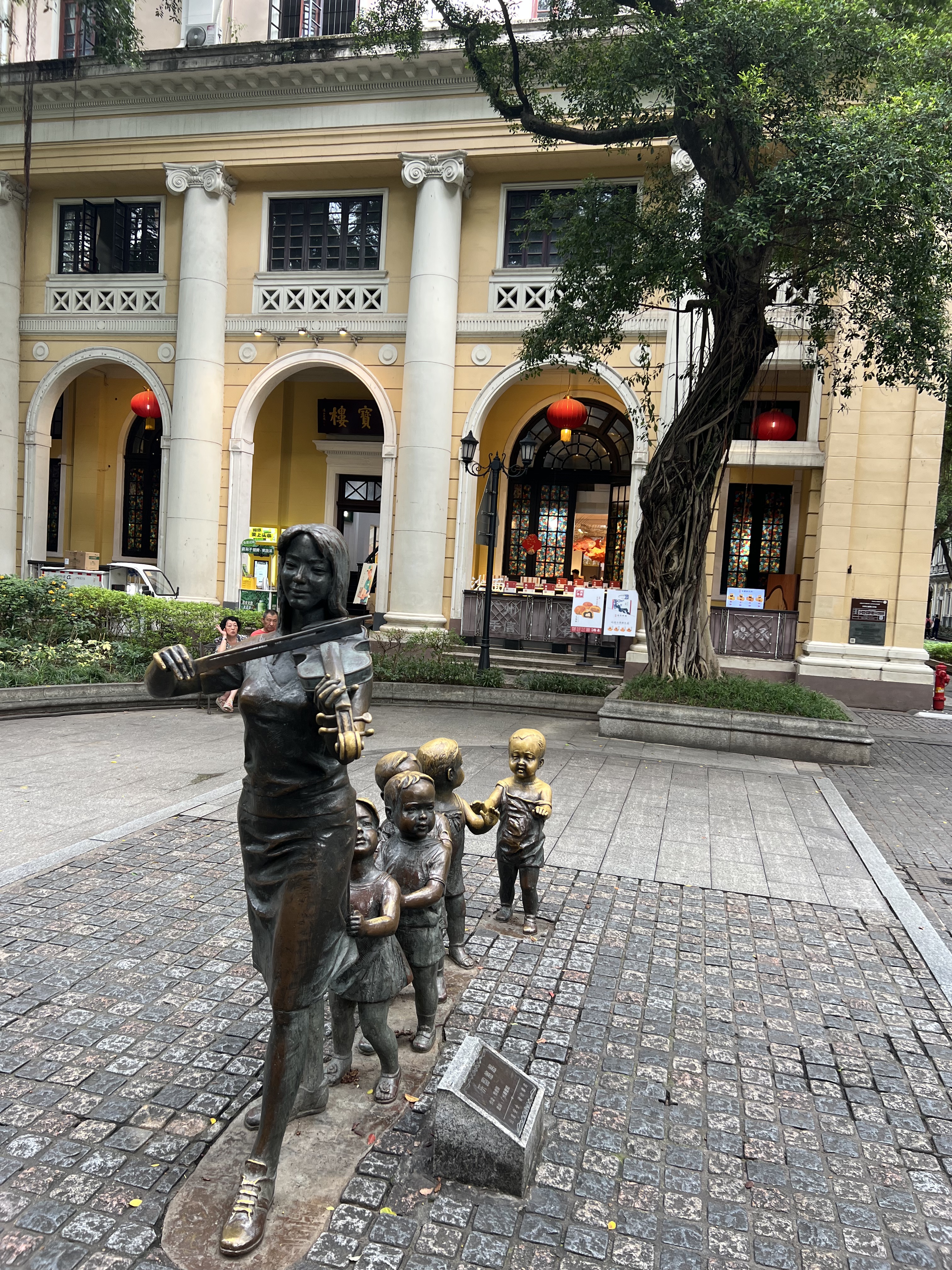
Our next destination is APB shopping mall, a huge rectangular building, covered in hessian. While the others shop, I spend most of my time there relaxing with coffee and a book. APB is not a typical shopping mall. The shops are more like factory outlets. Presentation is not a priority. Clothes and shoes are crammed into the available spaces. Bargains everywhere.
We have a very satisfying dinner on Beijing Street in a highly rated restaurant called The God of Claypot.
19 September
Normally the type of sore throat I have is a harbinger of worse things. It blossoms into at least a 24-hour period of bed-bound illness. Not this time. I feel better today than yesterday. It seems I am still acclimatising. It is not the first time heat and dust have affected me. It will be good to get back to Melbourne, much as I love this place.
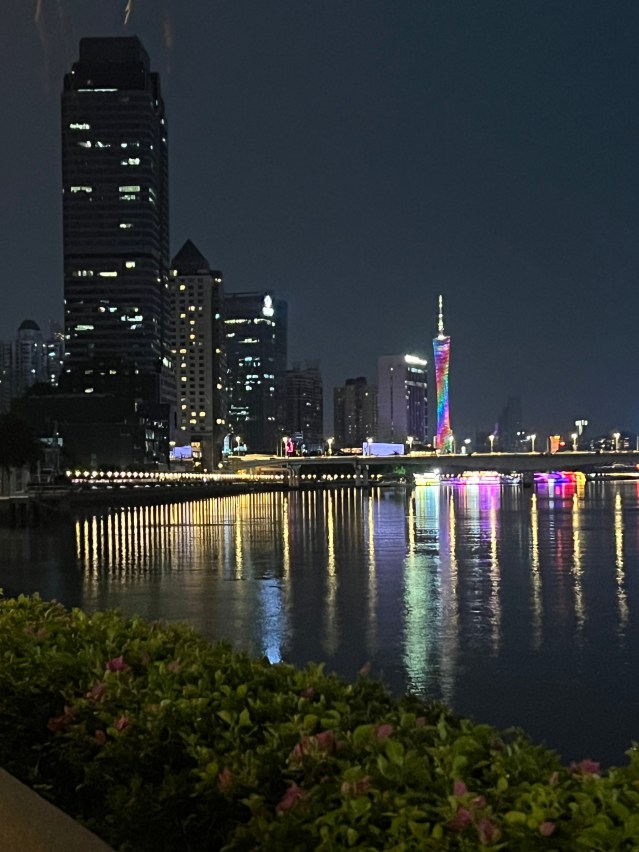
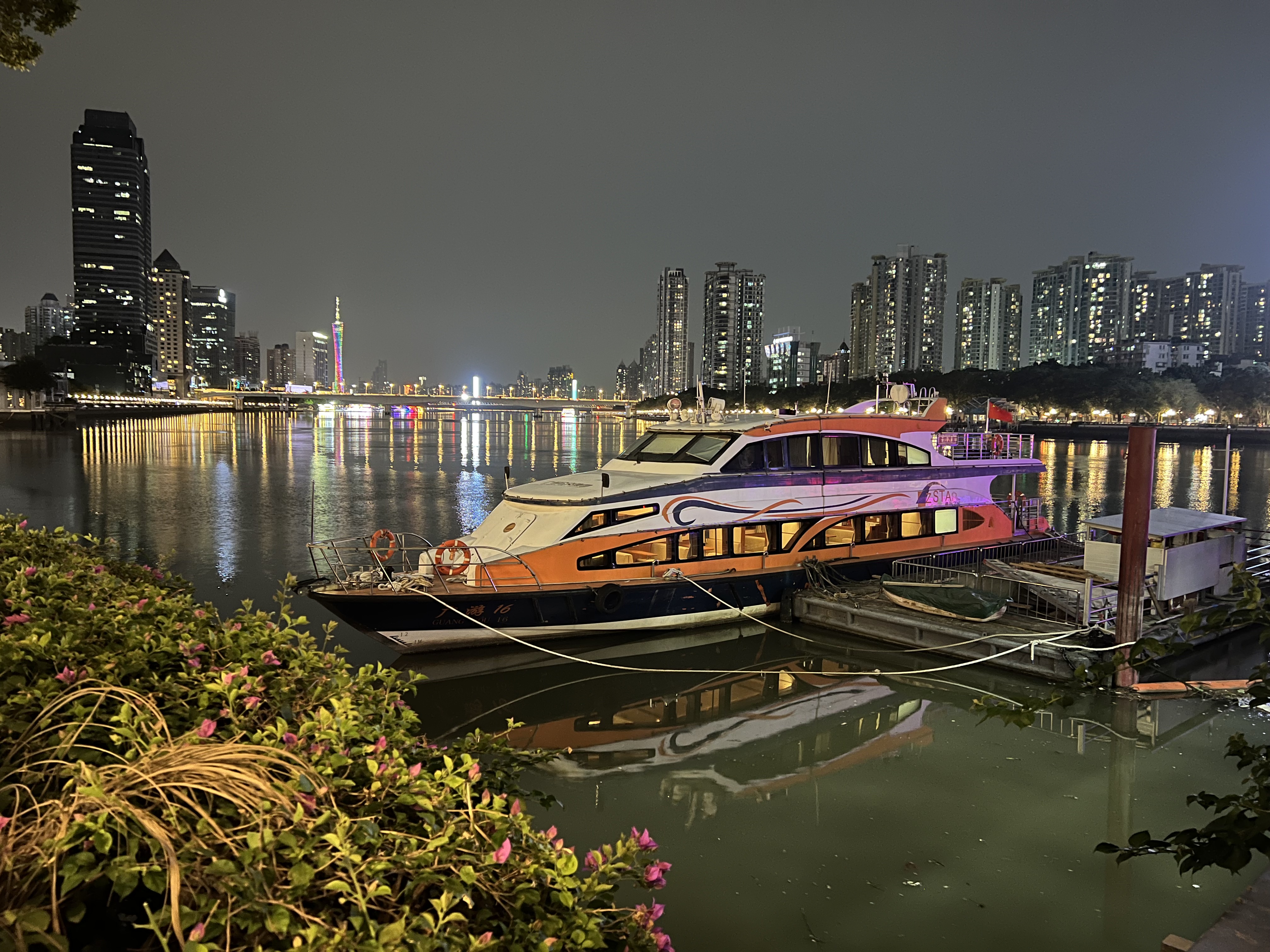
This is not the best time of the year for touring anywhere in the northern hemisphere. Summers have become excruciating. Today we decide to take things easy, hang around Beijing street and do a river cruise in the evening.
On arriving at the river front we learn that all cruises have been cancelled until further notice because of an approaching typhoon. There is no sign of it at present, and we have no plan B, so we head back to our apartment which is a short walk from the river. On the way we buy snacks for dinner. I am happy to call it a day.


20 September
No evidence of ferocious wind, but the typhoon has brought rain which settles in for the day. We spend all morning and part of the afternoon in a large shopping mall. In all shopping malls, no matter where in the world, I tire very quickly. My shopping MO is as follows: know what I am shopping for, buy the items, go home. Today I have nothing to buy, but I am in the company of enthusiastic shoppers, so I tag along. Mid-afternoon, the rain lets up and we decide to visit an open-air shopping precinct. On the way there it begins to pelt down. My umbrella provides scarcely adequate protection, and my backpack’s water resistance is severely tested. The precinct has some lovely shops, one of them specialising in art and craft. I buy some lovely bookmarks and a 1000-piece jigsaw puzzle.
We decide to dine in the Shunde restaurant where Bock and I enjoyed eggplant in batter. It takes an hour to get there and proves to be a disappointment. The disappointments begin when the waiter says they have run out of most of the items we want. They come up the eggplant dish, but the other dishes are mediocre at best. A broth of black chicken in coconut water is a meaningless dish. Pigeon is leathery and unpleasant and I won’t be having it again. The deep fried pig innards are lamentable, cooked out of all recognition. I feel sorry for Bock. He so wanted to give his mum and sisters a memorable meal. Still, no one minds, none of us are entitled sorts. Bock’s desire is appreciated for what it is. His sincerity is never in doubt.
Back in our apartment I check the contents of my backpack. Some moisture has managed to get in, soak a few bits and pieces and make others, like my passport, clammy.
21 September
The moist contents of my backpack have dried overnight. My passport is fine. Bock and I reach the airport in time, and soon our rapid crawl across the sky is under way. I’ll be home in a tick under 11 hours: 9 hours to Melbourne airport, an hour to get out of there and another hour to be driven home. A bit optimistic perhaps. I’m comfortable, not eating a lot, only parts of meals, staying hydrated but not overdoing it because I’d forever be needing to pee.
The time passes smoothly. Naps help, with reading, writing, sudoku in between. Soon enough we are about to touch down. Will I return to Guangzhou? Perhaps for a very few days as part of a longer trip to other places in China. It must be said my enthusiasm for China is enhanced by Bock’s ability to converse with the locals. I would love to learn Chinese. But how? I have never been good with other languages. My mind seems trapped in English. English is my comfort zone. Come to think of it, I develop comfort zones in many facets of my life. I need to abandon the very concept of a comfort zone, challenge myself to take risks, wrap my mind around new things. If there is something to be learned, learn it. Then embrace them. Don’t seek refuge in the known. Step into the unknown.


 Gerry Roberts