China 2025 – April 23
Ancient Towns
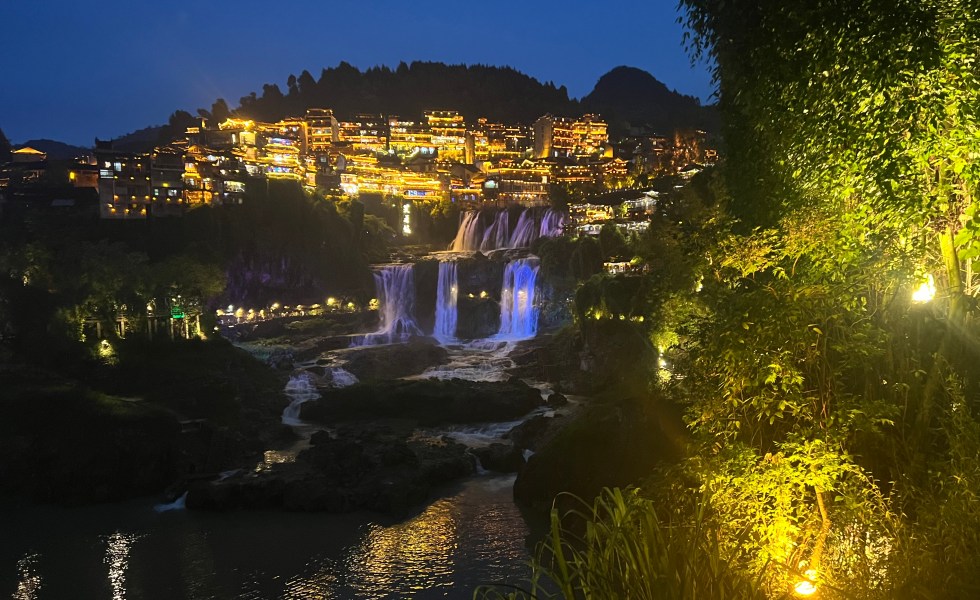
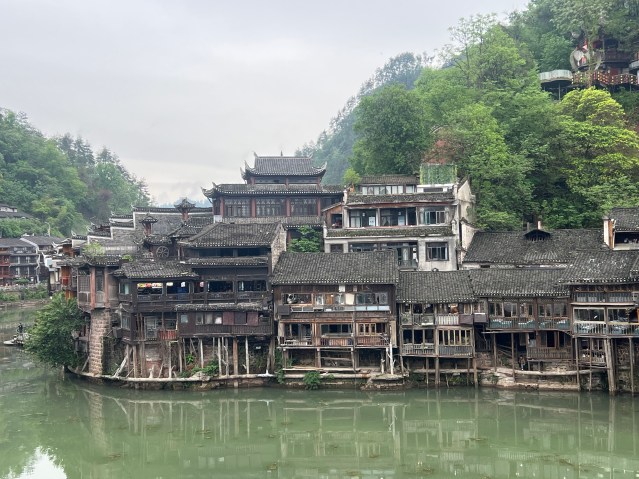
Most tourist itineraries for Zhangjiajie include visits to ancient towns Fenghuang and Furong. Each has its own special qualities, for example Fenghuang’s ornate bridges across the river and Furong’s iconic waterfall. From videos and photographs, the towns are ablaze with light after dark.
Before we commenced our trip, Furong, the more visited of the two, seemed a nice place to spend the entire day. Fenghuang looked attractive too, worth a visit if we could slot it into an afternoon somewhere.
When we get around to considering what we’d actually do in Furong, we decide that three to four hours are more than enough. From there it doesn’t take long to realise we can see Fenghuang too on the same day thanks to their locations on the same rail route and high-speed trains that can take us there in a jiffy. I cancel train bookings made in Melbourne and re-book a fresh set of journeys: from Zhangjiajie to Fenghuang, close to 200 km away and one hour on the train, then four hours later from Fenghuang to Furong, 120 km in the direction of Zhangjiajie, and finally a late evening train back to Zhangjiajie from Furong. We’ll miss the lights in Fenghuang but see them in blazing glory in Furong. I resolve to plan better in future and not be lulled by the ease of changing bookings because they come at a whacking cost.
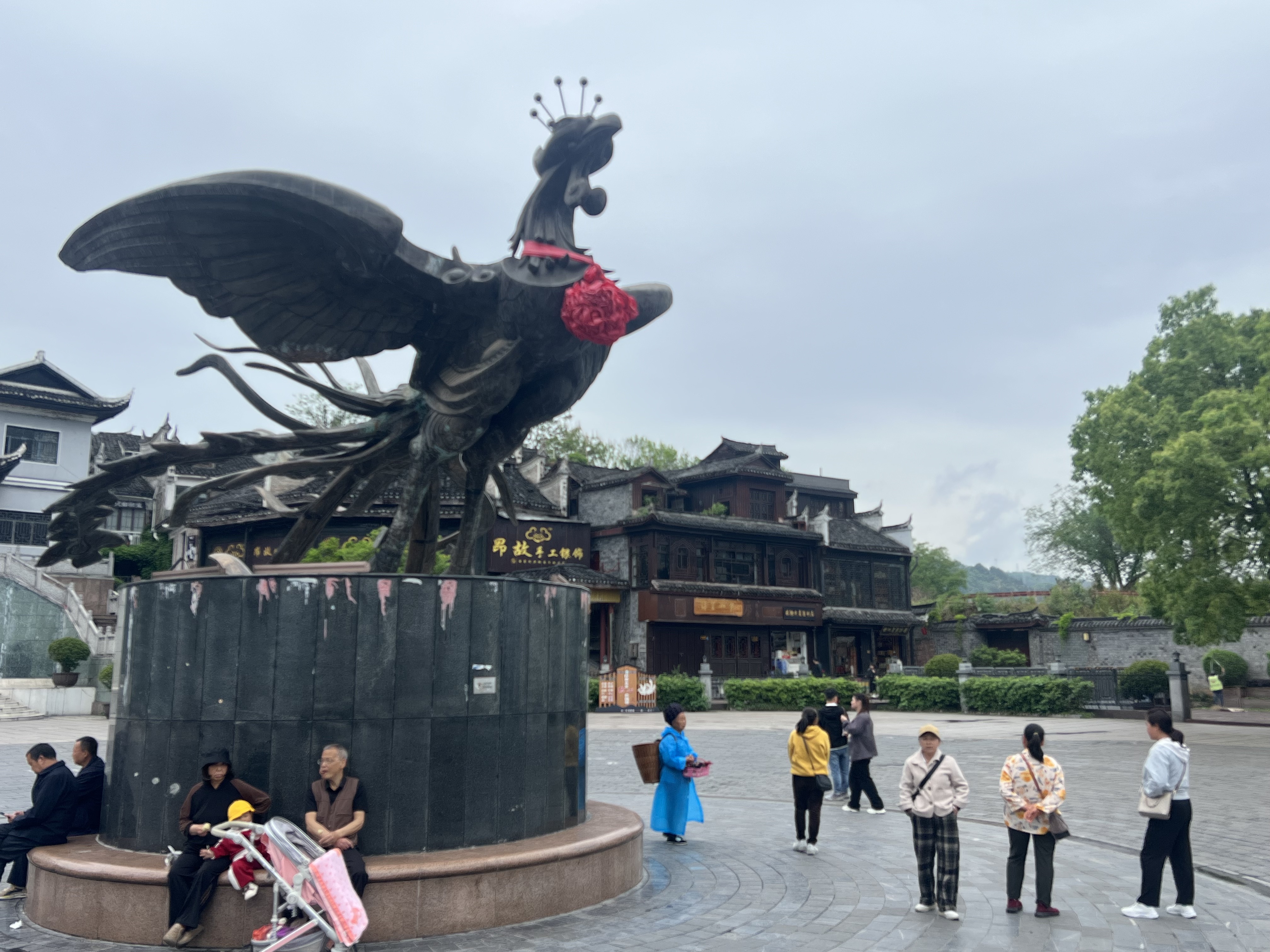
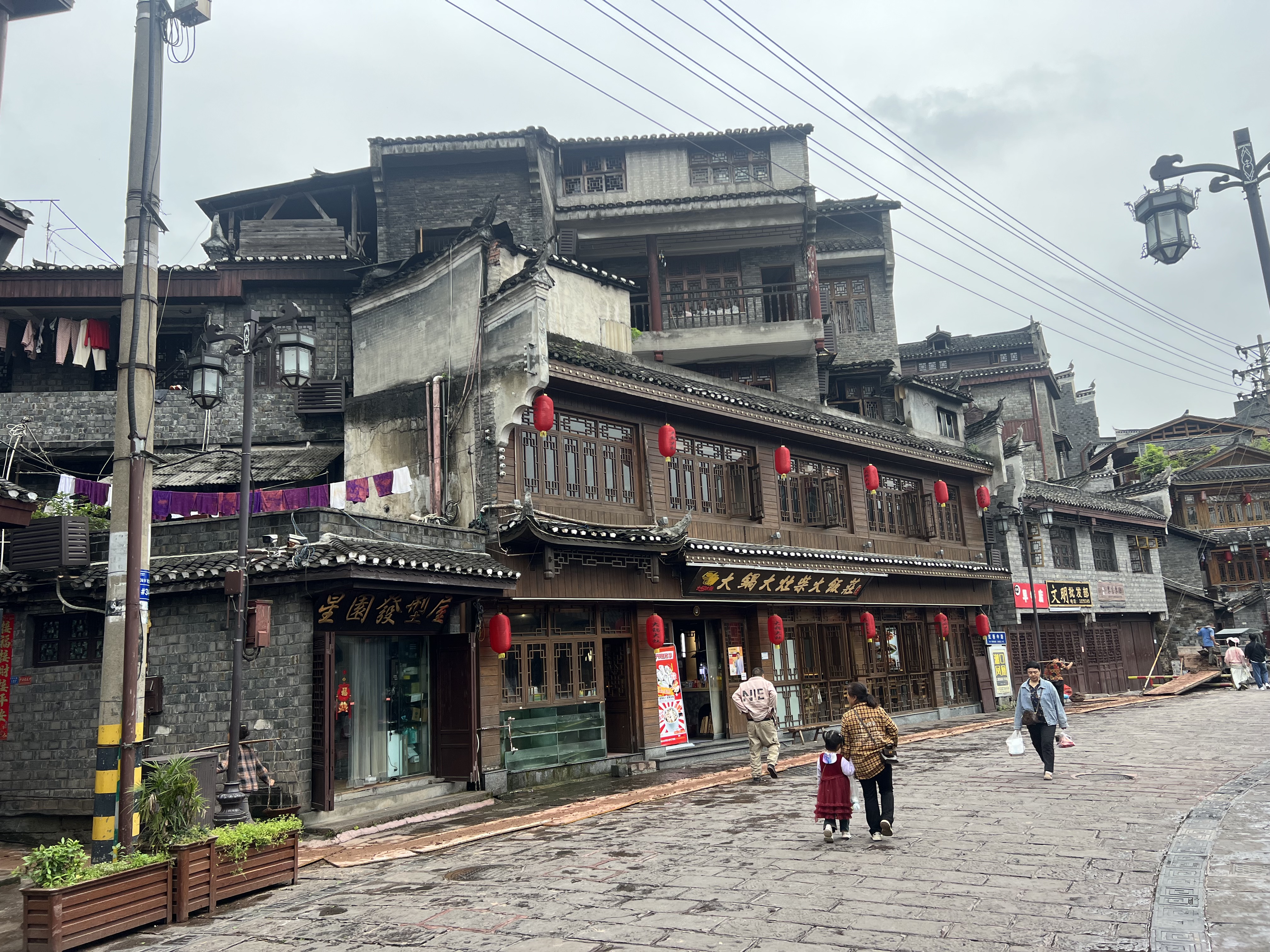

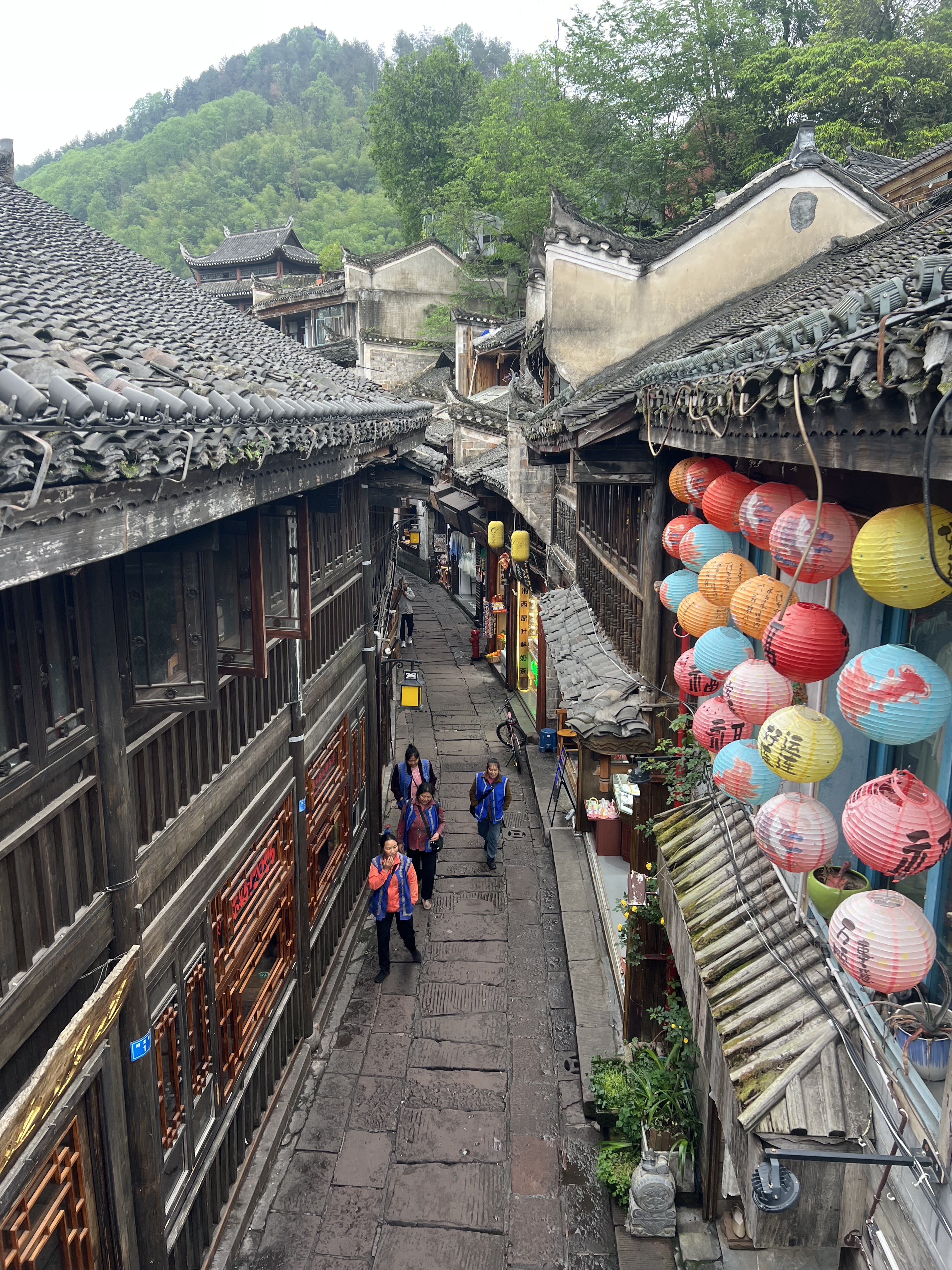

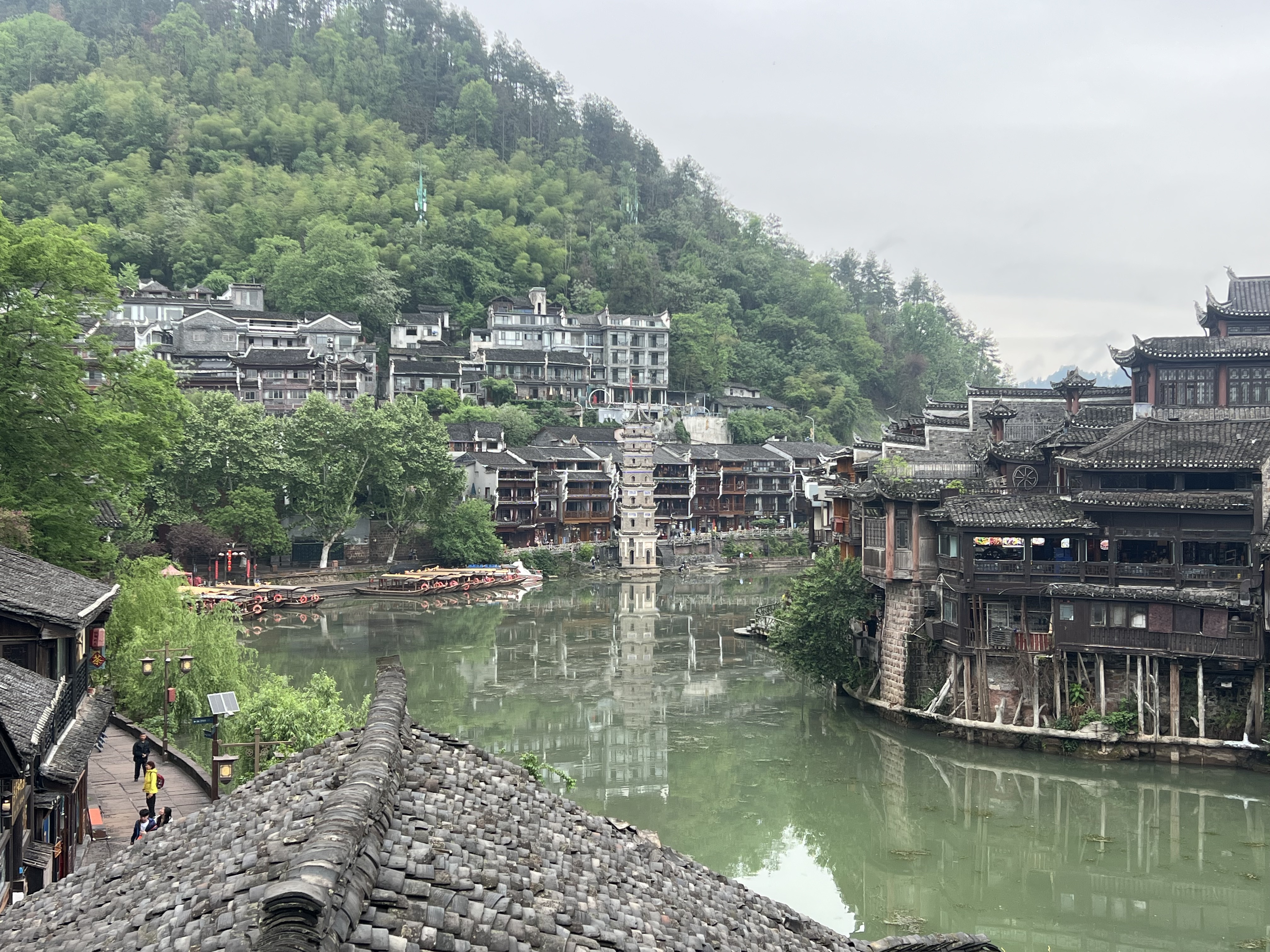
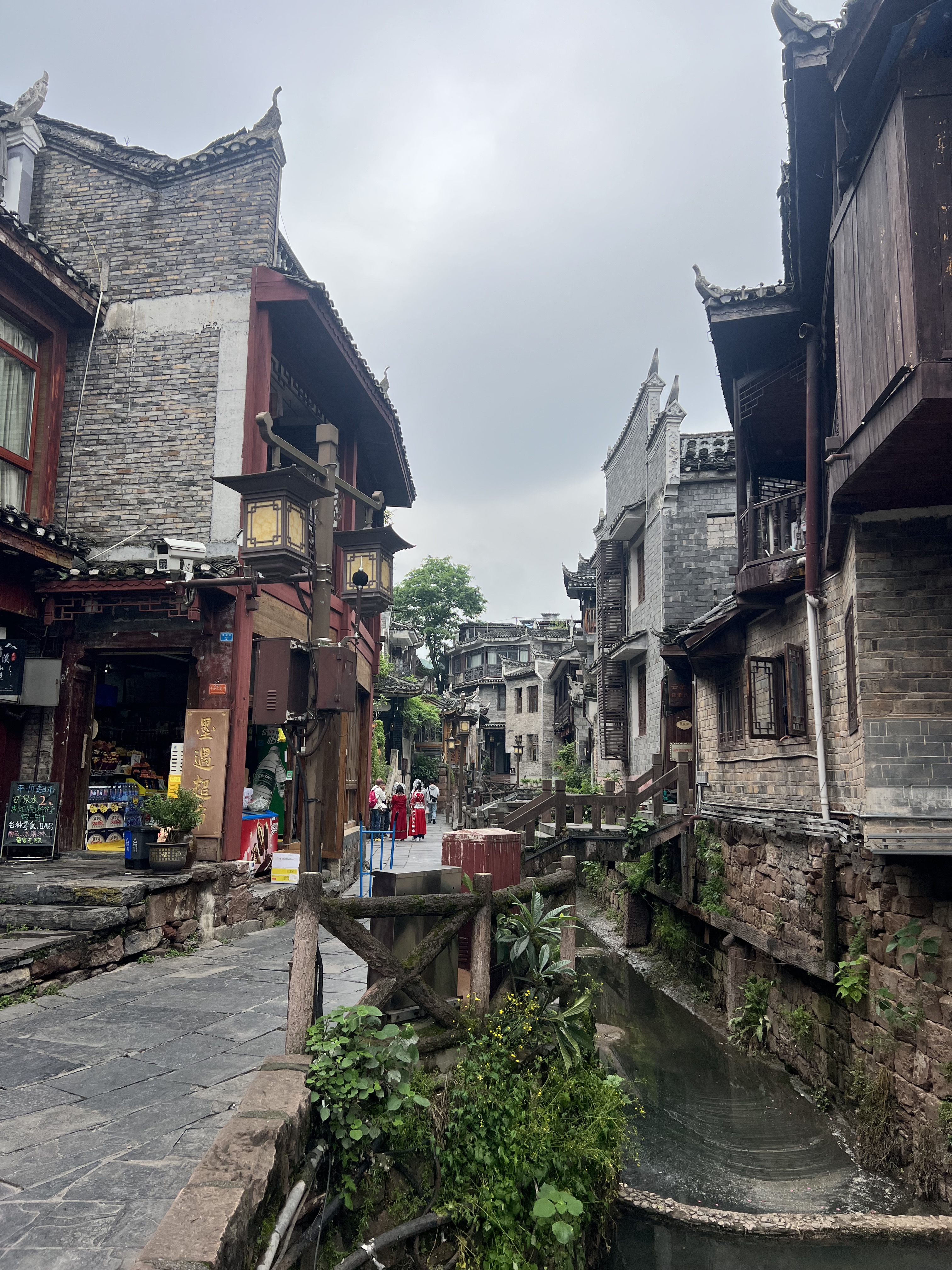
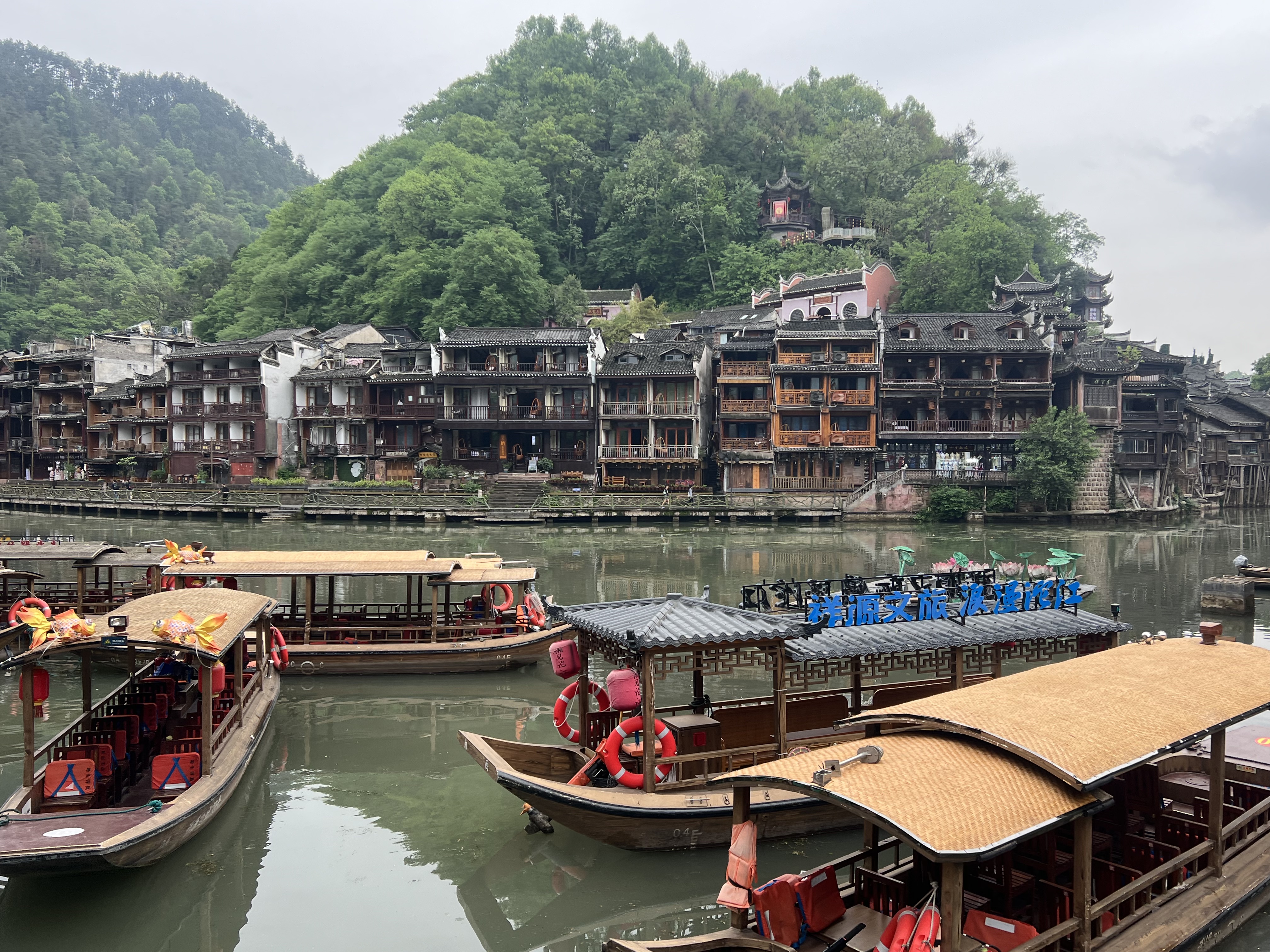
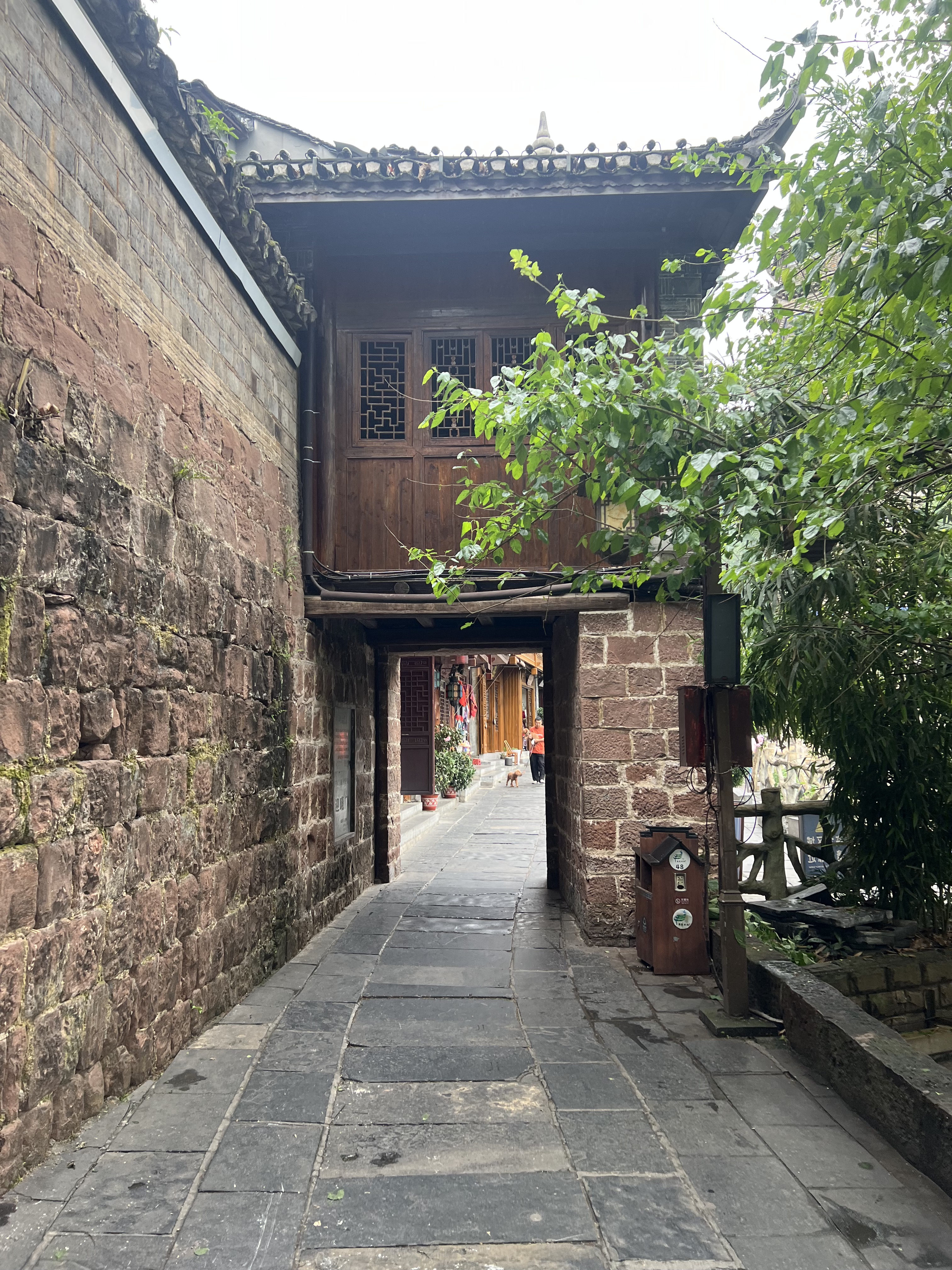
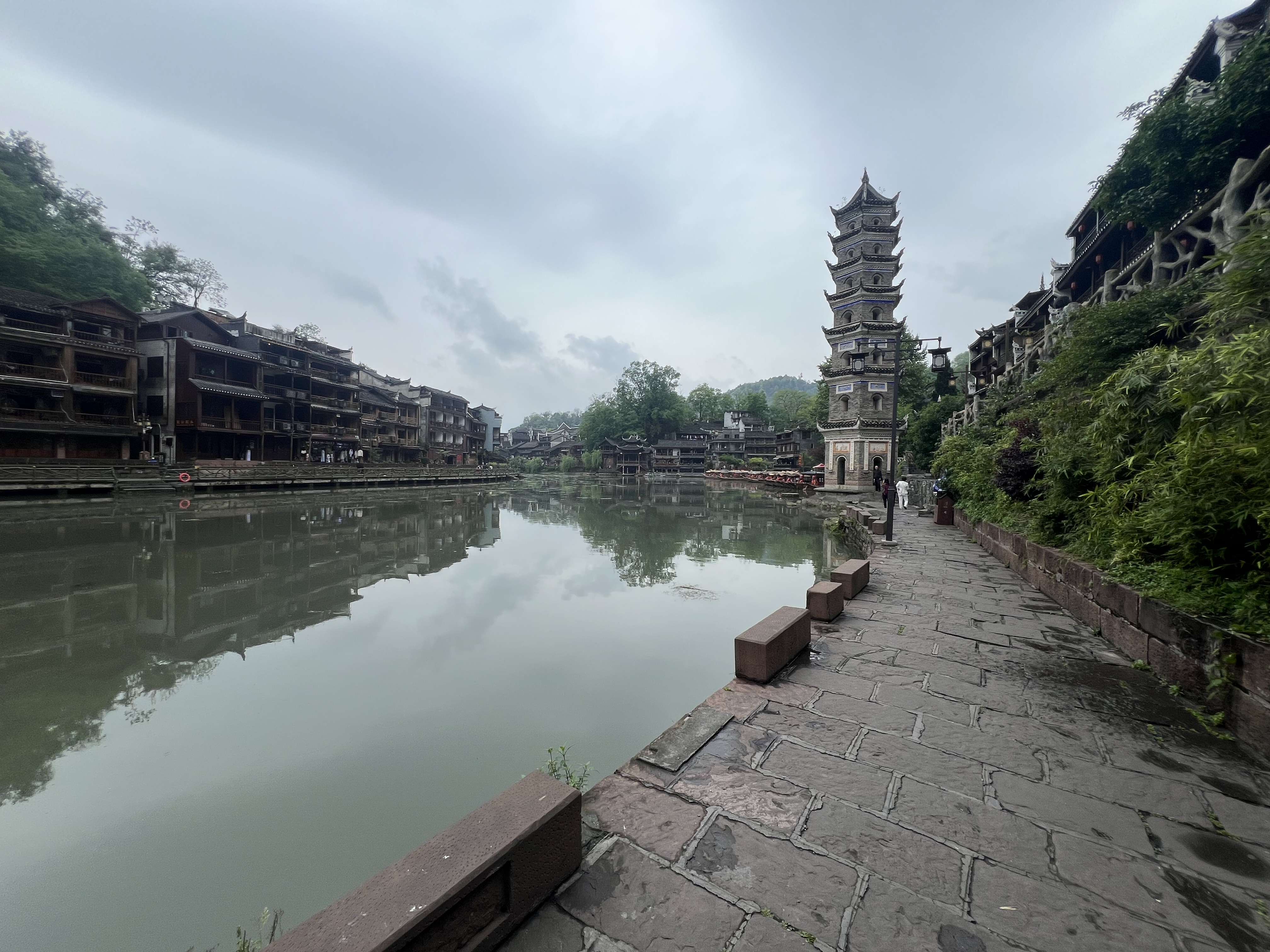
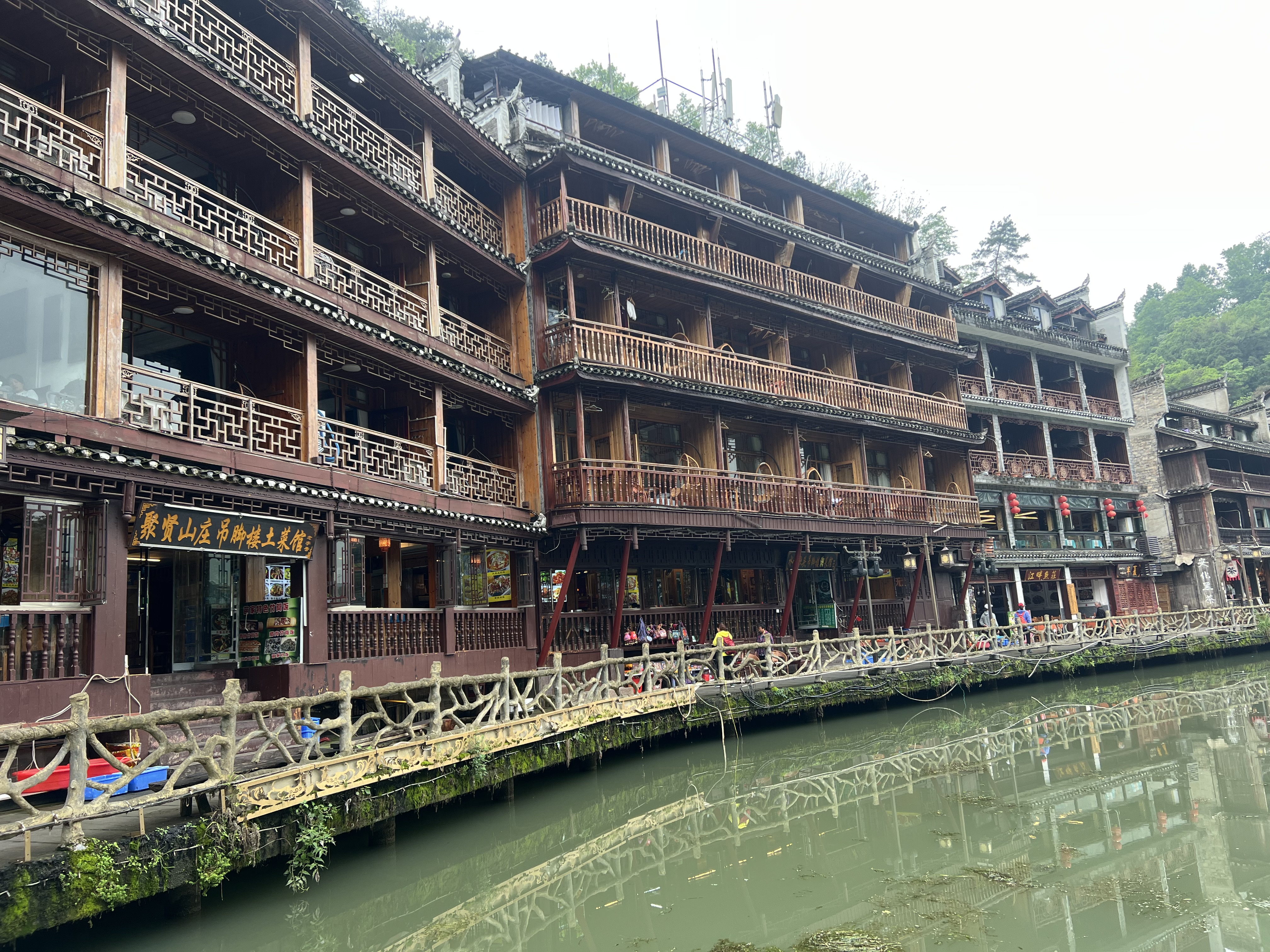
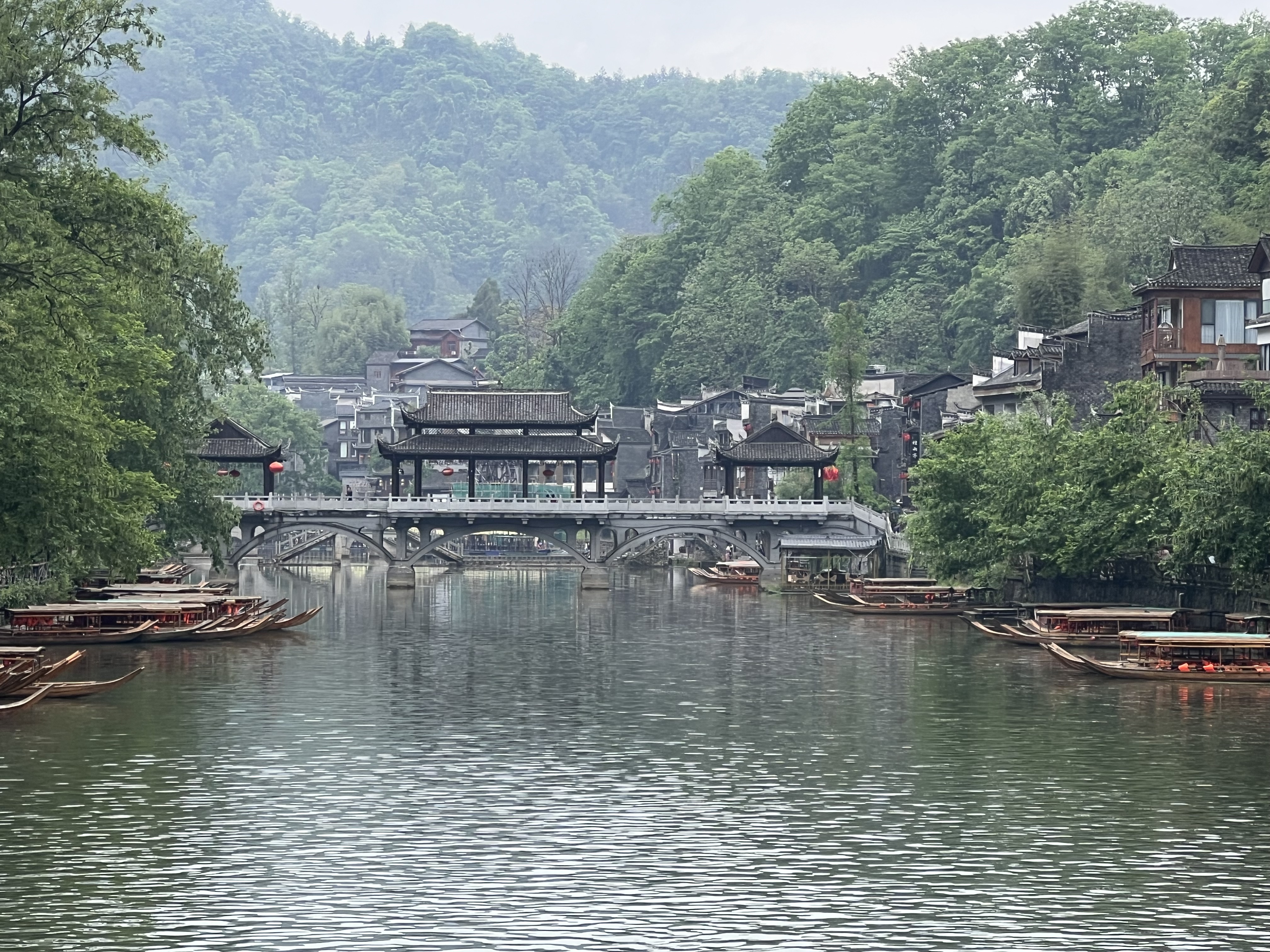
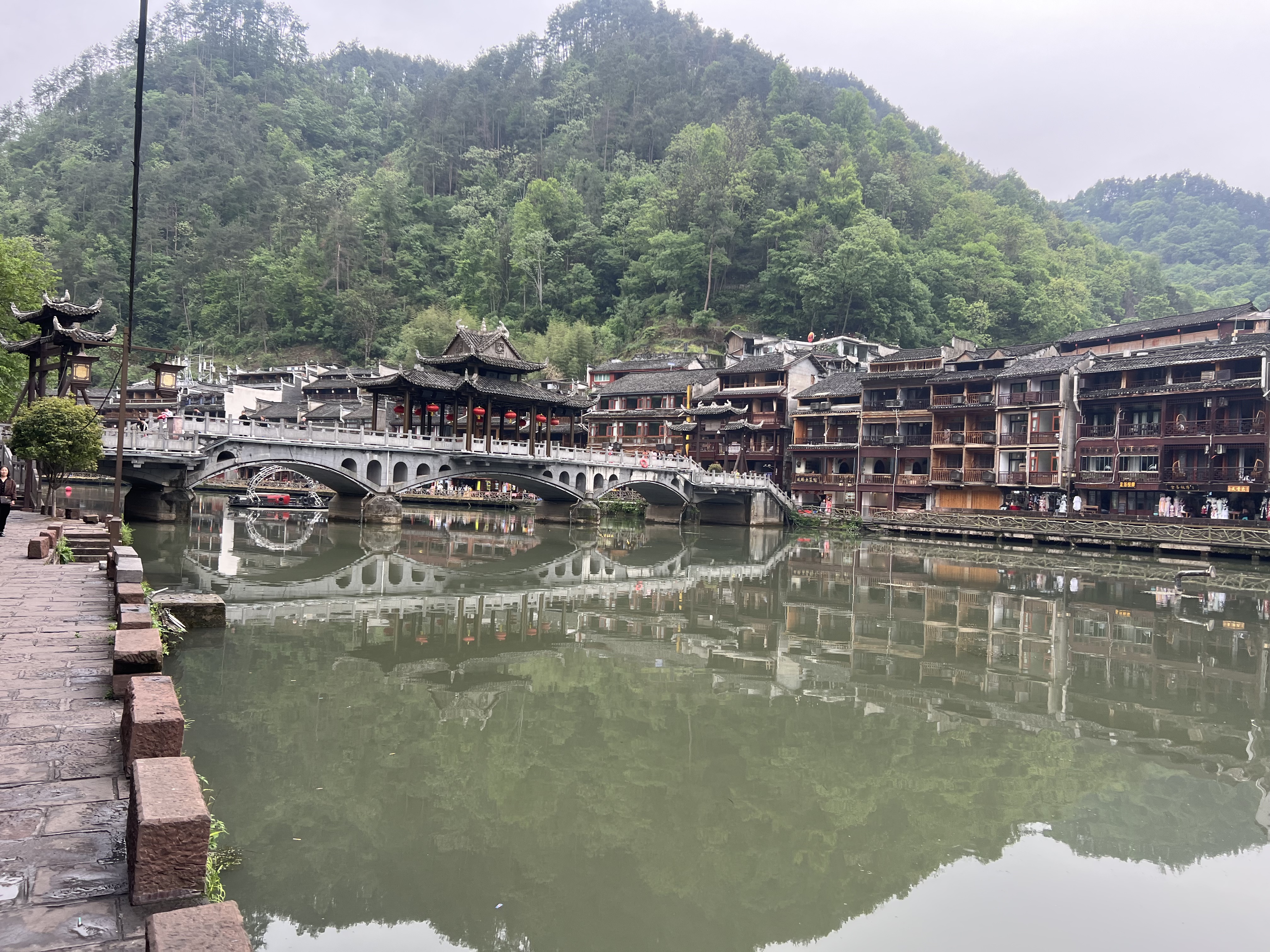
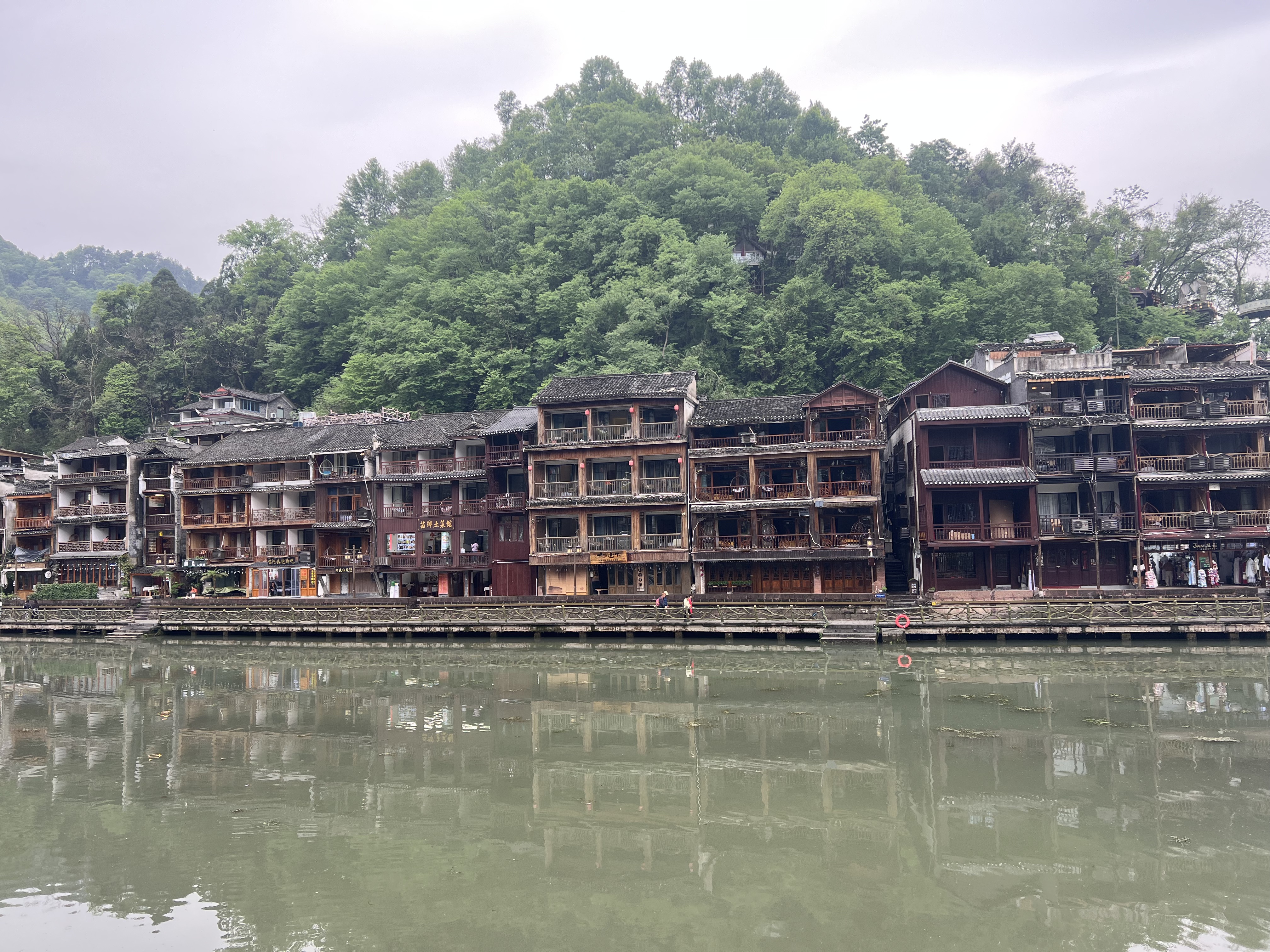

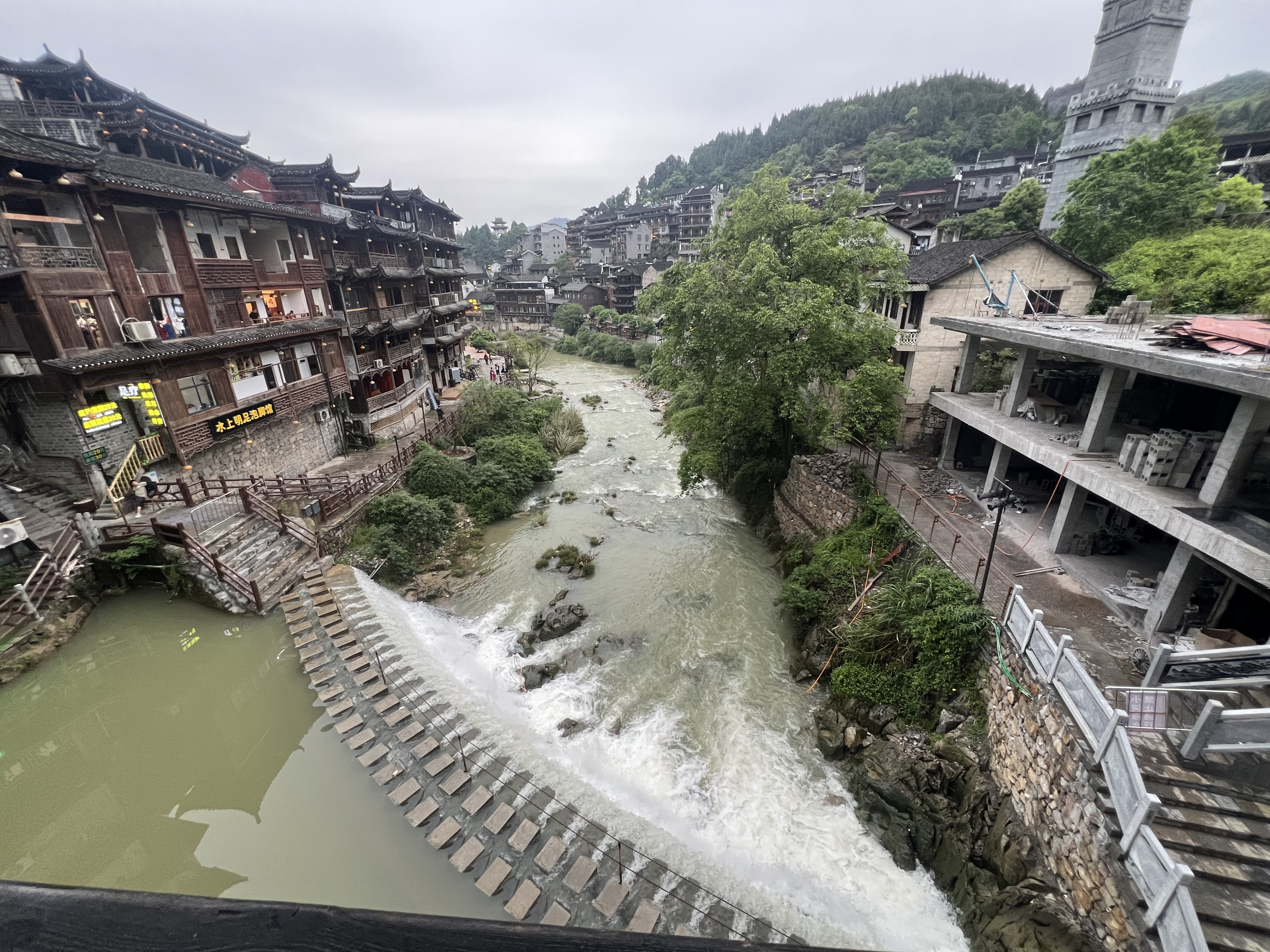
Grey and occasionally rainy in Zhangjiajie, it is a good day for not trekking in national parks or on mountaintops. Hopefully, it will be dry in Fenghuang. We get there at midday. The weather is bleak but dry even though I see a few threatening clouds. We take a bus to a modern-looking town. I see no sign of ancient dwellings. We are dropped off in front of a modern building with an escalator, which we are directed to ascend. After a short walk we emerge onto a large courtyard from where we faithfully follow signposts that take us towards a river. The buildings here are not new, but they don’t have an ancient feel. Close to the river we pass through an ornate gateway and the setting changes. This is more like it. We are in the ancient town. Very old buildings are crowded on both sides of the river. From a distance they look like empty relics of a past age, but when we reach them they turn out to be hives of activity. There are shops, homes, cafes. Fenghuang is 300 years old only on the outside. We walk along the riverbank and narrow alleys. The dwellings are mostly pasted together as one would expect.
Furong is reputed to be 2000 years old. We arrive in descending twilight. A few lights are already switched on. That Furong attracts more tourists than Fenghuang becomes evident outside the entrance. There’s traffic congestion, and people are pouring in.
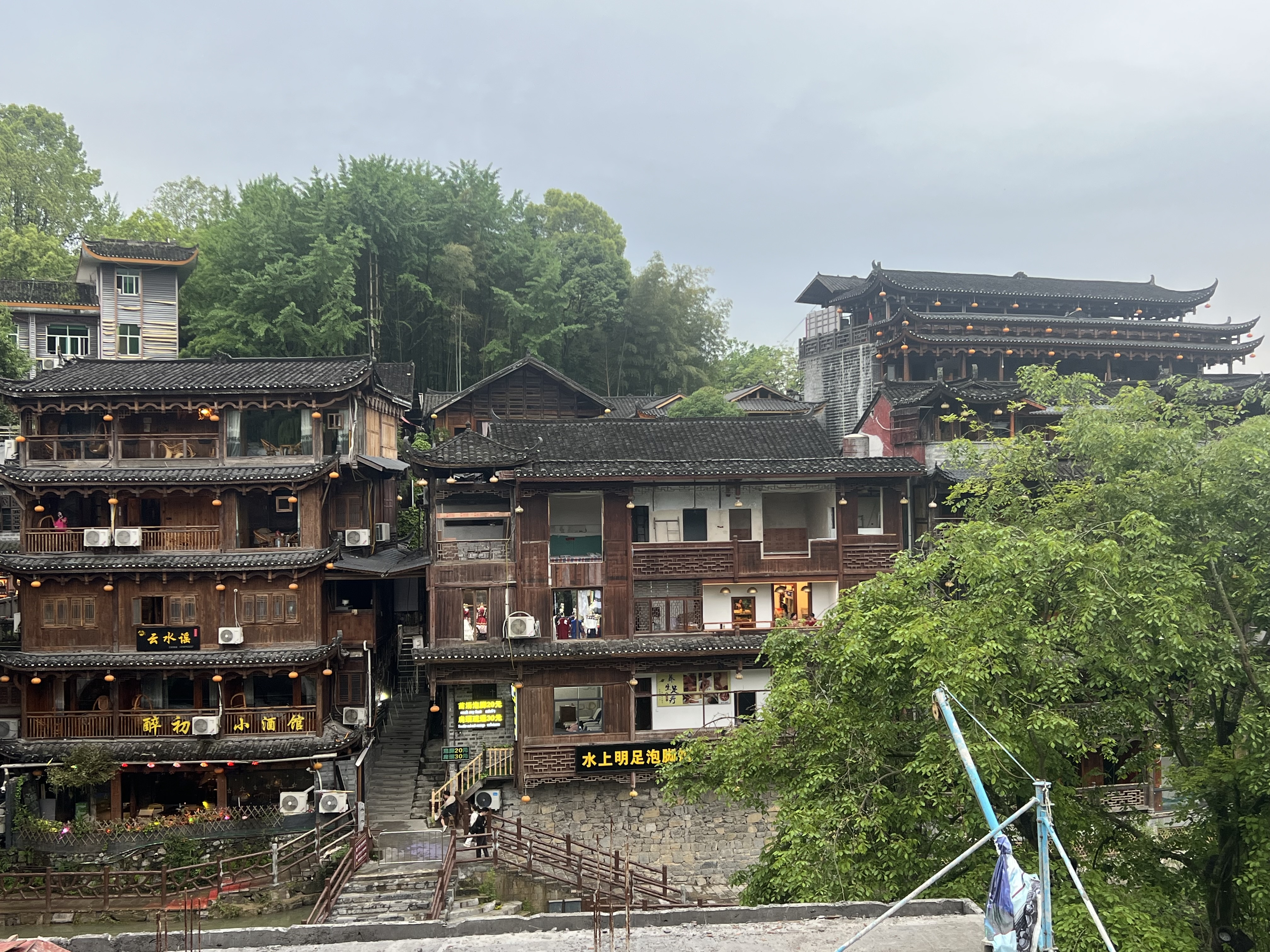
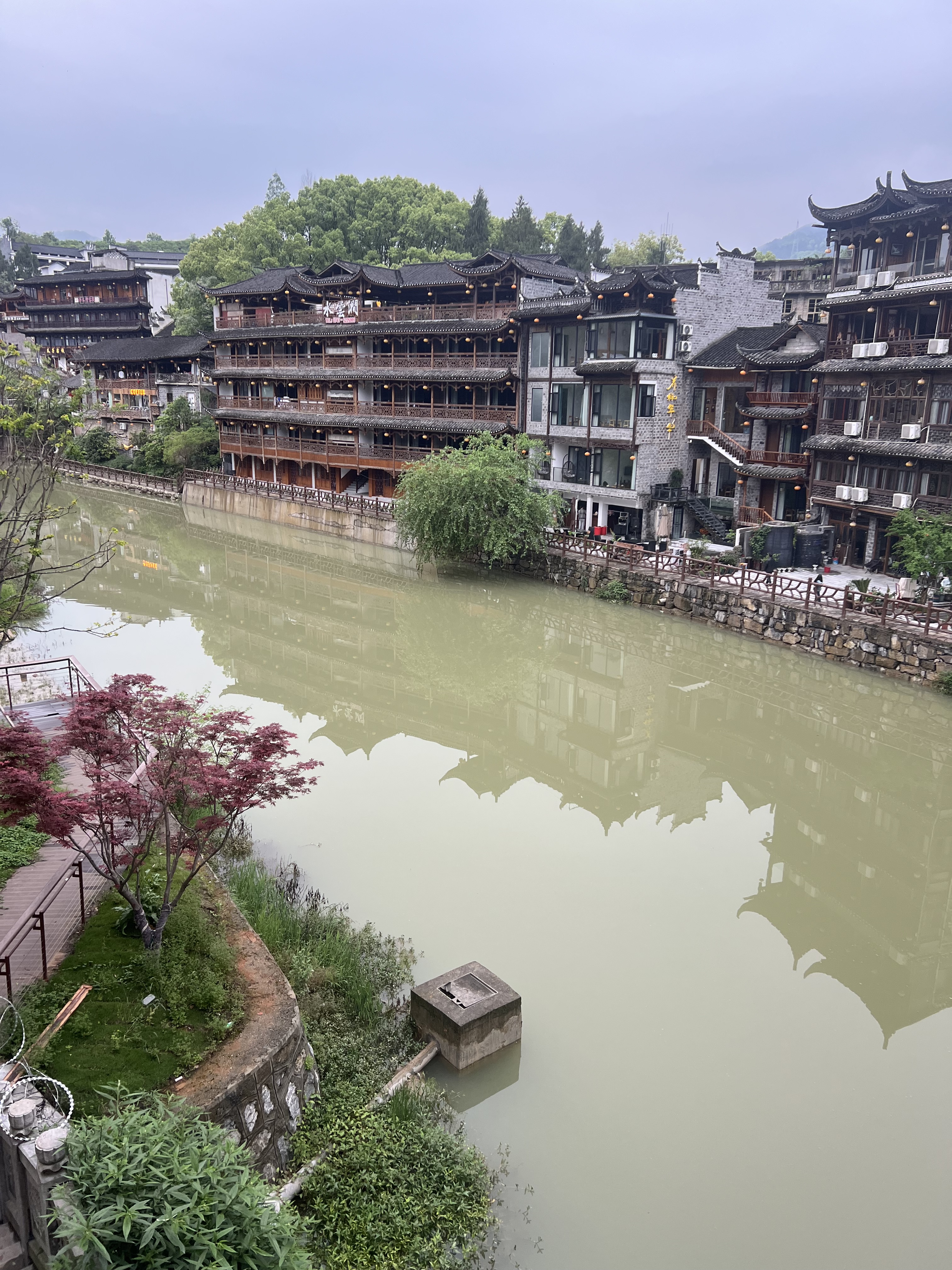
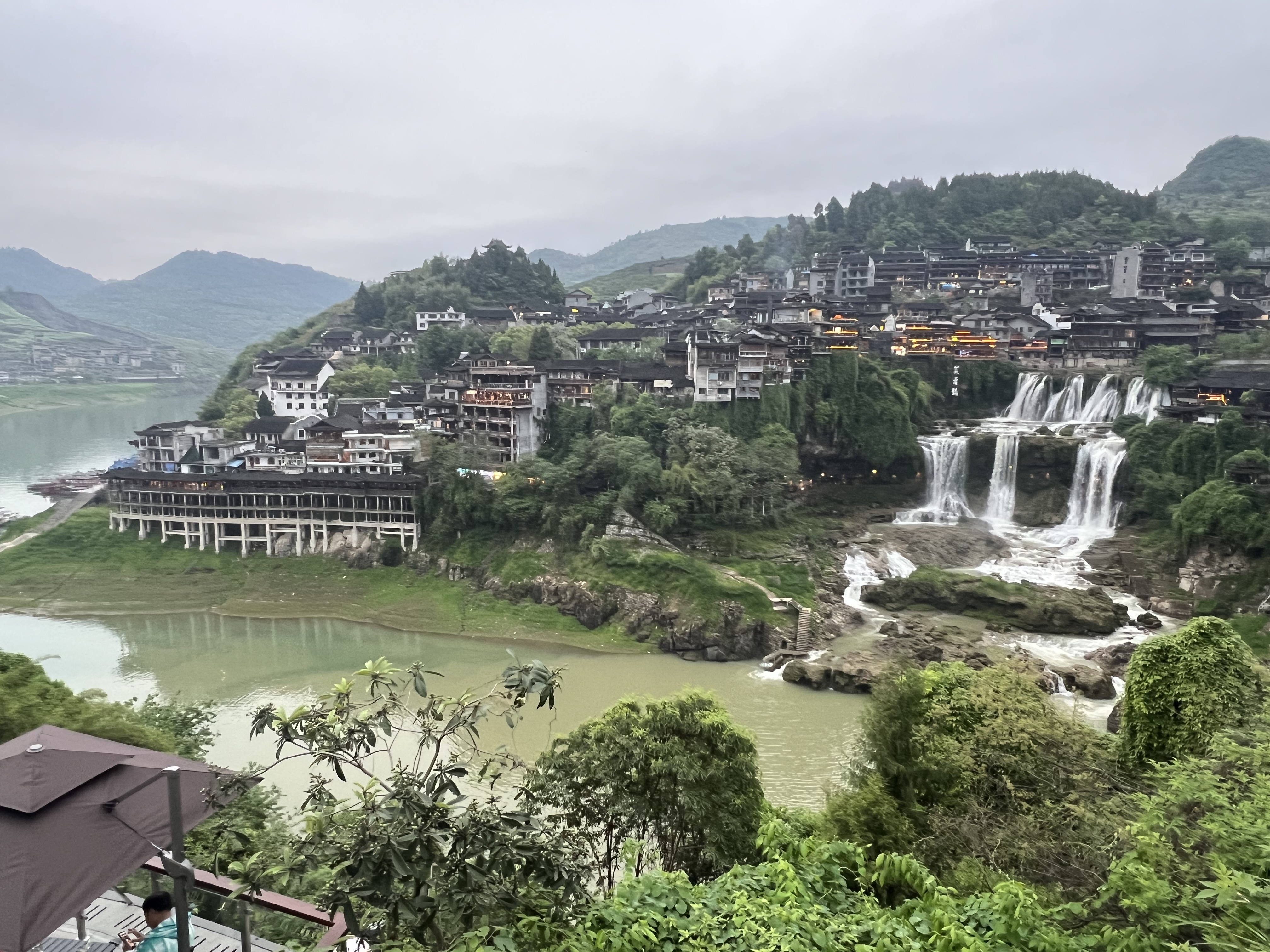
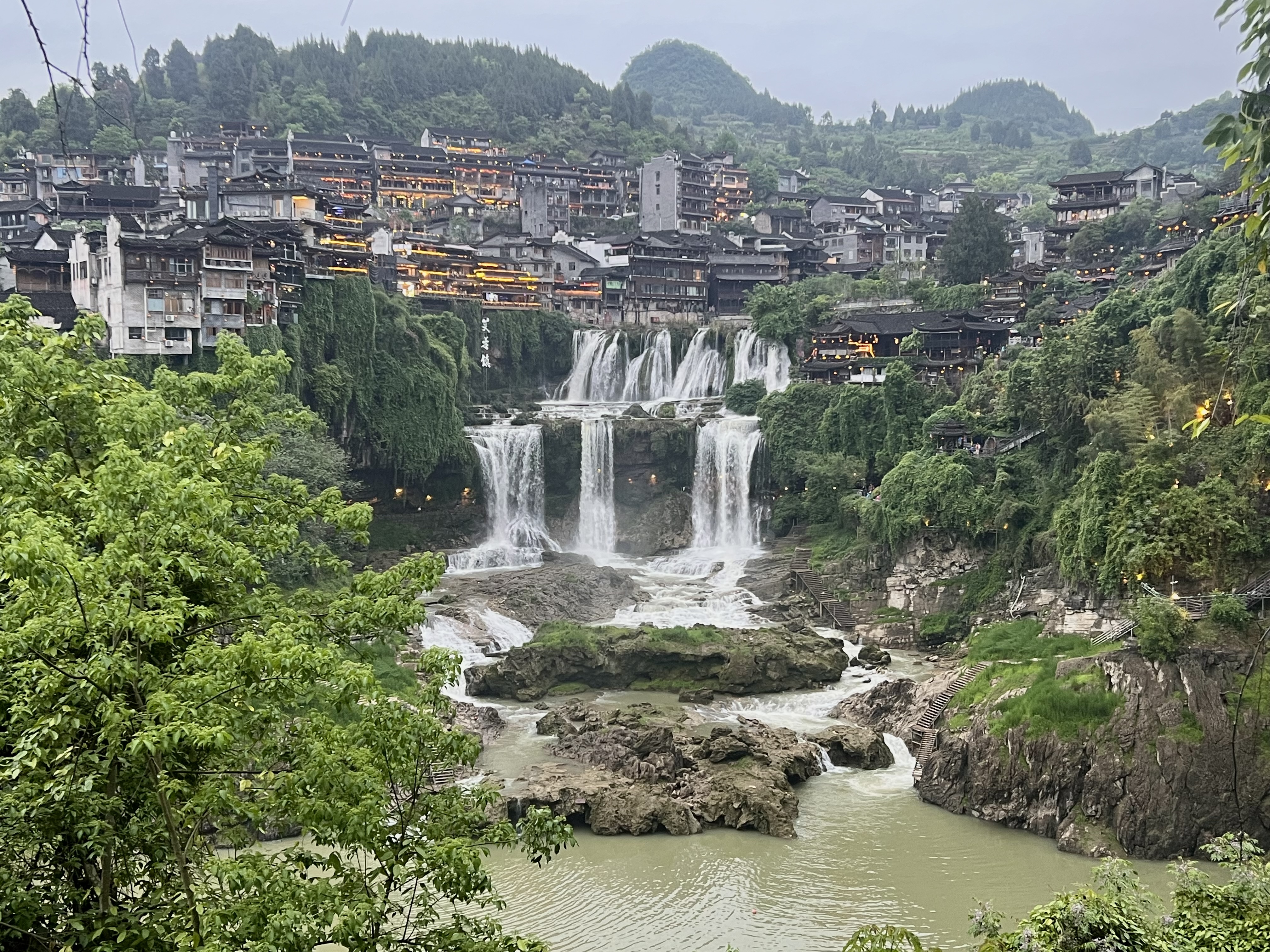

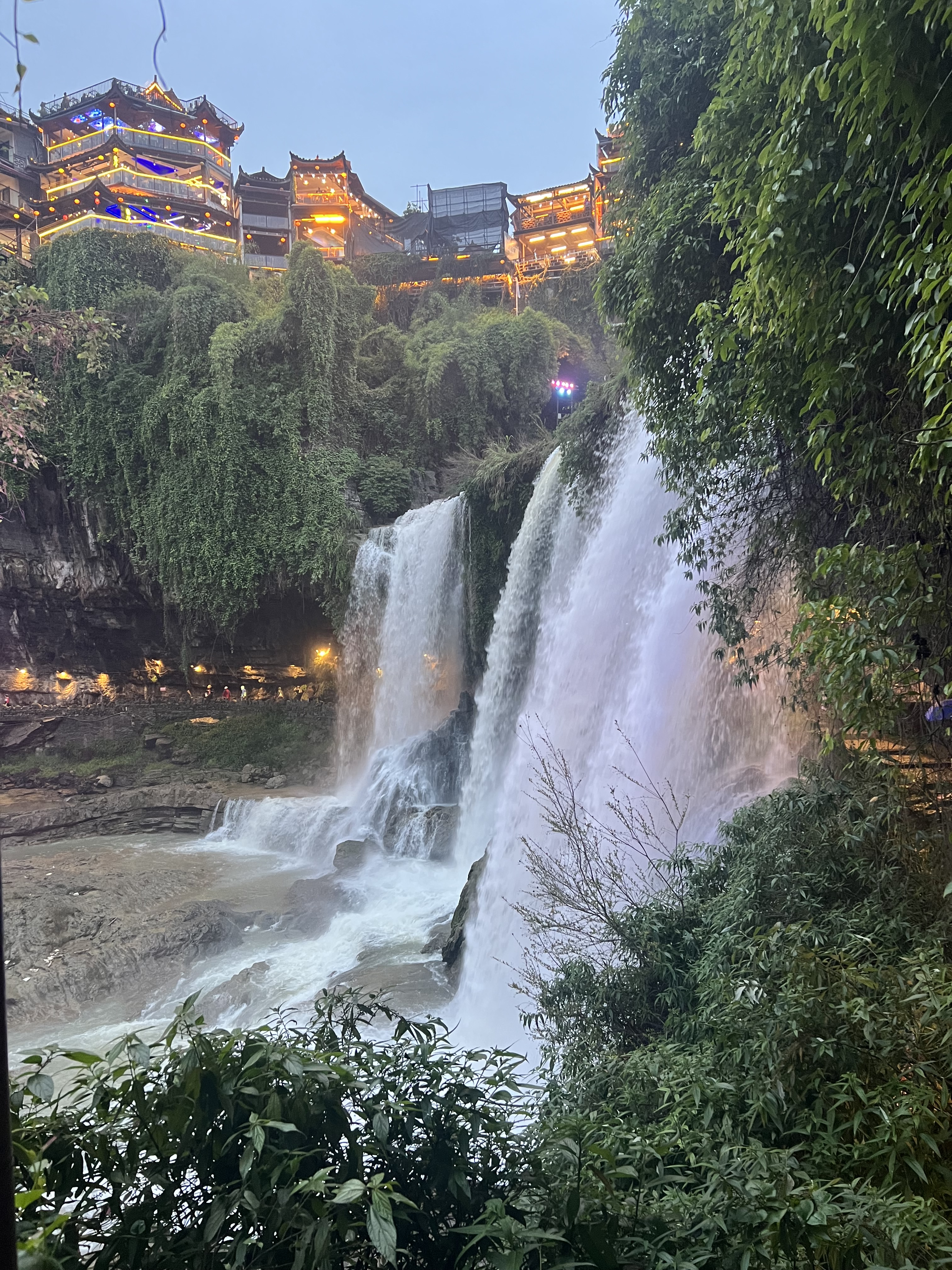
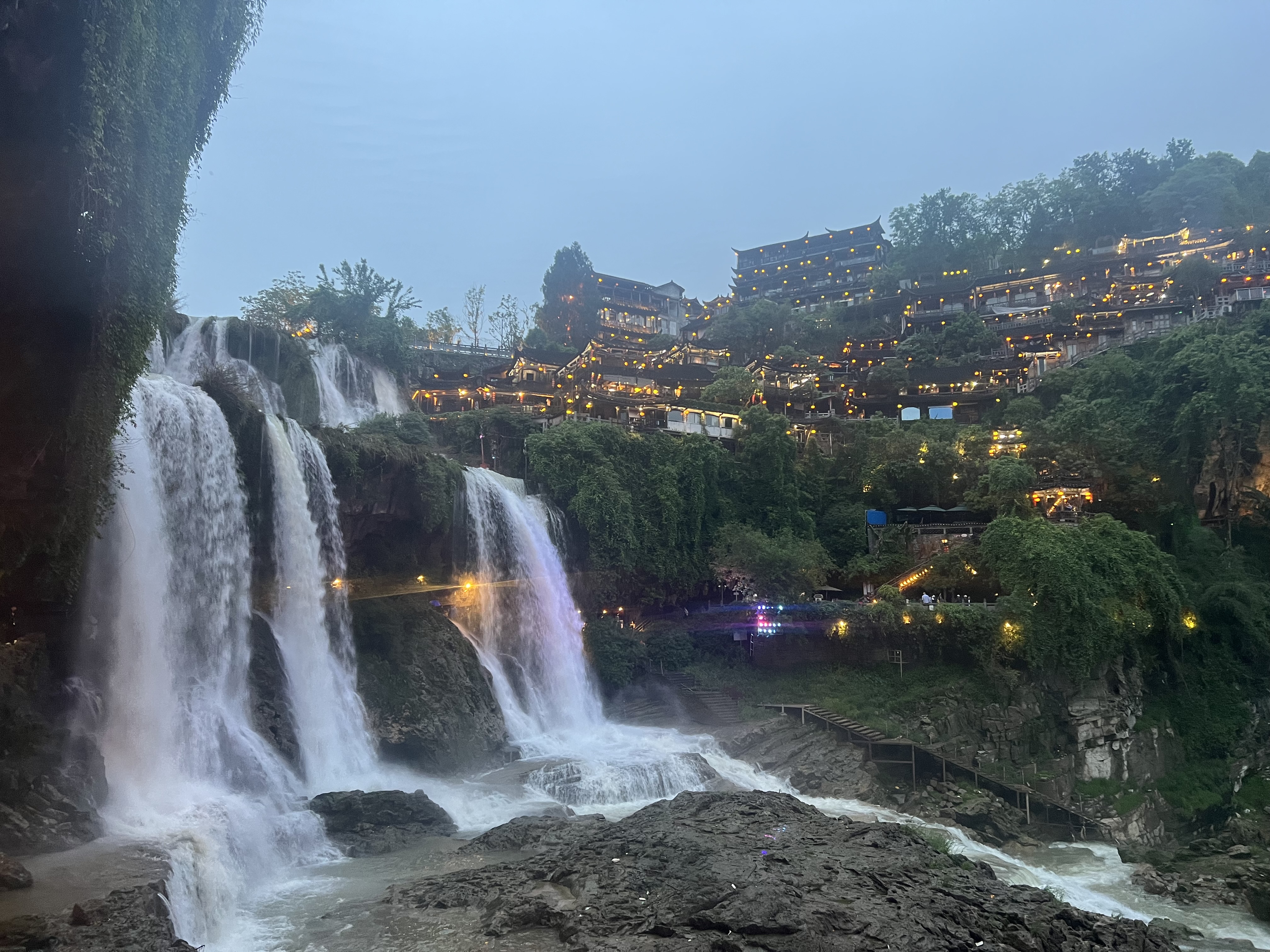
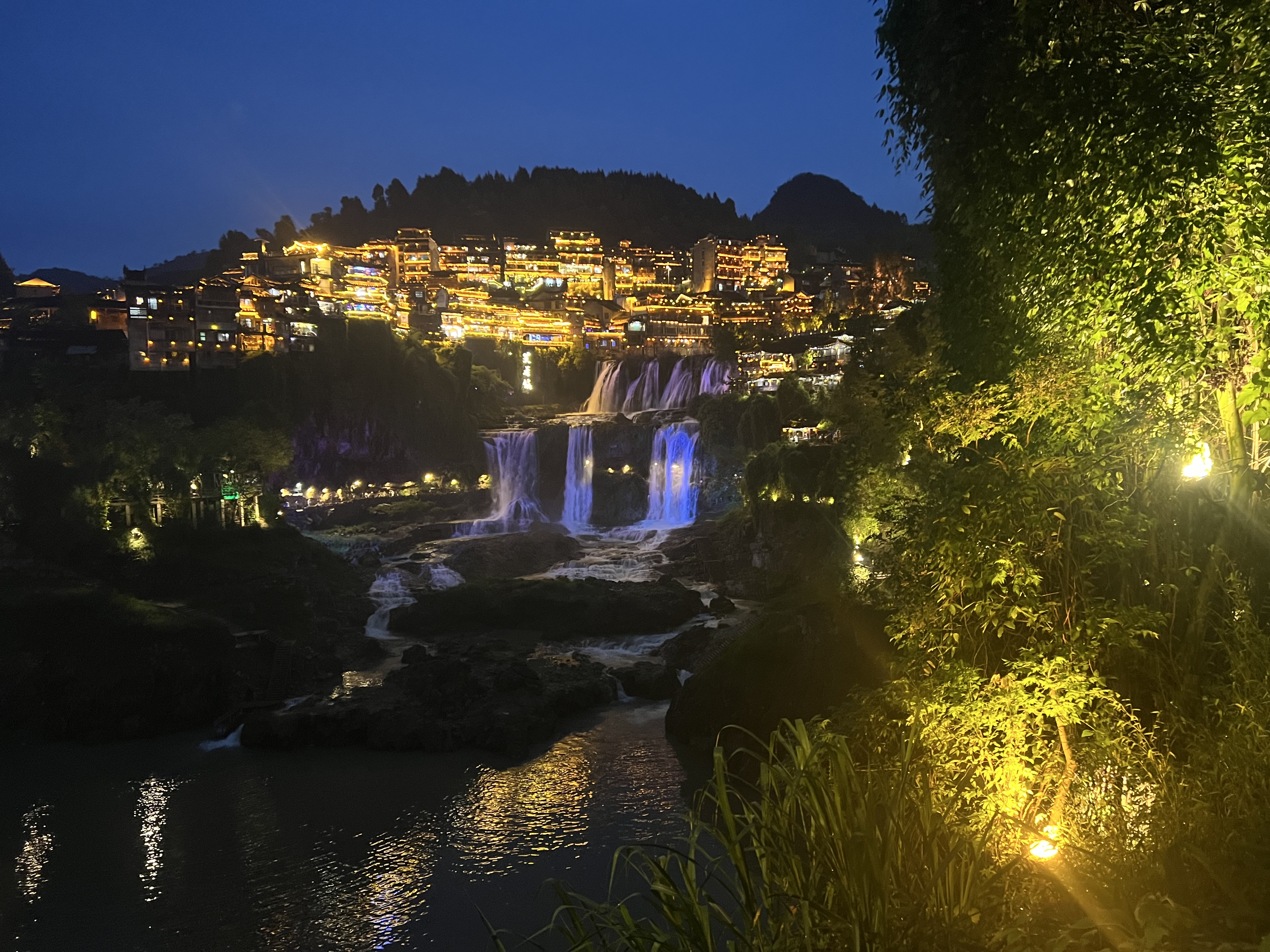
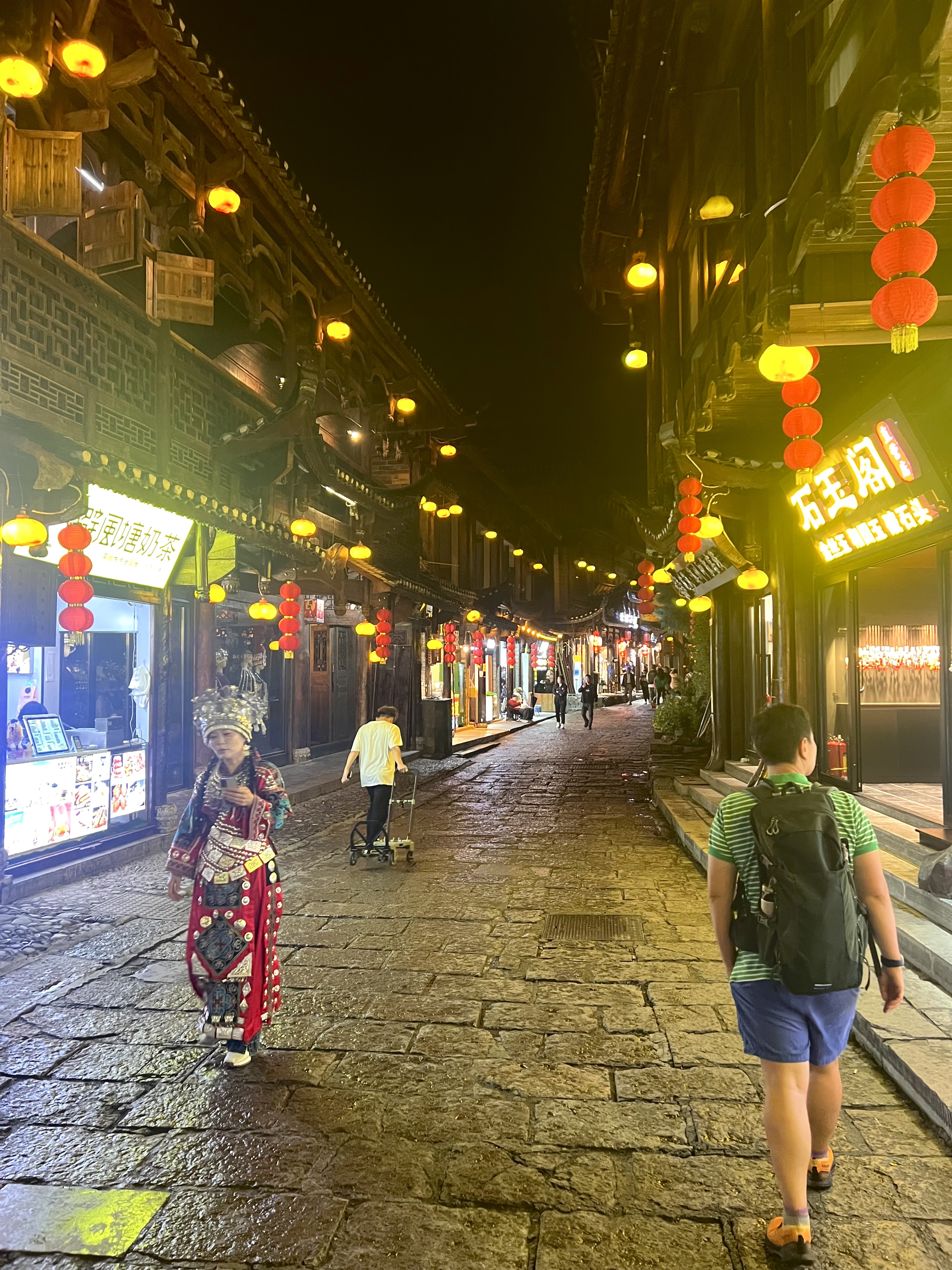
Furong is a crowd of wooden dwellings jostling for position on a hillside that overlooks a two-tiered waterfall gushing down over rocks into a river. It doesn’t always gush. At the height of the dry season it diminishes to a sad trickle. The town is shaped like a horseshoe around the waterfall. In daytime it looks like an old, dilapidated town leading a precarious existence on sloping ground, vulnerable to foundations softened up by rain. Those foundations couldn’t be anything stronger than tree trunks driven into the earth. How some of them hold up two and three storeys is impressive. At night Furong catches up with modernity and becomes a tourist precinct. The town is completely lit up, its age completely obscured by an indiscriminate torrent of yellow gloss. Spectacular though it may be, I prefer the humble matte finish of antiquity.
At 8:30pm we make our way to the entrance to hail a taxi because there is no other mode of transport to take us back to the railway station. Twenty minutes later we are still unable to find a vacant taxi. Fortunately, the considerate taxi driver who brought us here anticipated this difficulty and gave us his card. We call him and he arrives to take us back to the station.


 Gerry Roberts